
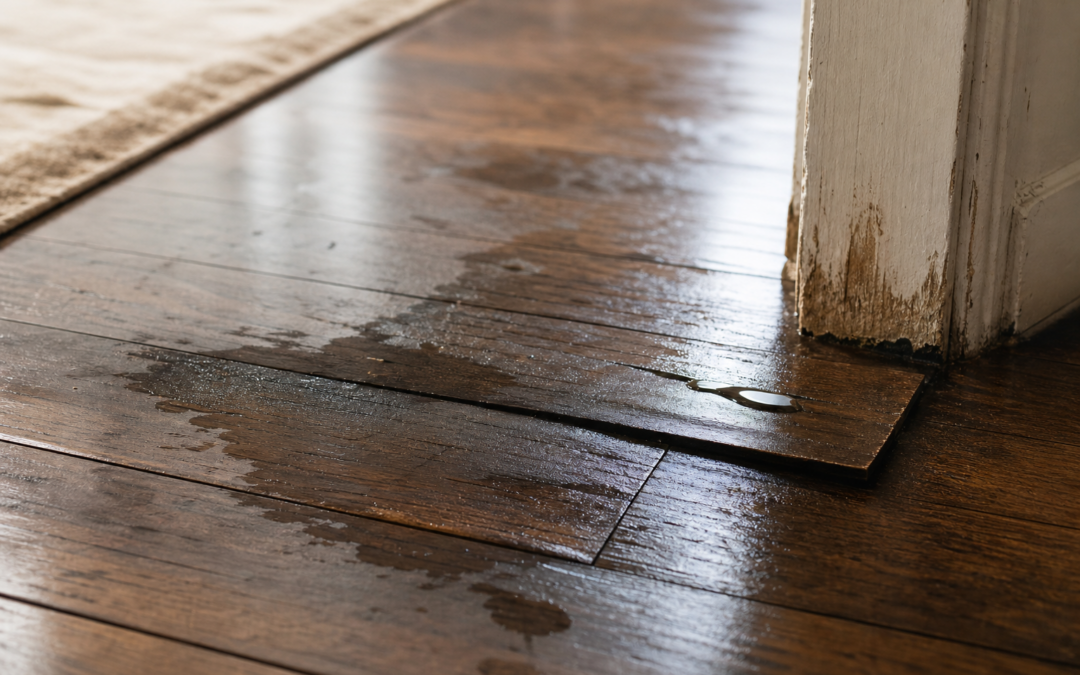
Water damage to wood flooring shows up as cupping, crowning, buckling, dark stains, soft spots and a musty odor. Stop the water source, remove standing water, and start gradual drying right away. Mold can begin once the wood's moisture content rises above 15 percent, so act within the first day or two.
This guide covers one narrow problem: a wood floor that got wet and needs a clear next move. If water reached more than your floors, the broader water damage restoration services in Dade County, FL page covers the whole home. Here, you get a sequence from first signs to a save-or-replace decision.
Signs of Water Damage on Hardwood Floors
The signs of water damage on hardwood floors show up through sight, touch and smell, and cupping usually appears first. In industry testing, cupping was the first visible sign in most hardwood samples after 6 to 9 days of moisture exposure. Check for each of these:
- Cupping. The edges of each board rise higher than the center, so the surface looks like a row of shallow troughs. Moisture from below, such as a slab or subfloor leak, often causes it.
- Crowning. The center of each board rises above the edges. It often follows cupping after a floor has been sanded while still damp.
- Buckling. Boards lift off the subfloor, sometimes in a ridge or tent shape. This is advanced damage and rarely fixes itself.
- Dark stains or black spots. Gray, brown or black discoloration, especially along seams, points to prolonged moisture and possible mold.
- Soft spots. Wood that gives under your foot or feels spongy has lost structural strength.
- Musty odor. A persistent earthy smell that doesn't clear with ventilation means moisture is trapped somewhere you can't see.
- Gaps or warping. Boards that shrink apart or twist after drying show the wood has already moved.
South Florida's humidity makes this harder to read. A floor can look fine on top while moisture sits in the subfloor, so a smell without visible damage still counts as a warning sign.
What to Do First: Emergency Steps for a Wet Wood Floor
The first hours decide how much of the floor you keep. Work through these steps in order, because each one limits how much moisture the wood absorbs.
- Stop the water source. Shut off the supply valve, stop the appliance, or tarp the roof opening. Nothing else works while water keeps coming [S1].
- Remove standing water and saturated items. Mop, squeegee or wet-vacuum the pooled water. Pull up rugs, mats and furniture, and lift anything that holds moisture against the wood [S2].
- Look for early damage. Hold a flashlight at a low angle across the boards. Light raking the surface shows early cupping or crowning that you miss from standing height [S3].
- Check by feel. Walk across the floor in socks. Soft spots and lifting boards are easy to feel before you see them [S4].
- Clean off silt and mud. If floodwater or a sewage backup left residue, scrub the wood with a stiff brush and detergent before it dries. Dried silt traps moisture against the surface and is much harder to remove [S5]. Contaminated water from sewage or flooding needs professional cleanup, not a household mop.
- Start gradual airflow. Run fans and dehumidifiers, and keep the air conditioning on. Skip heaters and heat guns. Intense heat dries the top of a board faster than its core and splits the wood [S6].
Take photos and video of the damage before you move or discard anything. You need them later for an insurance claim, and you can't recreate the original scene.
How Long Does It Take for Water to Damage Wood Floors?
Water starts changing wood almost immediately, but visible damage builds over days. In industry testing, cupping showed up as the first visible sign in most hardwood samples after 6 to 9 days of moisture exposure. That result comes from a single study, so treat it as a rough guide, not a promise. Species, finish, board width and the amount of water all change the timeline.
The visible signs lag behind what's happening inside the wood. Research indicates mold can begin growing on wood once its internal moisture content rises above 15 percent. In South Florida's warm, humid air, wet wood reaches that point fast. That's why the first day or two matter more than the first week. By the time cupping appears, moisture has already soaked in.
A second threshold matters if your floor is held down with metal fasteners such as nails or staples. Those fasteners risk corrosion once the wood's moisture content exceeds 18 percent. Corroded fasteners weaken the floor system even after the surface dries and looks fine.
Treat these numbers as markers, not exact cutoffs. A small spill you wipe up right away rarely causes lasting harm. A slow leak under a dishwasher, or a floor soaked in a storm, needs fast, steady drying. If you can't tell how long the wood stayed wet, assume it stayed wet long enough to check.
How to Treat Water Damage to Wood Flooring and Draw Moisture Out
Dry the floor slowly, with steady airflow and dehumidification. Then confirm the wood has returned to a stable moisture level before you repair anything. Rushing is the most common way to turn minor water damage on hardwood floors into permanent damage.
Follow these steps for water damage to wood flooring treatment on a small, recent leak:
- Keep air moving. Set fans across the floor and run a dehumidifier in the room. Close windows and doors if the outdoor air is humid, which is most of the year in South Florida [S6].
- Skip the heat. Don't aim heaters, hair dryers or heat guns at the boards. Fast surface drying splits and warps wood that is still wet underneath [S6].
- Measure, don't guess. Use a moisture meter and take readings across the affected area and an unaffected spot in the same room. Keep monitoring until the wet boards read close to that dry reference point [S7].
- Check against the stable range. The National Wood Flooring Association (NWFA) specifies a target moisture content of 6 to 9 percent for installed hardwood floors to be considered stable. That figure is vendor-reported, so use it as a benchmark and let your dry reference reading guide the final call.
- Wait, then reassess. Boards need days, sometimes weeks, to settle. Hold off on sanding or refinishing until the readings hold steady.
Will a swollen floor go back to normal? Often, if the damage is minor. Slightly cupped boards frequently flatten as they dry slowly. Boards that have buckled, split, turned black or gone soft usually don't recover. How to fix water damage to wood flooring comes down to what drying leaves behind: flat, stable, clean boards need only refinishing, while the rest need replacement.
DIY Drying vs. Professional Water Damage Restoration
You can dry a small, clean spill yourself. A larger or longer-lasting leak, or any contaminated water, needs professional equipment and testing. The table compares the two approaches.
| Factor | DIY drying | Professional restoration |
|---|---|---|
| Equipment | Household fans, a dehumidifier, a basic moisture meter | Industrial air movers, commercial dehumidifiers, and moisture-mapping tools |
| Reach | Surface and shallow moisture | Moisture trapped under boards, in the subfloor and behind baseboards |
| Monitoring | Occasional spot readings | Documented readings over the full drying period |
| Water type | Clean water from a supply line or small spill | Floodwater, sewage backup and other contaminated water |
| Best for | Minor, recent, limited area | Large areas, slow leaks, or water that sat for days |
The weak point of DIY drying is what you can't see. Wood can read dry on top while the subfloor stays damp, and that hidden moisture invites mold. Trapped moisture above 18 percent also threatens the metal fasteners that hold the floor down.
That's why you test the subfloor before any refinishing. Sanding and finishing over a wet subfloor seals the moisture in, and the cupping, staining and mold come back. Test several points, not one, and don't refinish until readings stay in the 6 to 9 percent stable range.
If the water sat for days, covered a large area, or came from a sewage backup, call a professional. Royal Mold Specialist is a mold and water damage company that provides water damage treatment, mold inspection and full remediation for homes and businesses across South Florida, and its water damage restoration services in Dade County, FL page explains how that process works. For a closer look at the difference, read our guide on what sets a pro apart from DIY in water removal.
Can the Floor Be Saved? Solid Hardwood vs. Engineered Wood vs. Laminate
Whether the floor survives depends on what it's made of and how far the damage went. Solid hardwood is the most forgiving. Engineered wood is limited by its top layer, and laminate is the least repairable once water gets in. The table shows the general decision path.
| Damage level | Solid hardwood | Engineered wood | Laminate |
|---|---|---|---|
| Minor (light cupping, no staining, dried quickly) | Usually dries flat. Refinish if needed. | Often recovers if it dries fully. Refinishing depends on how thick the top layer is. | May recover if the core stayed dry, but edges that swelled stay swollen. |
| Moderate (cupping or crowning that persists, some staining) | Replace the worst boards, then sand and refinish the whole floor for an even look. | Replace affected boards or planks. Heavy sanding usually isn't an option. | Replace affected planks. |
| Severe (buckling, soft spots, black stains, mold) | Replace the damaged section, or the whole floor if damage spreads. | Replace the floor. | Replace the floor. |
Solid hardwood can be sanded several times over its life, which gives you room to fix surface damage. Engineered wood has a thin real-wood layer over a plywood or fiberboard core, so there's little to sand, and a swollen core doesn't shrink back. Laminate has a fiberboard core that swells and crumbles when wet, and that damage doesn't reverse.
In every case, the subfloor decides the outcome. A floor that dries flat but sits on a damp or moldy subfloor will fail again. When moisture or mold sits behind the boards, the repair often reaches beyond the flooring itself.
Does Home Insurance Cover Water Damaged Wood Floors?
Coverage depends on your policy and on what caused the leak. Policies tend to cover sudden, accidental events, such as a burst pipe or an appliance failure. Long-term seepage, neglected maintenance, and flooding often fall under exclusions or separate coverage, so read your policy and ask your insurer directly.
Whatever the cause, document everything before you start cleanup:
- Photograph and video the damage. Capture the floor, the source of the water, and any affected furniture or belongings before you move or discard them.
- Stop further loss. Shut off the water and start drying. Most policies expect you to take reasonable steps to prevent more damage.
- Contact your insurer. Report the loss, ask what your policy covers, and write down the claim number, the date, and the name of everyone you speak with.
- Keep records. Save receipts for drying equipment, moisture readings, and professional invoices.
- Get a written assessment. A moisture inspection report gives the adjuster a clear picture of how far the water spread, including under the boards.
Mold is a separate question in Florida, and policies treat it differently. Our guide to what homeowners insurance does and doesn't cover for mold in Florida walks through those limits.
Preventing Future Water Damage and Humidity Problems in Wood Floors
These habits stop the slow leaks and humidity that cause most repeat damage.
- Control indoor humidity. Run the air conditioning through the wet season and use a dehumidifier in closed-up rooms. Steady indoor humidity keeps the wood from swelling and shrinking with the weather.
- Check for slow leaks. Look under sinks, behind the refrigerator and dishwasher, and around water heaters and washing machine hoses. A drip you never notice can wet a floor for weeks.
- Clean up spills promptly. Wipe standing water off wood the same day, especially near entryways and kitchens.
- Maintain your HVAC system. A clogged condensate line is a common hidden source of floor moisture.
- Seal windows and exterior doors. Storm-driven rain finds weak seals first.
- Use mats and area rugs carefully. Place mats at entries and under planters, and lift them regularly so moisture can't sit against the wood.
- Check the subfloor after any wet event. A floor that looks dry can hide moisture below. A musty smell that returns or boards that keep cupping mean the moisture source is still active.
Royal Mold Specialist inspects for mold and treats water damage in homes and businesses across South Florida, and the team can trace where the moisture keeps coming from. For the steps on drying a wet home, see how to dry out a flooded home fast.
FAQs
How do I know if my subfloor is bad?
Warning signs include soft or spongy spots underfoot, a musty smell that returns after cleaning, dark staining along seams, and boards that keep cupping after drying. A moisture meter reading well above the dry reference in your home confirms it. If you suspect trapped moisture, have a technician test several points before you refinish.
Will a swollen wood floor go back to normal?
Often, when the damage is minor and the floor dries slowly. Slightly cupped boards frequently flatten on their own. Boards that have buckled, split, turned black, or gone soft rarely recover and usually need replacement.
Does home insurance cover floor damage from a water leak?
It can, depending on the cause. Policies commonly cover sudden, accidental leaks, such as a burst pipe, and often exclude gradual seepage and flooding. Check your policy and contact your insurer to confirm what applies to your loss.
How do I clean water damaged wood?
Remove standing water first, then scrub off silt or mud with a stiff brush and detergent before it dries. Dry the floor gradually with fans and a dehumidifier, not heat. If the water was contaminated, such as sewage or floodwater, have professionals handle the cleanup.
Can engineered wood or laminate be saved after a leak?
Sometimes, if the water was minor and the floor dried quickly. Both have cores that swell when wet, and that swelling usually doesn't reverse. Moderate to severe damage typically means replacing planks or the whole floor.
How do I file an insurance claim for hardwood water damage?
Document the damage with photos and video, stop the water, and report the loss to your insurer. Keep receipts for drying and repairs, and get a written moisture assessment. Your insurer will explain the next steps and what your policy covers.
Conclusion
Water damage to wood flooring is easiest to save when you catch it early. Stop the source, remove the water, dry the floor gradually, and measure moisture before you repair anything. Cupping, soft spots, dark stains, and a musty smell are your cues to act.
Start by checking the floor with a flashlight and a moisture meter, and test the subfloor before you sand or refinish. If the water sat for days or the readings won't settle, get a professional assessment before you decide between refinishing and replacement.