
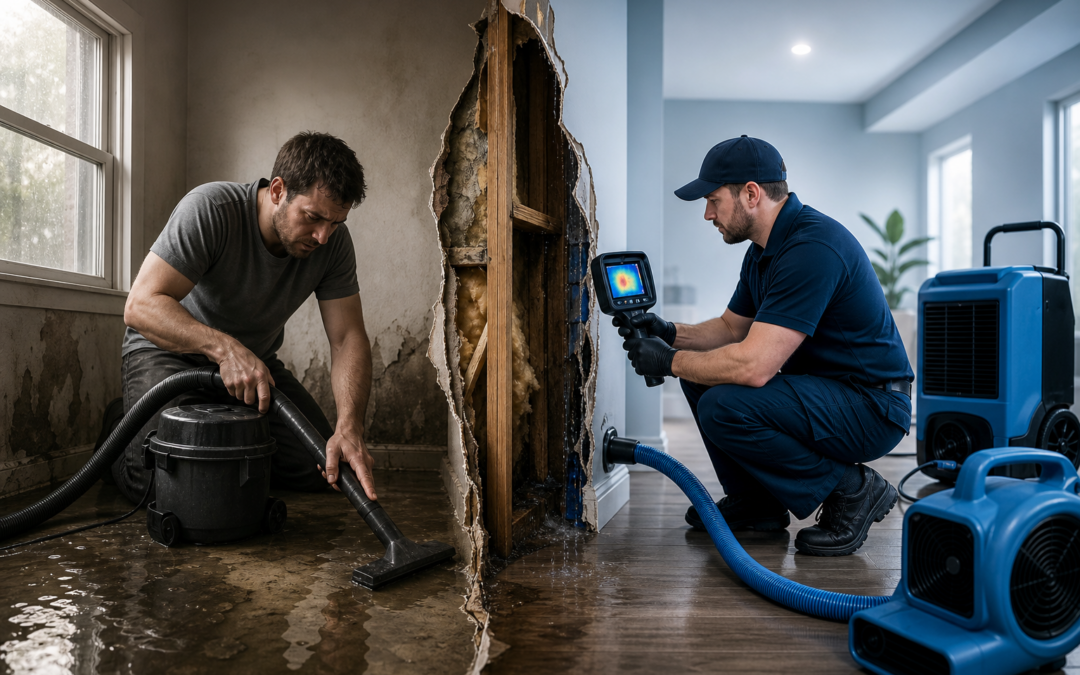
Expert water removal uses truck-mounted extractors, thermal imaging cameras, and industrial dehumidifiers that consumer gear cannot match. Pros also document moisture readings for insurance claims and catch hidden water before it triggers mold growth. For most property owners, the equipment gap and health risks make DIY water cleanup a costly gamble.
Water damage is a time-critical emergency. The difference between a full recovery and lasting structural damage often comes down to how fast the right equipment reaches the property, and whether hidden moisture gets found before it becomes something worse.
The 24 to 48 Hour Window: Why Speed Decides the Outcome
Mold begins growing within 24 to 48 hours of moisture exposure. That window is not a rough estimate, it is the threshold that separates a water damage event from a water-and-mold event, which costs significantly more to fix and poses real health risks.
According to the Insurance Information Institute's 2026 data, 14,000 people in the United States face a water damage emergency every day. Most of them do not have industrial drying equipment sitting in the garage. That gap matters because mold does not wait for a contractor to become available or for a rental shop to open Monday morning.
FEMA data, as reported by prohousemaintenance.com, indicates that a single inch of standing water in a residence can cause as much as $25,000 in damage. That figure reflects what happens when water sits long enough to saturate structural materials, not just surface finishes.
Secondary damage is the term professionals use for the harm that occurs after the initial flooding event. A floor that feels dry to the touch can still hold moisture inside the subfloor, inside wall cavities, and under baseboards. That hidden moisture keeps feeding mold growth and wood rot for days or weeks after the visible water is gone. By the time you notice a musty odor or soft drywall, the damage has already spread well beyond the original affected area.
South Florida's humidity makes this worse. High ambient humidity slows evaporation and gives mold spores a favorable environment year-round, not just during storm season. A property in Boca Raton or Miami-Dade that suffers water intrusion in August faces a much tighter recovery window than the same property in a drier climate.
Speed is not just helpful. In South Florida, it is the single biggest factor in whether a water damage event stays manageable.
Clean, Gray, and Black Water: Why the Category Changes Everything
Not all water damage is the same. Professionals classify water intrusion into three categories based on contamination level. That classification determines what protective measures are required, what materials can be salvaged, and whether DIY cleanup is safe at all.
Category 1: Clean water originates from a supply line, a broken pipe, or an overflowing sink. It carries no significant biological contaminants at the time of loss. This is the category where a motivated homeowner has the most room to act, though the equipment gap still applies.
Category 2: Gray water comes from sources such as washing machine overflow, appliance discharge, or HVAC condensate lines. It may contain contamination that can cause illness if ingested or if it contacts open skin. Cleaning up gray water without proper personal protective equipment, including gloves, eye protection, and respiratory protection, puts you at real risk.
Category 3: Black water presents the highest contamination risk. It includes sewage backups, floodwater that has contacted the ground, and any water that has sat long enough to grow bacteria. Black water carries pathogens, including E. coli, Salmonella, and other organisms that cause serious illness. If your water damage involves a sewage backup or outdoor flooding, this is not a situation for a shop vac and a box fan. For more on what sewage backup cleanup involves, see the sewage backup service page.
Categories escalate. Clean water that sits for more than 24 hours picks up bacteria from the materials it contacts and effectively becomes gray water. Gray water left longer can reach black water contamination levels. The longer you wait, the more dangerous the cleanup becomes.
Can I Just Use a Shop Vac for Water Extraction?
A shop vac will not get the job done. For minor spills on hard surfaces, a wet-dry vacuum is a reasonable first response. For any water damage that has soaked into carpet, reached the subfloor, or spread across more than a few square feet, a shop vac leaves most of the moisture behind.
The capacity difference is not marginal. Professional truck-mounted extraction units run off a vehicle engine and use high-suction power to pull water from deep within carpets, padding, and subfloor materials. According to advanceddri.com, professional-grade truck-mounted units are capable of removing more than 3,000 gallons of water per hour. A standard shop vac holds between five and sixteen gallons before it needs to be emptied.
Even setting aside raw capacity, a shop vac does not reach moisture trapped inside wall cavities, under hardwood flooring, or in the air gap beneath a slab. It removes surface water. Professional extraction removes the water you can see and begins addressing the water you cannot.
The practical result of using a shop vac on a serious water loss is a floor that looks dry and feels dry underfoot, while the subfloor and framing below hold enough moisture to support mold growth for weeks. By the time that mold becomes visible, the affected area has expanded far beyond where the water originally reached.
For South Florida properties, where a single afternoon storm can push water under doors and across entire ground floors, the equipment gap between a shop vac and a truck-mounted unit is the difference between a contained event and a full remediation job.
What Equipment Do Professionals Use for Water Damage?
Professional water removal teams arrive with equipment that has no real consumer equivalent. Each tool targets a specific phase of the drying process, and together they address water you can see, water you cannot see, and the moisture that remains locked inside structural materials long after the visible flooding is gone. For a full overview of how water damage treatment fits into the restoration process, see the water damage services page.
Here is what a professional team brings to a job and what each piece does:
-
Truck-mounted extraction units. These units draw power from a vehicle engine rather than a wall outlet, which gives them suction force that portable equipment cannot replicate. They pull water from deep within carpet, padding, and subfloor materials, not just from the surface. A professional-grade unit can remove more than 3,000 gallons per hour, according to advanceddri.com. A shop vac empties at 16 gallons. That gap is why extraction is the first tool deployed, not a mop and a fan.
-
Thermal imaging cameras. These cameras use infrared technology to detect temperature differences in walls, ceilings, and floors. Wet materials hold temperature differently than dry ones, so the camera produces a heat map that shows exactly where moisture is hiding. Water behind drywall, under hardwood flooring, or inside a ceiling cavity shows up clearly. Without thermal imaging, that moisture stays invisible until mold or rot makes it obvious.
-
LGR (Low Grain Refrigerant) dehumidifiers. Standard household dehumidifiers work reasonably well in normal humidity conditions. LGR dehumidifiers are built to pull water vapor from the air even when humidity levels are already low, which is the condition that exists after bulk extraction. In South Florida, where ambient humidity is high year-round, LGR units are especially important because they overcome the atmospheric moisture that slows structural drying. They remove the water vapor that extraction equipment cannot reach.
-
Injectidry systems. Once bulk water is out, moisture remains inside wall cavities, under cabinets, and behind baseboards. Injectidry systems force warm, dry air directly into those enclosed spaces through small injection ports, drying internal structures without requiring demolition. This matters because it can save drywall, cabinetry, and framing that would otherwise need to be torn out and replaced. It also reaches areas where no amount of surface airflow would have any effect.
No single tool handles the full scope of a water loss. The combination of extraction, imaging, dehumidification, and targeted drying is what makes expert water removal effective rather than just fast.
How the Expert Water Removal Process Works, Step by Step
Here is what that process looks like from start to finish:
-
Identify the source and extent of water intrusion. Before any water comes out, technicians map where it went. They use thermal imaging cameras and moisture meters to find water behind walls, under flooring, and inside ceiling assemblies. This step defines the scope of work and prevents technicians from drying the wrong areas while the actual affected zone stays wet.
-
Begin bulk water removal using high-capacity extraction units. Once the affected area is mapped, truck-mounted extraction units remove standing water and deep moisture from carpets, padding, and subfloor materials. This step stops secondary damage from spreading. The faster bulk extraction happens, the smaller the total affected area stays.
-
Discard materials that cannot be salvaged. Saturated insulation, carpet padding, and particleboard do not dry effectively. They hold moisture, feed mold growth, and slow the drying of the structural materials around them. Technicians remove these materials at this stage rather than attempting to dry them in place. This is a judgment call that requires knowing which materials are worth saving and which ones will cause problems if left.
-
Deploy industrial air movers and LGR dehumidifiers. With unsalvageable materials removed, technicians set up drying equipment across the affected area. Air movers accelerate evaporation from structural surfaces, and LGR dehumidifiers pull that evaporated moisture out of the air before it can re-absorb into surrounding materials. Where wall cavities or cabinet interiors need drying, Injectidry systems direct airflow into those enclosed spaces directly.
-
Monitor drying progress daily with moisture logs. Drying is not a single event. Technicians return each day to take moisture readings at the same measurement points, logging the numbers until every surface returns to pre-loss moisture levels. These logs document that the drying is complete, not just that the equipment ran for a certain number of days.
That final step, the daily moisture log, is what separates a professional job from a DIY attempt that felt finished. A floor can feel dry underfoot while the subfloor still reads well above acceptable moisture levels. The log catches that. A box fan running for three days produces no documentation at all.
For South Florida properties, where humidity slows structural drying and storm season runs from June through November, following this sequence without shortcuts is the only way to confirm a property is fully dry.
Will Insurance Cover DIY Water Cleanup?
Homeowners insurance policies vary widely, and coverage for water damage depends heavily on the cause of loss and the specific policy terms. What holds true across most claims: documentation determines what gets paid. Professional water removal produces that documentation. DIY cleanup usually does not.
When a licensed restoration team handles a water loss, they generate moisture logs that record readings at each measurement point before, during, and after drying. They produce written reports that identify the moisture source, the affected areas, and the equipment used. That paperwork gives an adjuster a clear record to work from and demonstrates that the work met a professional standard.
DIY cleanup leaves gaps in that record. If you extract water with a shop vac, run a household fan for a few days, and then file a claim for mold remediation two weeks later, an adjuster has no way to verify what you did, when you did it, or whether the drying was complete. Insurers can reduce or deny claims when they cannot confirm that appropriate mitigation steps were taken promptly.
Insurers can deny coverage for secondary damage if they determine mitigation was delayed or inadequate. Professional documentation protects against that argument. A moisture log showing daily readings and a final clearance measurement is hard to dispute.
Hiring a professional does not guarantee full coverage. It does give you the paperwork to support your claim and removes the question of whether the cleanup met a reasonable standard.
When Should You Call Royal Mold Specialist Instead of Going It Alone?
Some water damage situations leave no room for a DIY attempt. Call a professional when any of the following applies:
- The water source is gray or black water, including sewage backup or outdoor flooding.
- Standing water covers more than a few square feet or has soaked into carpet, subfloor, or walls.
- The damage occurred more than 24 hours ago.
- You notice a musty odor, soft drywall, or visible mold anywhere in the affected area.
- You need documentation for an insurance claim.
Royal Mold Specialist is a restoration company that provides water damage treatment, mold remediation, sewage cleanup, and full restoration for properties across more than 20 cities in South Florida. You can book an appointment online or by phone.
Prices and plan limits verified as of October 2026.
FAQs
How long does it take for mold to start growing after water damage?
Mold can begin growing within 24 to 48 hours of moisture exposure. In South Florida, where ambient humidity is high year-round, that window can close even faster. If water has been sitting for more than a day, assume mold growth has already started in any porous materials that stayed wet, including drywall, insulation, and wood framing.
What is secondary water damage and how does it happen?
Secondary water damage is the harm that occurs after the initial flooding event, when moisture that was never fully removed continues to feed mold growth and wood rot. A surface that feels dry to the touch can still hold moisture inside the subfloor, wall cavities, or under baseboards. That hidden moisture feeds mold growth and wood rot for days or weeks. It is the most common reason a water damage job that seemed minor turns into a full remediation.
Is gray water dangerous to clean up without protective gear?
Yes. Gray water may contain contamination from sources like washing machine overflow, HVAC condensate lines, or appliance discharge. Contact with it can cause illness, especially if it touches open skin or is accidentally ingested. At minimum, you need waterproof gloves, eye protection, and respiratory protection. If the water has been sitting long enough to escalate toward black water contamination, the risk increases further.
How do professionals find water hidden behind walls or under flooring?
Professionals use thermal imaging cameras, which detect temperature differences in building materials caused by trapped moisture. Wet materials hold heat differently than dry ones, so the camera produces a map showing exactly where water is hiding, even if the surface looks and feels dry. Moisture meters provide a numerical reading at specific points to confirm what the thermal image shows.
What should I do in the first hour after a pipe bursts or flooding occurs?
Stop the water source if you can, then move valuables and electronics out of the affected area. Do not run a household fan over standing water and assume that is enough. Document everything with photos before you touch anything. Then call a professional restoration team. The first hour matters because bulk extraction started within that window keeps moisture from penetrating deeper into structural materials and keeps the affected area from expanding.
Conclusion
Expert water removal outperforms DIY cleanup on every measurable factor: extraction capacity, hidden moisture detection, drying speed, and claim documentation. The equipment gap is real, the health risks from gray and black water are real, and the 24 to 48 hour mold window does not adjust for the time it takes to rent gear or figure out the process.
If you are dealing with water damage in South Florida right now, first confirm the moisture source has been identified and stopped, then get a professional on-site before that mold window closes. The scenarios in the checklist above are the clearest guide: any one of them is enough reason to bring in a trained technician rather than handle it yourself.