
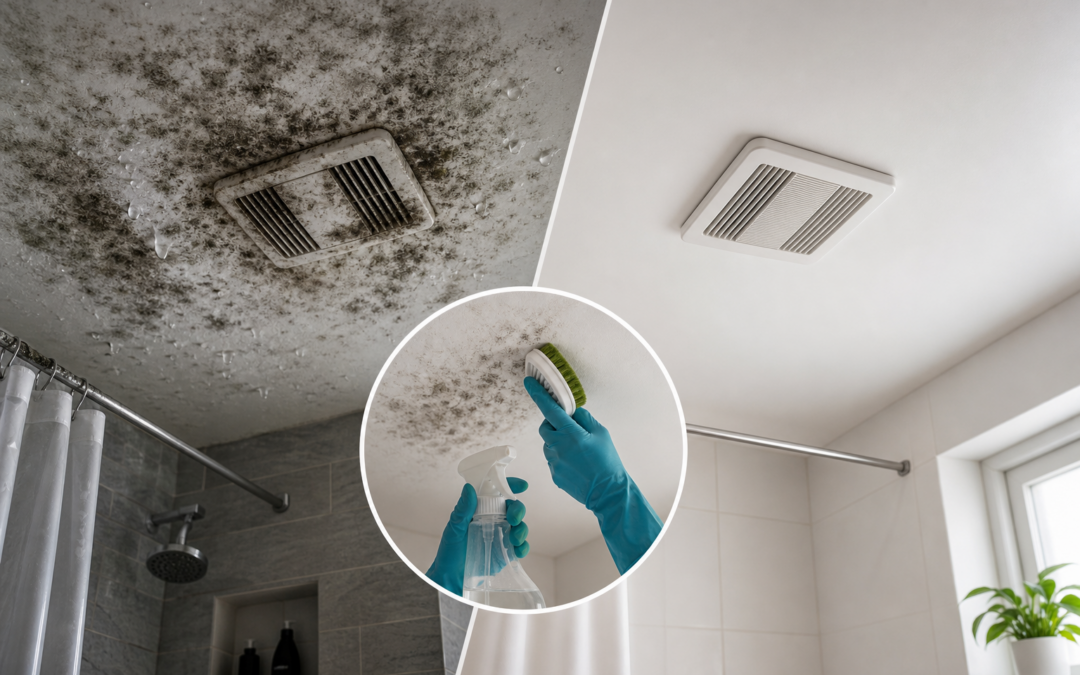
- Why Bathroom Ceilings Are a Prime Target for Mold
- Mold vs. Mildew: What You're Actually Looking At
- How to Assess the Scope Before You Do Anything
- DIY Removal: When It's Appropriate and How to Do It
- When to Call a Professional
- Preventing Bathroom Ceiling Mold from Coming Back
- Mold in the Bathroom Ceiling and Real Estate
- Frequently Asked Questions
Mold on a bathroom ceiling is one of the most common household problems in South Florida — and it rarely announces itself until the patch is already spreading. You might notice a faint dark stain near the exhaust vent, a cluster of black spots above the shower, or a musty smell that won't go away no matter how often you clean. Whatever tipped you off, the cause and the fix tend to follow a predictable pattern. Understanding both will help you decide whether this is a weekend project or a call to a professional.
Why Bathroom Ceilings Are a Prime Target for Mold
Bathrooms generate more moisture per square foot than almost any other room in the house. Every hot shower sends warm, humid air rising toward the ceiling. If that air has nowhere to go, it condenses on the cooler surface overhead — and standing moisture is exactly what mold needs to get established.
A few specific conditions make the ceiling more vulnerable than the walls or floor:
Poor ventilation. An undersized exhaust fan, a fan that vents into the attic instead of outside, or one that simply isn't used consistently leaves moisture trapped at ceiling level. Heat rises, vapor rises with it, and the ceiling is always the last surface to dry.
Roof or plumbing leaks above. Bathroom ceiling mold doesn't always start in the bathroom itself. A slow drip from a pipe in the floor above, a compromised roof membrane, or a failing wax ring on an upstairs toilet can saturate drywall from the top down. By the time you see discoloration on the ceiling surface, the material above it may already be heavily colonized.
Inadequate insulation. In South Florida's climate, the temperature gap between a cool air-conditioned bathroom and a hot attic above creates a condensation zone right at the ceiling. Without proper insulation, that surface stays damp for hours after every shower.
Drywall as a substrate. Standard drywall is paper-faced gypsum — both porous, both moisture-retaining. Mold can grow inside the material, not just on the surface, which is why wiping down a stain doesn't always solve anything.
Mold vs. Mildew: What You’re Actually Looking At
These words get used interchangeably, but the distinction matters when you're deciding how to respond.
Mildew is a surface-level fungal growth — typically flat, powdery, and gray or white. It sits on top of a surface and can usually be scrubbed away with a household cleaner. It's common on grout and tile.
Mold goes deeper. It can be black, green, brown, or even orange, with a fuzzy or slimy texture, and it penetrates porous materials. On a painted ceiling, what looks like a surface stain may have roots extending into the drywall behind it. If the stain comes back within a week or two of cleaning, you're dealing with mold, not mildew.
Black mold on a bathroom ceiling gets particular attention because certain species that appear black — like Stachybotrys chartarum — are associated with more serious health concerns. Identifying the exact species requires air or surface sampling by a professional. A visual inspection won't tell you what you're actually dealing with.
How to Assess the Scope Before You Do Anything
Before reaching for bleach, take a few minutes to understand what you're working with.
Check the size. A patch smaller than about ten square feet on a non-porous surface is generally considered manageable for a careful DIY approach. Anything larger — or any growth on drywall, insulation, or wood framing — warrants a professional assessment.
Press gently on the drywall. If the ceiling feels soft, spongy, or crumbles slightly under pressure, the material is compromised. Cleaning the surface won't help at that point; the drywall needs to come out.
Find the moisture source. Cleaning mold without fixing what's feeding it is pointless. Check whether the exhaust fan works and vents to the exterior. Look for water stains that suggest a leak from above. If you can access the attic, inspect the insulation and sheathing directly above the bathroom.
Consider the age of the stain. A fresh stain following a single plumbing leak is a different situation than a recurring pattern that suggests ongoing moisture intrusion.
DIY Removal: When It’s Appropriate and How to Do It
If the affected area is small, the ceiling material is intact, and you've confirmed the moisture source is something you can control, here's a practical approach.
What you’ll need
- N95 respirator or better
- Safety glasses
- Rubber gloves
- A spray bottle
- Cleaning solution (see below)
- Old rags or disposable cloths
- A plastic drop cloth for the floor
Cleaning solutions that work
A diluted bleach solution — roughly one cup of bleach per gallon of water — is effective on non-porous painted surfaces. Apply it, let it sit for ten to fifteen minutes, then scrub and rinse. Ventilate the room well, and never mix bleach with ammonia-based cleaners.
Hydrogen peroxide at three percent concentration is a less harsh alternative that works on painted drywall surfaces. Apply it, wait ten minutes, scrub, and wipe dry.
White vinegar applied undiluted is a lower-strength option often cited for mildew, but it's less effective against established mold colonies.
Whichever solution you use, the goal is to kill the surface growth and remove it completely. Painting over mold without removing it first only hides the problem — temporarily.
After cleaning
Dry the ceiling thoroughly with a fan or dehumidifier, then monitor the spot over the next two weeks. If growth returns, the mold has roots deeper in the material than surface treatment can reach, and the drywall likely needs to be removed and replaced.
When to Call a Professional
Some situations are clear calls for professional remediation:
- The affected area is larger than ten square feet
- The ceiling is soft, sagging, or structurally compromised
- You suspect a hidden leak from above
- Mold keeps returning after cleaning
- There are visible signs of mold in multiple rooms or on multiple surfaces
- Anyone in the household has respiratory conditions, allergies, or immune concerns
Professional remediation goes well beyond cleaning. It involves containment to prevent spores from spreading, removal of compromised materials, treatment of structural surfaces, and verification that the area is clear before any reconstruction begins. A specialist can also identify whether the source is a plumbing issue, an HVAC problem, or a building envelope failure — causes that surface cleaning will never fix.
In South Florida, the combination of high humidity, frequent rain, and year-round warmth means bathroom mold tends to be more aggressive and recurrent than in drier climates. A problem that looks minor can spread quickly if the underlying moisture source isn't resolved.
Royal Mold Specialist has handled mold remediation across more than 20 cities in Broward, Miami-Dade, and Palm Beach Counties for over 12 years. The team covers everything from initial inspection through full remediation and sanitizing — so you're working with dedicated mold specialists, not a generalist restoration company that handles mold on the side.
Preventing Bathroom Ceiling Mold from Coming Back
Fixing the current problem is only half the work. Keeping it from returning comes down to consistent moisture control.
Run the exhaust fan correctly. Turn it on before you start the shower and leave it running for at least 20 to 30 minutes after you finish. If your fan is more than ten years old or sounds labored, it may not be moving enough air to matter. Confirm it vents to the exterior, not into the attic.
Upgrade the fan if needed. A bathroom exhaust fan should be sized for the room's square footage — a fan rated for 50 CFM can be inadequate in a large master bathroom. Humidity-sensing fans that run automatically until moisture drops below a set threshold are a practical upgrade in South Florida homes.
Keep surfaces dry. After a shower, use a squeegee on the walls and leave the door or window open if possible. The faster surfaces dry, the less opportunity mold has to take hold.
Inspect the ceiling regularly. Check the area near the exhaust fan and above the shower every few months. Catching a small stain early is far easier than dealing with an established colony.
Address leaks immediately. Any water intrusion from above — a roof leak, a plumbing drip, or condensation from an HVAC line — needs to be fixed and the affected area dried within 24 to 48 hours. Mold can begin colonizing wet drywall within that window.
Control indoor humidity. In South Florida, keeping indoor relative humidity below 60 percent significantly slows mold growth. A whole-home dehumidifier or properly maintained air conditioning helps maintain that level year-round.
Mold in the Bathroom Ceiling and Real Estate
If you're buying or selling a home in South Florida, bathroom ceiling mold is a common inspection finding. For sellers, undisclosed mold can create legal liability and derail a deal at closing. For buyers, a mold stain on a bathroom ceiling should prompt questions about the moisture source — not just the visible growth.
A professional mold inspection before listing or before finalizing a purchase gives you documented evidence of the property's condition. That documentation matters whether you're negotiating a price reduction or confirming that remediation was completed correctly.
Frequently Asked Questions
What causes mold on a bathroom ceiling specifically?
The main cause is trapped moisture from showers and baths with nowhere to escape. Poor ventilation, an undersized exhaust fan, or a fan that vents into the attic rather than outside keeps humidity at ceiling level long enough for mold to grow. Leaks from plumbing or the roof above can also introduce moisture from the top side of the ceiling.
Is mold on a bathroom ceiling dangerous?
It depends on the species and the level of exposure. Many common bathroom molds cause respiratory irritation, allergy symptoms, and eye or skin irritation — particularly in people who are already sensitive. Certain species associated with prolonged water damage can be more serious. If anyone in the household is experiencing unexplained respiratory symptoms, a professional inspection and air quality test is worth pursuing.
Can I remove bathroom ceiling mold myself?
Small patches on intact, non-porous painted surfaces can often be cleaned with a diluted bleach solution and proper protective gear. If the area is larger than about ten square feet, the drywall feels soft, or the mold keeps coming back, DIY cleaning is unlikely to solve the problem — and professional remediation is the right step.
How do I know if the mold is just on the surface or has gone deeper?
Surface mold wipes away cleanly and doesn't return within a week or two. If the stain comes back quickly after cleaning, or if the ceiling material feels soft or crumbles under light pressure, the mold has penetrated the drywall. At that point, the material likely needs to be removed and replaced rather than cleaned.
What's the difference between mold and mildew on a ceiling?
Mildew is a flat, powdery surface growth — usually gray or white — that sits on top of a surface and can be scrubbed away. Mold is typically darker, has a fuzzy or slimy texture, and penetrates porous materials. On a painted drywall ceiling, recurring dark stains are almost always mold rather than mildew.
How long does professional bathroom ceiling mold remediation take?
It depends on the extent of the growth and whether any structural materials need to be removed and replaced. A contained bathroom ceiling job is often completed in one to two days, but if the moisture source involves a roof leak or significant plumbing damage, the full scope may take longer.
How do I stop bathroom ceiling mold from coming back after treatment?
Consistent ventilation is the most important factor. Run the exhaust fan during and for at least 20 to 30 minutes after every shower. Keep indoor humidity below 60 percent, address any leaks immediately, and inspect the ceiling periodically so you catch new growth early before it spreads.
Bathroom ceiling mold is fixable — but it rarely stays fixed unless you address the moisture source. If you're in South Florida and the problem is beyond a small surface stain, a professional assessment will tell you exactly what you're dealing with and what it takes to clear it for good. You can book an appointment directly at royalmoldfl.com.