
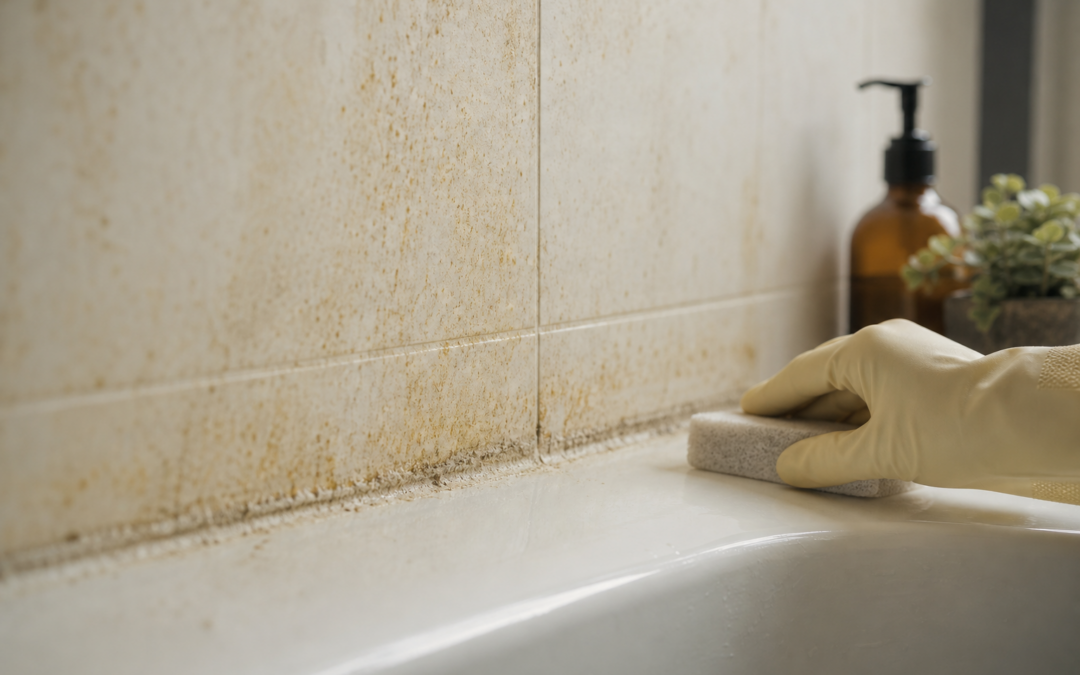
Bathroom yellow mold is usually caused by lingering moisture and poor ventilation, which let species like Aspergillus grow on walls and ceilings. First confirm it is mold and not paint surfactant drips. Then wear protective gear, clean with diluted bleach or vinegar, dry the area fully, and cut humidity below 60% so it does not return.
This guide covers a narrower problem than general ceiling mold: yellow growth or yellow drips in your bathroom. If your patch is overhead, the guide on bathroom ceiling mold goes deeper on that case. Here you'll learn how to tell what you're looking at, how to clear it safely, and how to keep it from coming back.
Why Are There Yellow Drips on My Bathroom Walls?
Not every yellow patch is mold. Yellow, sticky streaks that run down a freshly painted bathroom wall are often paint surfactant leaching, a cosmetic paint problem rather than a living growth.
Surfactants are the soapy compounds in paint that help it spread and stay mixed. In a steamy room, moisture can pull them to the surface of cured paint, where they dry as a glossy, yellowish or amber film. It tends to appear in the first weeks after painting, or after a few humid days, and it often smells faintly sweet or soapy rather than musty.
You can check in under a minute with a simple wipe test:
- Wipe it with a damp white cloth. Surfactant residue usually wipes away cleanly and leaves the paint underneath intact.
- Look at the shape. Drips and vertical streaks that follow gravity point to surfactant. Fuzzy, spotty, or powdery patches that spread outward point to mold.
- Smell the area. A musty, earthy odor points to mold. A soapy or sweet smell points to paint.
- Check for return. If the yellow reappears in the same spot after a thorough wipe-down and drying, treat it as possible mold and keep reading.
If it wipes off and stays gone, you had a paint issue, and better airflow will usually stop it. If the stain smears, spreads, or comes back, assume mold until proven otherwise.
What Is Bathroom Yellow Mold and What Does Early Stage Growth Look Like?
Yellow mold is a general name for several fungi that grow as yellow, yellow-green, or mustard-colored patches on damp surfaces. The most common culprit indoors is Aspergillus, a mold genus that feeds on drywall paper, caulk, grout residue, and soap film. A slime mold can also show up as a yellow, jelly-like smear in very wet spots, though it behaves differently from true mold.
By the time you see a distinct yellow patch, the colony has already established itself. Early stage yellow mold in a house usually looks like one of these:
- Faint discoloration. A pale yellow or greenish-yellow tint, often mistaken for a water stain or aged paint.
- Small speckles. Tiny dots clustered near corners, the shower ceiling, or the top of tile.
- Powdery or fuzzy texture. A dusty surface that smudges when you touch it.
- Musty odor. A smell that lingers after the fan has run.
Check the places steam collects first: the ceiling above the shower, corners where walls meet the ceiling, behind the door, and around the exhaust fan. If the growth sits overhead, the same moisture patterns apply, and the mold on ceiling guide explains what to look for above your head.
To keep it from taking hold again, control indoor humidity. Keeping it below 60% helps prevent yellow molds like Aspergillus from growing.
What Causes Yellow Mold to Grow in a Bathroom?
Yellow mold grows where moisture lingers and air doesn't move. A bathroom supplies both every time someone showers, and in South Florida's humid climate the room struggles to dry out between uses.
These are the main causes to look for:
- Heavy shower use. Research published through Data Archiving and Networked Services found that the risk of bathroom mold increases significantly when a bathroom is used for more than 14 showers per week. A busy household crosses that line easily.
- A weak or neglected exhaust fan. A fan that is clogged, undersized, or never switched on leaves steam in the room. The same study found that ventilation fan boxes should be maintained at least every 5 years to minimize the risk of fungal growth.
- Short fan run times. Turning the fan off the moment you step out leaves humid air behind. Steam needs time to clear.
- Hidden moisture sources. A slow leak behind the wall, a failing caulk line, or a drip from the shower valve keeps drywall damp from the inside.
- Wet surfaces left alone. Damp towels, soap film, and standing water on shower curbs feed growth.
Paint matters too. Mold-resistant paint, sold as mildew-resistant or bathroom-formulated, adds a layer of protection on walls and ceilings. It does not fix a moisture problem, so treat it as a backup to ventilation, not a replacement.
Is Bathroom Yellow Mold Dangerous? Symptoms to Watch For
Yellow mold in a bathroom can irritate your airways and trigger allergies, and the risk is higher for some people than others. For most healthy adults, a small patch is more likely to cause nuisance symptoms than serious illness. Is yellow mold on a wall dangerous? The answer depends on how much is growing, how long it has been there, and who lives in the home.
The symptoms most often tied to indoor mold exposure include:
- Respiratory irritation. Coughing, wheezing, a tight chest, or a scratchy throat that eases when you leave the room.
- Allergic reactions. Sneezing, a runny or stuffy nose, itchy or watery eyes, and skin irritation.
- Worsening asthma. More frequent flare-ups for people who already have asthma.
- Lingering headaches or fatigue. These are less specific, so look for a pattern tied to time spent in the bathroom or the nearby rooms.
Infants, older adults, people with asthma or allergies, and anyone with a weakened immune system should treat even a small patch seriously and keep away from it during cleanup.
Symptoms alone cannot confirm mold, and no reliable figure exists for how often yellow mold makes people sick, so skip any source that promises one. Watch the pattern instead. If symptoms ease when you are away from home and return when you come back, a hidden moisture problem is worth investigating.
Timing matters. A patch you catch early and clean that week is a very different situation from yellow mold left to spread for months behind a vanity or above the shower.
How to Get Rid of Bathroom Yellow Mold, Step by Step
You can clear a small patch of bathroom yellow mold yourself with basic supplies and a careful sequence. This applies only once you have confirmed it is mold and not paint surfactant drips, and only when the affected area is small. If it covers more than 10 square feet, skip ahead to the next section.
Follow these steps in order:
- Put on protective gear. Wear a respirator with HEPA cartridges (a HEPA filter traps extremely fine particles, including mold spores), gloves, and goggles. [S1]
- Seal off the bathroom. Use plastic sheeting and tape to separate the room from the rest of the house so spores don't travel. [S2]
- Apply your cleaning solution. Use one part bleach to ten parts water, or undiluted vinegar, on the moldy surface. [S3] Pick one or the other. Never mix bleach and vinegar, because the combination releases harmful fumes.
- Scrub from the top down. Use a non-abrasive sponge or brush and work from the top of the wall or ceiling downward, so loosened mold doesn't drip onto areas you've already cleaned. [S4]
- Rinse the area. Wipe with warm water and a clean towel to remove leftover cleaning residue. [S5]
- Dry it completely and vacuum. Dry the surface thoroughly, then go over it with a HEPA vacuum to capture dead mold fragments and spores. [S6]
A few practical notes. Keep the fan running or a window open during cleanup, but leave the plastic seal in place between the bathroom and the rest of the house. Bag the sponge, cloths, and sheeting, and dispose of them outside the home.
Porous materials such as unsealed drywall, ceiling tile, and soaked caulk often can't be fully cleaned, because mold grows into them rather than sitting on top. If you scrub and the stain returns, the growth runs deeper than the surface.
Cleaning kills what you can see. It does not fix the moisture source. Without that fix, the yellow comes back, which is why prevention matters as much as removal.
When Is It Time to Call a Mold Professional?
Call a professional when the affected area is larger than about 10 square feet or when the mold keeps coming back after you clean it. The EPA suggests that homeowners can typically manage mold cleanup themselves if the affected area is less than 10 square feet. Treat that as a guideline for what you can reasonably handle, not a legal rule.
Beyond size, these signs mean the job has moved past DIY:
- Recurring growth. The yellow returns within weeks of a thorough cleaning, which points to a hidden moisture source.
- Water damage. Soft, bubbling, or sagging drywall, a ceiling stain that keeps growing, or a leak you can't locate.
- Musty odor with no visible mold. Growth may be inside the wall cavity or above the ceiling.
- Health concerns. Someone in the home has asthma, a weakened immune system, or symptoms that track with time spent there.
- Sewage or contaminated water. Any backup calls for a professional, regardless of how much mold you can see.
A professional inspection finds the moisture source, checks the areas you can't see, and sets a scope of work. That scope lists the specific areas, materials, and steps the job covers. A surface wipe-down can't locate hidden moisture or verify the problem is solved. If you live in Palm Beach County, mold inspections in Delray Beach, FL can show you what is behind the wall before you decide how to proceed. Royal Mold Specialist is a mold inspection and remediation company that serves homeowners across South Florida, from the first inspection through full removal, and you can learn more about the company on its homepage.
What does it cost? Costs vary with the size of the affected area and the cause behind it. A small, contained patch is a different job from mold that followed a leak through a wall. An inspection turns that general range into a number for your home.
If the mold followed a flood, a roof leak, or a storm, read the guide on how to get rid of mold after water damage in Florida before you start cleaning.
How to Prevent Yellow Mold From Coming Back
Prevention comes down to moving steam out and keeping the room dry. This checklist covers the habits and maintenance that do the most, and each item targets a cause from earlier in this guide.
- Run the exhaust fan every time. Turn it on before you shower and leave it running for 20 to 30 minutes afterward. If you have no fan, open a window.
- Keep humidity in check. A small hygrometer (a humidity gauge) shows you where the room sits, so you can see whether your fan and habits are working.
- Service the fan box. Have the ventilation fan box maintained at least every 5 years to minimize the risk of fungal growth. Clean the grille each season so it can move air.
- Add a dehumidifier. It pulls moisture out of the air so spores have less to land on. It helps most in humid climates like South Florida, where the bathroom can stay damp between uses.
- Space out shower use. If your household takes more than 14 showers a week in one bathroom, the mold risk climbs. Use a second bathroom when you can.
- Wipe wet surfaces. A quick pass with a squeegee or towel on tile, glass, and the shower curb removes the water mold needs.
- Fix leaks fast. A dripping valve or cracked caulk line feeds growth from inside the wall.
- Repaint with mold-resistant paint. Choose a mildew-resistant or bathroom-formulated product. It backs up ventilation but does not replace it.
South Florida's storm season runs June through November, and wet weather can push indoor humidity past the safe line. Check your hygrometer (a small gauge that reads humidity) more often during those months. If water has already entered your home, follow the steps in the water damage guide for Florida first.
FAQs
What kills mold instantly in the bathroom?
Not instantly. A mix of one part bleach to ten parts water, or undiluted vinegar, kills surface mold on contact, but you still need to scrub, rinse, and dry. Never mix the two.
What are signs of mold sickness?
Common signs include coughing, wheezing, sneezing, a stuffy nose, itchy eyes, and skin irritation. Symptoms that ease when you leave home and return when you come back point to a moisture problem. A doctor can rule out other causes.
How much does professional mold remediation cost?
Costs vary with the size of the affected area and the cause behind it. A small, contained patch is a different job from mold that followed a leak through a wall. An inspection gives you a real number for your home.
Can yellow mold in the bathroom make me sick?
It can irritate your airways and trigger allergies, especially if you have asthma or a weakened immune system. Most healthy adults see mild symptoms from a small patch. Clean it early and fix the moisture source.
Is yellow mold on a wall dangerous to leave for a few weeks?
Waiting lets the colony spread into porous materials like drywall, where scrubbing no longer reaches it. A small patch left for weeks can become a larger job. Clean it or have it inspected now.
Does a bathroom fan really prevent mold?
Yes, if it runs long enough and moves air properly. A clogged fan leaves steam behind, and so does one switched off too soon. Run it 20 to 30 minutes after each shower and clean it each season.
Conclusion
Most yellow patches in a bathroom come down to one of two things: paint surfactant that wipes away, or mold fed by steam and weak ventilation. Use the wipe test to tell which you have. Clean small mold patches with the right gear and a dry finish, and treat the moisture source as the real fix.
Start by checking your humidity and your exhaust fan this week. If the patch is larger than 10 square feet, keeps returning, or sits over water damage, have it inspected before you scrub again.