
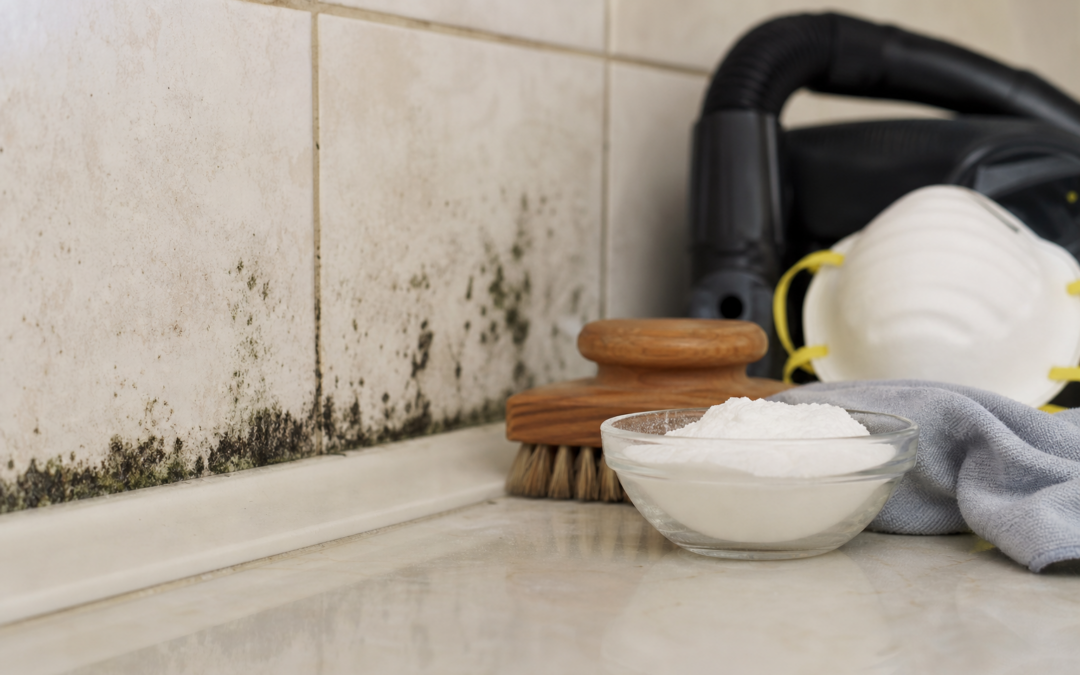
Baking soda mold removal can clean light surface mold and slow regrowth, but it mostly stalls mold rather than killing it. Lab work needed a strong concentration to stop growth completely. It works best on small, hard, nonporous areas under 10 square feet. Porous materials like drywall, insulation, and carpet usually need professional remediation.
You found mold, and you're reaching for the box in your pantry. That's a reasonable first move for a small spot on a tile or a bathroom vanity. Baking soda is cheap, mild, and already in your house.
This guide covers what baking soda does to mold and what it doesn't. You'll get the exact steps for hard surfaces and walls, and you'll see where it falls short on wood, carpet, and clothes. You'll also learn why mixing it with vinegar backfires and where DIY should stop. In South Florida, where humidity keeps moisture in the air most of the year, knowing that line matters.
Does Baking Soda Kill Mold or Just Stall It?
Baking soda cleans and inhibits mold more than it kills it. That distinction matters for your wall.
A fungistatic product stalls growth. The mold stays alive but stops spreading while conditions are poor for it. A fungicidal product kills mold outright. Baking soda acts mostly like the first kind. It makes a surface less friendly to mold, and its mild grit helps you scrub stains off. It doesn't reliably wipe out a colony.
The lab numbers show why. A 2023 study published in Frontiers in Microbiology found that 12.0 g/L of sodium bicarbonate (baking soda's chemical name) was required to completely stop the growth of Aspergillus niger in a lab setting. That's the concentration at which growth stopped entirely, not a weaker mix that merely slowed it.
You can translate that into kitchen terms. One teaspoon of baking soda weighs about 4.6 g, according to USDA FoodData Central. At that weight, the lab concentration works out to roughly 2.6 teaspoons per liter of water. A weaker mix than that may only slow growth.
Treat the figure as a benchmark, not a promise. It comes from one mold species under controlled lab conditions. Your bathroom ceiling has different species, different materials, and a moisture problem the lab didn't have. Baking soda also doesn't fix that moisture. If the water keeps coming, the mold comes back.
When Is Baking Soda Mold Removal Safe to Try?
Baking soda is a reasonable DIY option when the mold is small, sits on a hard nonporous surface, and you've found the moisture source. Check three things before you start: how big the area is, what the surface is made of, and how long it has been wet.
Size. The EPA recommends that homeowners only attempt DIY mold removal if the affected area is smaller than 10 square feet. That's roughly a 3-by-3-foot patch. Anything larger moves into professional territory.
Mold moves fast. Indoor mold can begin colonizing surfaces as quickly as 48 hours after moisture is introduced. By the time you see a dark patch, the growth behind it has usually been going for a while. In South Florida's humid climate, a slow leak can feed it indefinitely.
The table below sorts common situations by whether baking soda is a fair first attempt.
| Situation | DIY with baking soda? | Why |
|---|---|---|
| Under 10 sq ft on tile, glass, sealed countertops | Yes | Hard, nonporous surface you can scrub and dry fully |
| Under 10 sq ft on painted drywall, surface only | Maybe | Works on surface growth only if the wall stayed dry behind it |
| Over 10 sq ft on any surface | No | Past the EPA's 10 square feet DIY limit |
| Mold on unfinished wood, carpet, or insulation | Limited | Porous materials hold mold below the surface |
| Mold keeps returning after cleaning | No | Points to a hidden moisture source |
| Water damage or sewage backup involved | No | Needs professional cleanup and drying |
If your situation lands in the "No" rows, skip to the section on when to call a professional. If it lands in "Yes," keep reading.
How to Clean Mold Without Spreading Spores
You clean mold without spreading spores by controlling dust and air movement before you touch anything. Spores are the microscopic particles mold uses to reproduce. Scrubbing, dry brushing, and blowing air across a moldy surface all launch them into the room.
Set up first. Work through these points before any scrubbing starts:
- Protective gear. Wear an N95 respirator (a mask rated to filter out most airborne particles), rubber gloves, and non-vented safety goggles. A paper dust mask or a cloth mask won't do the job.
- Air movement. Turn off your HVAC system and fans in the work area so spores don't travel through ducts. Close interior doors. Open a window only if it doesn't blow air across the moldy surface.
- Dry brushing. Don't dry-scrub or sweep mold. Keep the surface damp while you work so spores stay on it.
- HEPA vacuuming. A true HEPA-filtered vacuum captures minute mold particles without blowing them back into the room through the exhaust. HEPA stands for high-efficiency particulate air filter. Use it only after scrubbing, never on wet mold, and note that a standard vacuum can spread spores.
- Bagging waste. Seal used sponges, rags, and loose debris in a plastic bag before carrying them out through the house.
Keep other people out of the area. Elderly adults, infants, and anyone with asthma, allergies, or a weakened immune system face higher respiratory risk from disturbed spores. If someone in your home falls into one of those groups, that's a strong reason to hand the job to a professional rather than do it yourself.
Step-by-Step Baking Soda Mold Removal on Hard Surfaces and Walls
Baking soda mold removal on a hard surface takes seven steps: fix the moisture, gear up, mix, scrub, rinse, re-spray if you want, and dry the area completely. The same steps work on walls when the growth is small and sits on the paint or tile surface. Gather a spray bottle, a stiff nylon brush or non-scratch sponge, clean cloths, towels, and a fan before you start.
- Fix the moisture source first. Find and repair what is feeding the mold: a dripping pipe, a failed window seal, a leaking AC drain line, a bathroom with no airflow. Skip this and the mold returns, whatever you scrub with.
- Put on your gear. Wear the N95 respirator, rubber gloves, and non-vented goggles from the setup above.
- Mix your solution or paste. For a spray, use at least one tablespoon of baking soda per cup of water. For a paste, mix equal parts baking soda and water until it holds on a brush. A stronger mix fits the lab finding better than a weak one, and one tablespoon is the minimum, not the target. Shake the bottle until the powder dissolves.
- Apply and scrub. Spray or spread the mixture over the moldy area and the clean margin around it. Scrub with the nylon brush or non-scratch sponge. Keep the surface damp as you work so spores stay put.
- Rinse and wipe. Rinse with clean water and wipe away the gray sludge with a damp cloth. Seal the cloth in a bag when you finish.
- Re-spray if you want to. Optionally, apply one more light spray of the solution and let it air-dry. That leaves a thin baking soda film that makes the surface less friendly to regrowth. This step stalls mold. It doesn't kill what survived.
- Dry everything. Use towels and fans to dry the area completely. Leftover dampness gives mold what it needs to restart, and in South Florida's humidity, a surface can stay damp for hours without a fan.
Check the spot over the next few weeks. If the stain reappears, you have a moisture problem the baking soda can't solve.
What Reddit and DIY Forums Claim
Search "baking soda mold removal reddit" and you'll find plenty of threads where someone says a baking soda scrub cleared a bathroom ceiling or a window sill. Many of those reports are credible for what they describe: light surface growth on hard surfaces, cleaned and dried well. But a lifted stain isn't the same as dead mold. A clean-looking surface can still carry living growth, especially on porous material.
Forum posts don't tell you the mold species, moisture conditions, or whether the problem returned six months later. Treat them as anecdotes, not evidence.
For a longer walkthrough of the general process, see these steps for basic mold cleanup.
Baking Soda Mold Removal From Wood, Carpet and Clothes
Baking soda gets weaker as the material gets more porous. Wood, carpet, and fabric all absorb moisture, so mold grows into them instead of sitting on top. Scrubbing cleans the surface layer but can't reach what lies underneath.
Wood
Baking soda mold removal on wood depends on whether the wood is sealed. On a sealed or painted surface, such as a finished table or trim, the paste-and-scrub method works much like it does on a wall. On unfinished or deeply stained wood, mold has already worked into the grain. Baking soda may lighten the surface, but the growth underneath stays. Keep the wood damp only briefly, because added water can feed what you left behind. If framing, subflooring, or a deck shows dark staining or soft spots, treat it as a structural moisture problem, not a cleaning job.
Carpet
Does baking soda kill mold in carpet? Not reliably. Carpet fibers, backing, and padding hold moisture, so mold typically spreads below what you can see. Sprinkling baking soda on carpet can help with odor and surface dampness, and a HEPA vacuum (one with a filter that traps microscopic particles) can pick up loose material afterward. It won't reach mold in the padding. Mold on carpet bigger than a small spot, or carpet that stayed wet for a couple of days, usually means the carpet and pad need to come out.
Clothes
Does baking soda kill mold on clothes? It helps, but it isn't a guaranteed kill. Adding a half cup of baking soda to a wash cycle cuts odor and lifts light mildew. Wash on the hottest setting the fabric allows, and dry the clothes fully, preferably in sunlight or a hot dryer. Mold stains that survive a wash or two have usually set into the fibers. For items you can't replace, a professional laundry or textile restoration service is the safer call.
Baking Soda and Vinegar: Should You Mix Them for Mold?
No. Mixing baking soda and vinegar in one bottle works against you. Baking soda is a base and vinegar is an acid, so they react and cancel each other out. The fizz looks active, but what's left is mostly salty water with little of either one's cleaning power.
Use them one after the other instead. Scrub with the baking soda solution, rinse, then spray undiluted white vinegar on the surface and let it dry. Vendor-reported testing puts undiluted vinegar at killing about 82 percent of common mold species. That figure applies to vinegar used on its own, not to the baking soda and vinegar mix, and not to baking soda. Skip vinegar on natural stone like marble, where the acid can etch the surface.
Bleach is a different tool. It can lighten stains on hard, nonporous surfaces, but it does little for mold in porous materials. Never combine it with vinegar or ammonia, because the fumes are toxic.x
When to Call a Mold Remediation Professional
Call a professional when the problem has outgrown a spray bottle. Stop DIY and book an inspection if any of these apply:
- The affected area is large. A patch bigger than a 3-by-3-foot square is beyond what you should handle yourself.
- Mold keeps coming back. Repeat growth after a careful cleaning points to a hidden moisture source.
- Porous materials are affected. Drywall, insulation, carpet padding, and ceiling tiles hold mold below the surface.
- Water damage or sewage is involved. Standing water gives mold time to take hold, and sewage adds contamination risks beyond mold.
- Someone in your home is vulnerable. Infants, older adults, and people with respiratory conditions shouldn't be near disturbed spores.
Royal Mold Specialist is a mold remediation company that inspects properties, finds moisture sources, and removes mold for homeowners and businesses across South Florida. You can read how mold remediation works, from containment through post-remediation verification, before you book.
FAQs
Does bleach kill mold permanently?
No. Bleach can lighten stains and disinfect hard, nonporous surfaces, but it doesn't reach mold rooted in porous materials. If moisture stays, mold returns. Never mix bleach with vinegar or ammonia, because the fumes are toxic.
What removes mildew stains from grout and fabric?
On grout, scrub with a baking soda paste and a stiff nylon brush, rinse, and dry fully. On fabric, wash on the hottest setting the material allows, add baking soda to the cycle, and dry in a hot dryer or direct sun. Stains that survive a few washes have usually set into the fibers.
Does boiling water kill mold on metal?
Boiling water can kill surface mold on metal and glass, but only while it's hot, and it won't stop regrowth. Wipe the item, dry it completely, and keep it away from damp spots. Be careful with scalding water, and don't pour it on cold glass.
How quickly does mold spread after a leak?
Indoor mold can begin colonizing surfaces as quickly as 48 hours after moisture is introduced. In South Florida's humidity, a wet area that isn't dried quickly gives mold an easy start. Dry the area with towels and fans right away.
Is it safe for elderly people or infants to clean mold themselves?
No. Disturbed spores can irritate the lungs, and infants, older adults, and people with asthma or weak immune systems face higher risk. Keep them out of the work area, and consider hiring a professional for the cleanup.
Is baking soda better than commercial mold killers for preventing regrowth?
There's no reliable research comparing baking soda to commercial products on how often mold returns, so no honest answer exists. Baking soda leaves a mild film that makes surfaces less friendly to growth. Controlling moisture matters more than any cleaner you pick.
Conclusion
Baking soda cleans light surface mold and can slow regrowth at a strong concentration, but it mostly stalls mold rather than killing it. It fits small areas on hard surfaces. On porous materials, large patches, or mold that keeps returning, it falls short.
Before you scrub, measure the affected area and find the moisture source. If the patch is under 10 square feet and the surface is hard, try the steps above. If it's larger, or the water source stays hidden, get it inspected before the mold spreads further.