
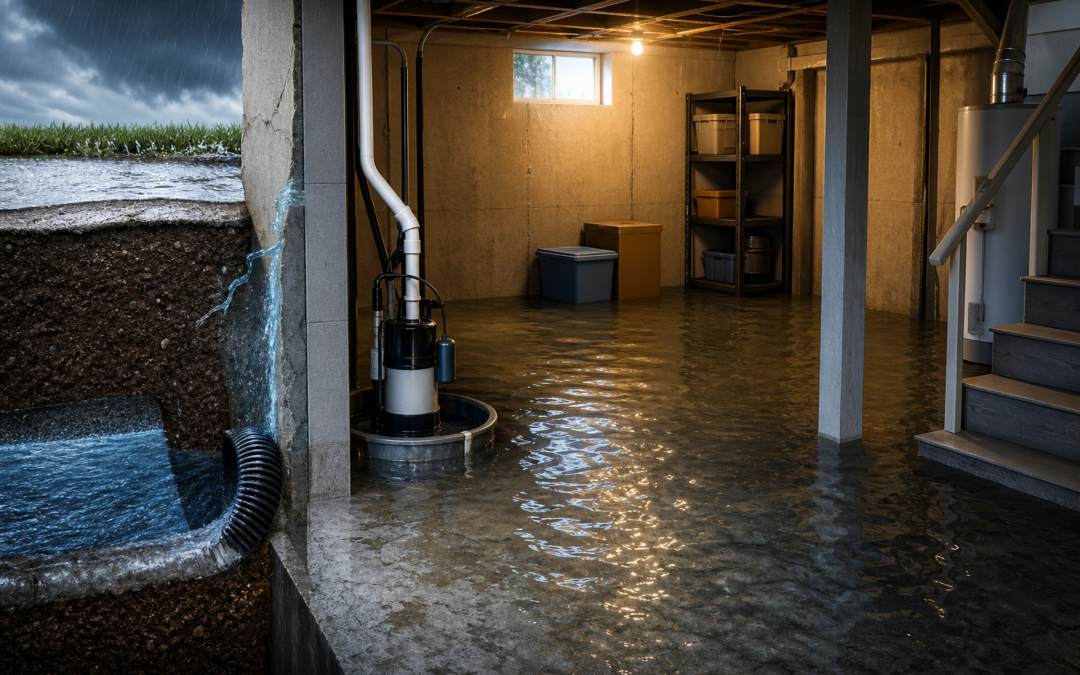
Water flooding in a basement demands a fast, ordered response: cut power and gas, then stop the water source. Remove standing water, dry the space within 48 hours to block mold, and document everything for insurance. Long-term, a sump pump, French drain, or backflow valve can prevent the next event entirely.
Basement flooding is not a rare edge case. It is one of the most common and costly home emergencies in the country, and in South Florida, where storm season runs June through November and the water table sits close to the surface, the risk is especially high. This guide walks through both the immediate response and the long-term fixes, in the order you need them.
What Causes Water Flooding in a Basement?
Knowing your flooding source is the first step toward fixing it. A sewer backup needs a completely different solution than groundwater seeping through a foundation wall. Treating the wrong cause wastes time and money.
The most common causes fall into a few categories:
- Surface water intrusion. Heavy rain overwhelms the soil around your foundation. Water follows the path of least resistance, pressing through cracks in concrete walls or the floor-wall joint. This is the most frequent cause after major storms.
- Sewer or drain backup. When municipal sewer lines get overloaded during heavy rain, wastewater can reverse direction and push back up through your floor drains or toilets. This type of flooding carries serious contamination risk.
- Sump pump failure. A sump pump that loses power, burns out, or clogs during a storm leaves accumulated groundwater with nowhere to go. Many failures happen during the exact conditions when the pump is needed most.
- Burst or leaking pipes. A pipe that freezes, corrodes, or fails under pressure can flood a basement quickly, independent of weather.
- Poor grading or gutter drainage. If your yard slopes toward the house or your downspouts discharge too close to the foundation, every rainstorm channels water directly against your walls.
Scale helps put this in context. Data from the Census Bureau indicates that 2.8 million homes in the U.S. experienced water leaking into their basements from exterior sources over a one-year period. An analysis by Price-Quotes Research Lab reported that basement flooding incidents increased by 35% between 2020 and 2025.
In South Florida specifically, sewer backups and surface flooding dominate. Flat terrain gives water almost no natural path away from structures. In the Midwest and Northeast, sump pump failure and groundwater seepage are more common culprits. Knowing your region's typical cause helps you pick the right prevention system.
How Much Water in a Basement Is Bad?
Any standing water in a basement causes damage faster than most homeowners expect. Even a small amount is enough to start a chain of problems.
According to FEMA's 2026 data, even a single inch of water in a home can result in approximately $25,000 in damage costs. That figure covers structural materials, flooring, drywall, mechanical systems, and personal property. It does not require a dramatic flood. One inch is enough to ruin a finished basement, saturate insulation, and create the moisture conditions mold needs to take hold.
The depth thresholds that matter most:
- Any standing water warrants immediate action. Waiting even a few hours extends the damage to more materials.
- Several inches will reach electrical outlets, appliances, and the lower sections of drywall. At this depth, the space is not safe to enter until power is confirmed off.
- A foot or more puts water heaters, HVAC systems, and structural framing at risk. Recovery at this level almost always requires professional equipment.
Water damage accounts for 23% of all claims filed under homeowners insurance policies. The average insurance claim for a flooded basement reached $35,000 in 2025, according to Price-Quotes Research Lab. That gap between the one-inch damage estimate and the average claim reflects how quickly secondary damage, mold remediation, and structural repairs compound the original problem.
Speed is the single most important variable. The longer water sits, the more materials absorb it, and the harder recovery becomes.
What to Do When Your Basement Floods: Step-by-Step
The moment you discover a flooded basement, the order of your actions matters as much as the actions themselves. Walking into a wet space with live electricity is dangerous. Moving too slowly on drying gives mold the window it needs to take hold.
Follow these steps in sequence:
-
Stay out until you assess the electrical risk. Before you step into standing water, check whether the water is near any outlets, appliances, or your electrical panel. If there is any contact or you are not certain, do not enter. Treat the space as live until proven otherwise.
-
Shut off power and gas from a dry location. Go to your main electrical panel and trip the breaker for the basement, or shut off the main breaker entirely if you cannot isolate the zone. If you smell gas, leave the house immediately and call your gas provider before doing anything else.
-
Find the water source and stop it. For a burst pipe, shut off the main water supply valve, usually located near the water meter. For surface flooding or sewer backup, you cannot stop the source the same way, but identifying it tells you what kind of contamination you are dealing with and which professional to call first.
-
Document everything before you touch it. Walk through the space and photograph or video every affected area, including waterlines on walls, damaged belongings, and any visible structural damage. Do this before moving furniture or starting cleanup. Your insurance claim depends on this record.
-
Contact your insurance provider and any needed professionals. Report the loss as soon as possible. Delays in notification can complicate claims. If the flooding involves sewage or a plumbing failure, call a plumber alongside your restoration contact.
-
Remove standing water once the space is electrically safe. Use a submersible utility pump for significant depth, a wet-dry vacuum for smaller volumes, or absorbent materials for shallow residual water. Work from the lowest point outward. Do not use a standard household vacuum.
-
Start drying immediately. Set up fans and a dehumidifier as soon as the water is removed. Mold can begin to grow within 24 to 48 hours of moisture exposure, so speed matters. Every hour past that threshold raises the risk.
-
Disinfect all affected surfaces. Once the space is dry, clean hard surfaces with a diluted bleach solution. Pay close attention to concrete floors, wall bases, and any framing that got wet. Sewage backups require stronger disinfection protocols and are generally not safe to handle without protective equipment.
Is Basement Flooding Covered by Homeowners Insurance?
Standard homeowners insurance usually does not cover basement flooding caused by external water sources. That gap catches many homeowners off guard after a storm.
Here is how coverage typically breaks down. If a pipe inside your home bursts and floods the basement, that is generally a covered peril under a standard policy. If a heavy rainstorm drives water through your foundation walls or your neighborhood's sewer system backs up into your floor drain, standard homeowners insurance typically excludes that damage entirely. Flood damage from external water sources requires a separate flood insurance policy, either through the National Flood Insurance Program (NFIP) or a private insurer.
Water damage accounts for 23% of all homeowners insurance claims, which reflects how common these events are. Yet the coverage gap remains wide. FEMA reported that flooding caused $8.8 billion in total damages in 2024. A large portion of that loss fell on homeowners without flood coverage.
The financial exposure is real. The average insurance claim for a flooded basement reached $35,000 in 2025. If your flooding source falls outside your policy's covered perils, that cost lands on you directly.
Most homeowners miss these three coverage details:
- Whether you have a sewer backup rider, which is a separate add-on that some insurers offer
- Whether your flood zone designation has changed, which affects both your risk and your eligibility for NFIP coverage
- What your policy says about mold remediation costs that result from a covered water loss
For a detailed breakdown of what Florida policies typically do and do not cover for mold and water damage, see Does Insurance Cover Mold Remediation in Florida Homes?
How to Prevent Basement Flooding During Heavy Rain
Prevention costs less than recovery. The right combination of systems can stop the next flood before it starts, and most work passively once installed.
These four solutions address the most common entry points for basement water:
-
Sump pump. A sump pump sits in a pit at the lowest point of your basement floor and automatically pumps accumulated groundwater out through a discharge pipe that routes water away from your foundation. It runs whenever water in the pit reaches a set level. The critical weakness: it depends on electricity. During the storms that cause the most flooding, power outages are common. A battery backup unit keeps the pump running when the grid goes down. The pit also needs periodic cleaning to prevent clogs. For South Florida homes with a high water table, a sump pump is often the single most effective defense.
-
Backflow or check valve. This device installs on your sewer or drain line and acts as a one-way gate. When water tries to reverse direction, the valve closes and blocks it. This is the right fix for sewer backup flooding, which is common in South Florida during heavy rain when municipal systems get overwhelmed. Debris can jam the valve open over time, so periodic inspection matters. Check your local building codes before installation, as permits may be required.
-
French drain or drain tile system. A French drain is a perforated pipe surrounded by gravel that intercepts groundwater before it reaches your foundation and redirects it away. It can be installed inside the basement beneath the floor slab or outside around the foundation perimeter. Interior installation is less disruptive. Exterior installation is more thorough but typically requires significant excavation. For homes where groundwater seepage through walls is the main problem, a French drain addresses the source directly.
-
Smart water leak detector. A leak detector monitors for moisture near appliances, sump pits, or drain lines and sends an alert to your phone the moment it detects water. Some models can automatically shut off the water supply when triggered. This does not stop flooding, but it cuts the response time dramatically, which directly limits damage. Place sensors near your water heater, sump pit, and any floor drains. Do not plug them into outlets controlled by a wall switch.
Two low-cost fixes address the most overlooked causes. First, regrade any soil that slopes toward your foundation so water drains away from the house. Second, extend your downspouts at least six feet from the foundation wall. Both changes reduce the volume of water pressing against your basement during heavy rain.
When to Call a Water Damage and Mold Remediation Professional
DIY cleanup handles some basement floods. It does not handle all of them, and misjudging which category you are in costs more than calling a professional early.
Call a professional immediately if any of these apply:
- The flooding involves sewage. Sewer backup water carries bacteria and pathogens that require protective equipment and commercial-grade disinfection. A bleach solution and a shop vac are not adequate.
- The water depth reached several inches or more, or the flooding affected finished walls, insulation, or structural framing. These materials absorb water in ways that fans and dehumidifiers cannot fully reverse.
- You cannot dry the space below 50% relative humidity within 48 hours. Mold can begin growing within 24 to 48 hours of moisture exposure, and once it takes hold inside walls or under flooring, surface cleaning does not reach it.
- You smell a musty odor within a day or two of the flood. By the time that smell appears, mold has already started growing somewhere you likely cannot see.
Professional water damage treatment uses industrial dehumidifiers, moisture meters, and thermal imaging to find water that has migrated into wall cavities and subfloor materials. That equipment matters because hidden moisture is where secondary damage originates.
Royal Mold Specialist is a mold and water damage remediation company that sends trained technicians to South Florida homes for inspection, water damage treatment, sewage backup cleanup, and full mold remediation. The company has operated for over 15 years and covers more than 20 cities across the region. For a full overview of what professional water damage restoration and mold remediation services involve, that page covers the complete scope of work.
If you are unsure whether your situation needs professional help, err toward calling. A brief inspection costs far less than remediating mold that spread through a wall cavity because the drying phase was incomplete.
Prices and plan limits verified as of October 2026.
FAQs
Is it normal for a basement to flood?
Basement flooding is common, but common does not mean harmless. Data from the Census Bureau indicates that 2.8 million homes in the U.S. experienced water leaking into their basements from exterior sources in a single year. Even minor recurring seepage causes cumulative structural damage and raises mold risk over time. If your basement floods more than once, find the moisture source and fix it.
What soaks up water in a basement?
For small volumes of residual water after pumping, old towels, mops, or a wet-dry vacuum work for the final layer. Baking soda or cat litter can pull moisture from damp concrete. For any meaningful depth of standing water, use a submersible utility pump. Absorbents alone are not adequate for anything beyond a thin film.
How long does it take for mold to grow after a basement flood?
Mold can begin growing within 24 to 48 hours of moisture exposure. That window applies to any wet porous material: drywall, wood framing, carpet, insulation. The clock starts the moment flooding occurs, not when you discover it. Get fans and a dehumidifier running as fast as possible after water removal.
Can I stay in my house if the basement is flooded?
It depends on the type and extent of flooding. Sewage backup poses a contamination risk, so limit exposure until the space is professionally cleaned. If the flooding came from clean water and your electrical system is confirmed safe, staying on the upper floors is generally possible. Any flooding that affects your HVAC system, electrical panel, or structural components needs a professional assessment before you continue occupying the home.
Does a sump pump prevent all basement flooding?
No. A sump pump handles groundwater accumulation in the sump pit, which makes it effective against rising groundwater and some surface water intrusion. It does not stop sewer backup, water seeping through foundation wall cracks above the pit, or flooding from a burst pipe. A complete prevention strategy usually pairs a sump pump with a backflow valve and proper exterior drainage. A battery backup is also essential, since pump failures during power outages are one of the most common causes of flood damage.
Conclusion
Basement flooding causes serious damage fast. The mold clock starts within 24 to 48 hours of exposure, and secondary damage compounds quickly from there. Confirm the space is electrically safe, stop the water source, document the damage, and start drying before that window closes.
For long-term protection, identify which flooding type your home is most vulnerable to, then match the right system to it. A sump pump with battery backup handles groundwater. A backflow valve stops sewer intrusion. A French drain redirects seepage before it reaches your walls. In South Florida, where storm season is long and the water table is high, layering two or more of these systems is worth the investment. Start with the one that addresses your most recent flood's cause.