- Why Miami Is Especially Risky After Water Damage
- The 24 to 72 Hour Window
- Common Water Damage Sources in Miami Homes
- What to Do Immediately After a Water Event
- Why DIY Drying Is Usually Not Enough
- Who to Call for Water Damage and Mold in Miami
- What a Professional Assessment Covers
- The Cost Reality
- Frequently Asked Questions
Miami's heat and humidity don't give you much margin after a water event. A burst pipe, a roof leak during storm season, an overflowing appliance — any of these can trigger a mold problem faster than most homeowners expect. Understanding the timeline matters, because the window between wet and moldy is shorter here than almost anywhere else in the country.
Why Miami Is Especially Risky After Water Damage
Mold needs three things to grow: moisture, a food source (drywall, wood, insulation), and warmth. Miami provides two of those three year-round without any help from a leak.
Average outdoor humidity in Miami sits above 70% for most of the year. Indoor temperatures in an air-conditioned home are typically cooler, but the moment AC is disrupted or water saturates a wall cavity, the microclimate inside that wall becomes ideal for mold growth. This isn't a temperate climate where you have a few days to respond — it's a subtropical environment where mold can establish a foothold in under 48 hours.
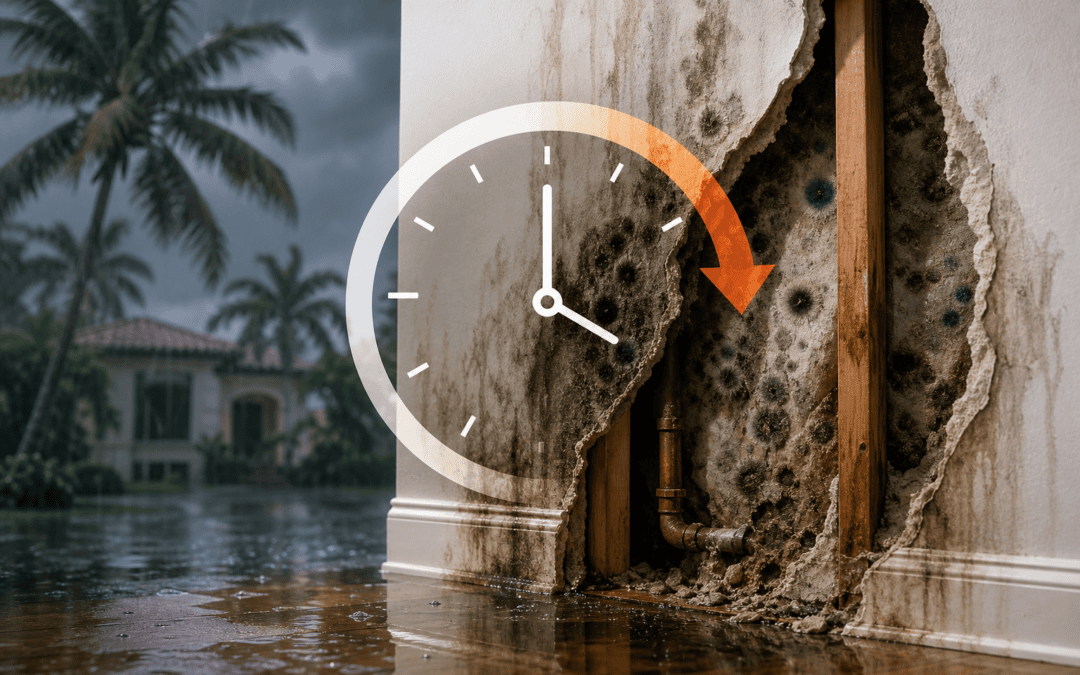
The 24 to 72 Hour Window
This is the number that matters most after any water damage event in Miami.
Mold spores are always present in the air. They aren't introduced by a flood or a leak — they're already there, waiting for the right conditions. When moisture hits porous materials like drywall, wood framing, carpet padding, or ceiling tiles, dormant spores begin to germinate. Under Miami's temperature and humidity conditions, that process can start within 24 hours and produce visible mold colonies within 48 to 72 hours.
By day three, if affected materials haven't been dried or removed, you're no longer dealing with a prevention problem. You're dealing with a remediation problem.
What Happens to Your Home During That Window
- Hours 1 to 12: Water saturates porous materials. Drywall begins absorbing moisture into its paper face and gypsum core. Wood framing swells. If the water source is contaminated — sewage backup, floodwater — microbial activity begins almost immediately.
- Hours 12 to 24: Surface materials reach saturation. Moisture migrates behind walls and under flooring, settling into concealed cavities where air circulation is low and humidity is high.
- Hours 24 to 48: Early mold growth begins on organic surfaces. You may not see it yet — it's starting inside wall cavities or beneath subfloor materials.
- Hours 48 to 72: Visible mold colonies can appear on drywall faces, baseboards, and ceiling tiles. A musty odor often becomes noticeable around this point.
Common Water Damage Sources in Miami Homes
What caused the water event affects how you respond and what kind of professional you need.
Storm and hurricane damage is the most common source in South Florida. Roof penetrations, window seal failures, and flooding from heavy rainfall all introduce large volumes of water quickly. Storm water is often classified as Category 2 or Category 3 contamination depending on what it has contacted, which means standard drying alone isn't sufficient.
Plumbing failures — burst pipes, failed supply lines under sinks or behind washing machines, slow leaks inside walls — are particularly dangerous because they often go undetected. A slow leak inside a wall can feed mold growth for weeks before you notice a stain or smell anything off.
AC condensate leaks are a Miami-specific problem. Air conditioning systems here run almost continuously, and a clogged condensate drain line can overflow into the air handler closet, the ceiling, or the surrounding walls. Low volume, but persistent — and persistent moisture is exactly what mold needs.
Sewage backups introduce contaminated water carrying bacteria and other pathogens alongside the moisture. These require a different response than clean water events. The area needs to be sanitized, not just dried.
What to Do Immediately After a Water Event
Speed is the only variable you can control at this point.
Stop the source first. If it's a plumbing failure, shut off the water supply. If it's a roof leak mid-storm, you may need to contain it rather than stop it entirely until conditions allow.
Remove standing water. Use towels, a wet/dry vacuum, or a mop to get surface water off floors as quickly as possible. Don't let it sit while you wait for a professional.
Ventilate if it makes sense. Open windows and run fans if outdoor air is drier than indoor air. In Miami's summer months, outdoor humidity may actually be higher, so use judgment. Running your AC on fan mode to circulate air is often more effective than opening windows.
Document everything. Photograph the source, the affected areas, and the extent of visible water before moving anything. This matters for insurance.
Don't wait to call a professional. The 48-hour window isn't a suggestion. Calling a mold and water damage specialist on day one is meaningfully different from calling on day three.
Why DIY Drying Is Usually Not Enough
Renting a dehumidifier and pointing a box fan at a wet wall feels like action. It rarely solves the actual problem.
Moisture inside wall cavities, under flooring, and in ceiling assemblies doesn't respond to surface airflow. Professional water damage restoration uses moisture meters and thermal imaging to locate hidden saturation, then positions industrial-grade drying equipment to pull moisture out of building materials from the inside. Without that diagnostic step and that equipment, you may dry the surface while the interior stays wet.
And if mold has already started, drying the area without addressing the contamination doesn't fix anything. It can actually make things worse — disturbing spores without containment spreads them to areas that weren't affected.
Who to Call for Water Damage and Mold in Miami
You need someone who handles both the water damage and the mold risk in a single engagement. Calling a water damage company and then a separate mold company days later means the clock is still running between those two calls.
Royal Mold Specialist has operated in South Florida for over 12 years, handling mold inspection, mold remediation, water damage restoration, sewage backup cleanup, and sanitizing. Their own trained technicians manage the full scope — from initial inspection through completed remediation — without dispatching third-party contractors. They serve Miami and 20+ cities across Miami-Dade, Broward, and Palm Beach Counties.
When you're dealing with water damage in Miami, having a specialist who understands both the water damage response and the mold risk specific to South Florida's climate is the practical choice. A generalist restoration company may treat the water event and miss early mold growth. A mold-only company called after the fact is responding to a problem that could have been caught sooner.
What a Professional Assessment Covers
When a trained technician arrives after a water damage event, the assessment should go well beyond a visual check of the wet area.
- Moisture readings taken at multiple points in the affected room and adjacent spaces
- Inspection of wall cavities using probes or thermal imaging where surface readings suggest concealed moisture
- Evaluation of the water source category — clean, gray, or black water — to determine whether sanitizing is required
- Documentation of affected materials and their condition
- A clear scope of work covering drying, removal of unsalvageable materials, and any mold remediation needed
If mold is already present, the remediation scope should include containment to prevent spore spread, removal of contaminated materials, surface treatment, and post-remediation verification.
The Cost Reality
Based on 2026 national averages, water damage restoration and mold remediation together typically range from $1,200 to $3,750 for residential jobs. Costs rise depending on the size of the affected area, the category of water contamination, and how long moisture was present before treatment. Jobs involving sewage backup or extensive mold growth push toward the higher end.
The longer you wait, the more material typically needs to be removed rather than dried and treated. Acting within the first 24 hours is almost always less expensive than acting at 72.
Frequently Asked Questions
How fast does mold grow after water damage in Miami?
Under Miami's heat and humidity, mold can begin germinating on wet porous materials within 24 hours. Visible colonies often appear within 48 to 72 hours. The subtropical climate accelerates this timeline significantly compared to cooler, drier regions.
Can I dry out water damage myself and avoid mold?
Surface drying with fans and dehumidifiers can help, but it rarely reaches moisture trapped inside wall cavities, under flooring, or in ceiling assemblies. Without professional moisture metering and industrial drying equipment, hidden areas can stay wet long enough for mold to take hold. If the water event was significant, a professional assessment is the safer call.
What kind of professional handles both water damage and mold?
Look for a company that offers water damage restoration and mold remediation as part of the same service. This eliminates the gap between separate contractors and ensures mold risk is assessed as part of the initial water damage response — not as a separate call days later.
Does homeowner's insurance cover water damage and mold in Miami?
Coverage depends on the cause. Sudden and accidental damage from a burst pipe is typically covered. Flooding from storm surge usually requires separate flood insurance. Mold resulting from a covered water event may be covered, but many policies carry mold sublimits or exclusions. Document everything and contact your insurer early.
What is the difference between water damage restoration and mold remediation?
Water damage restoration focuses on removing moisture from building materials and drying the structure to prevent further damage. Mold remediation addresses mold that has already grown — containment, physical removal of contaminated materials, surface treatment, and verification that the mold has been eliminated. After a water event, you may need both.
How do I know if mold is growing inside my walls after a leak?
A persistent musty odor, discoloration on drywall or baseboards, or unexplained allergy-like symptoms in household members can all point to hidden mold growth. A professional inspection using moisture meters and thermal imaging can identify concealed growth before it becomes visible.
How long does water damage remediation take in a typical Miami home?
A straightforward water damage job with no mold involvement can take two to five days depending on the extent of saturation and the materials affected. If mold remediation is also required, the timeline extends based on the size of the affected area and the remediation scope. Your technician should give you a clear estimate after the initial assessment.
Acting quickly after water damage in Miami isn't about being overly cautious — it's about the math. The climate here closes the window between a water event and a mold problem faster than most people realize. If you've had a leak, a flood, or any significant moisture event, get a professional on-site within the first 24 hours. The earlier the assessment, the more options you have. Book with Royal Mold Specialist at royalmoldfl.com.