
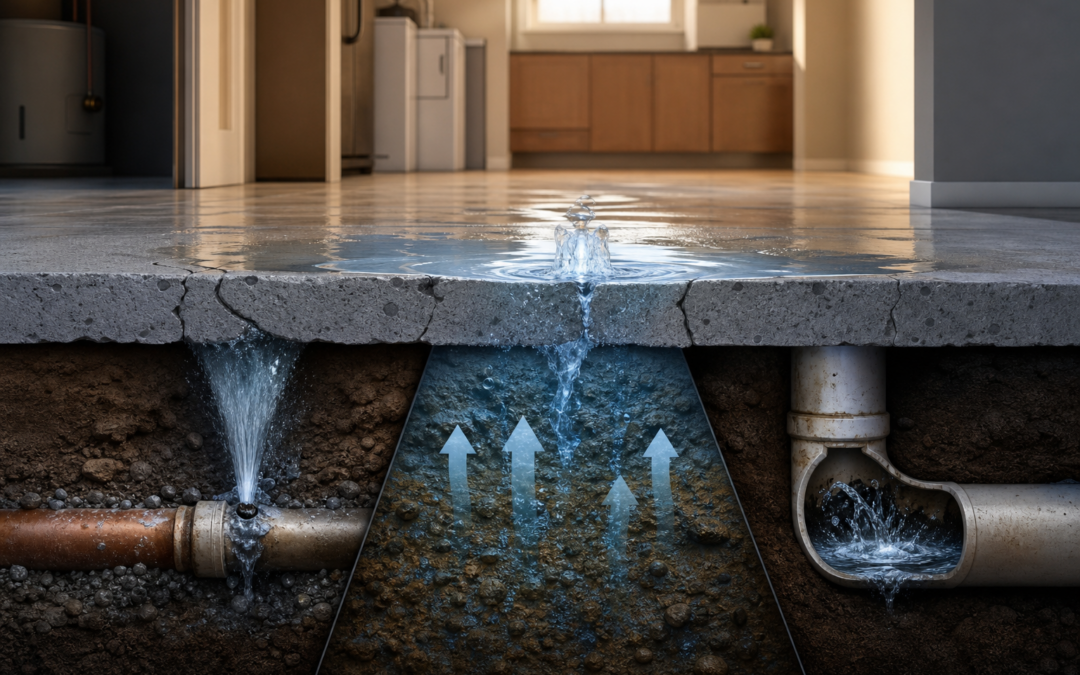
Water coming up from your floor is caused by one of three things: a pressurized pipe or slab leak, groundwater forced up by hydrostatic pressure, or a backed-up drain. Each cause needs a different fix. The steps below help you identify which one you have and what to do right now to limit damage.
The wrong first move can make things worse. Grabbing a mop before you cut the power, or sealing the floor before you find the moisture source, can turn a manageable problem into a costly one. Work through this guide in order.
Step 1: Make the Area Safe Before You Do Anything Else
Before you investigate the moisture source, deal with the immediate hazards. Water near electrical outlets or appliances is a serious risk. In certain situations, floor water can also carry sewage contamination.
Here is what to do first:
- Cut power to the affected room. If water has reached any outlet, is pooling near an appliance, or stands two inches deep or more, shut off the circuit breaker for that room before you step in. Do not rely on unplugging appliances from a standing position.
- Assume the water is contaminated until you know otherwise. Water backing up through a floor drain or rising after heavy rain can carry sewage or soil bacteria. Wear rubber gloves and waterproof boots before you touch anything.
- Ventilate the space. Open windows and run a fan if you have one. This limits exposure to any airborne contaminants and begins slowing moisture buildup in the room.
- Move valuables off the floor. Furniture, rugs, and stored items sitting in water absorb it quickly. Get them off the floor before they become part of the damage.
- Do not use a standard household vacuum. Water and standard vacuums do not mix safely. If you need to move water, use a wet-dry vacuum rated for liquid extraction.
Once the area is safe, you can start tracing where the water is actually coming from.
What Causes Water to Come Up From the Floor?
Water does not rise through a floor on its own. Something is pushing or pulling it there. The three root causes are distinct, and each points to a different repair path.
Pressurized pipe or slab leak. Supply pipes run beneath concrete slabs in most South Florida homes. When one of those pipes cracks or a joint fails, pressurized water has nowhere to go but up through the slab. You may notice warm spots on the floor, a sudden drop in water pressure, or a water bill that climbs without explanation. This is a plumbing problem, and it needs a licensed plumber.
Hydrostatic groundwater pressure. After heavy rain, water saturates the soil around and beneath your foundation. That saturated soil exerts pressure against the concrete, a force called hydrostatic pressure. When the pressure exceeds what the slab or foundation wall can resist, water seeps through cracks, cove joints (the seam where the floor meets the wall), or porous concrete. According to industry statistics for 2026, hydrostatic pressure is the cause of basement water issues in 25% of foundations. Soil settlement, which accounts for 40% of all foundation issues, can worsen those entry points over time. Water coming up through the floor after rain, with no plumbing explanation, almost always points here.
Drain backup or sewer surcharge. When a drain line is blocked or the municipal sewer system is overwhelmed during a storm, wastewater reverses direction. It takes the path of least resistance, which is often a floor drain. This is the cause behind most cases of water coming up from the floor in a bathroom, especially after a shower or during heavy rain.
Which category fits your situation shapes every decision that follows.
Step 2: Run These Two Tests to Find the Source of Water Coming Up From Your Floor
Two simple tests let you separate a plumbing leak from groundwater intrusion before you call anyone. Neither test is definitive on its own, but together they give you a strong indication of the cause.
The water meter test (checks for a pressurized pipe leak)
Turn off every fixture and water-using appliance in your home, including the dishwasher, washing machine, and ice maker. Go to your water meter and note the reading, or watch the leak indicator dial if your meter has one. Wait 30 to 180 minutes without using any water. If the dial moves or the reading changes, water is flowing somewhere in your supply system. That points to a pipe or slab leak. If the meter stays completely still, a pressurized supply leak is unlikely.
The plastic sheet test (separates condensation from seepage)
Cut a piece of thick plastic sheeting roughly 12 by 12 inches. Tape all four edges firmly to the dry floor using waterproof tape, sealing it completely. Leave it in place for 24 hours. When you remove it, check both sides. Moisture on the top surface points to condensation forming on cool concrete, a common pattern in South Florida during summer when humid air meets an air-conditioned slab. Moisture on the underside means water is migrating up through the concrete itself, which points to groundwater pressure or a slab leak.
If the meter test shows movement and the plastic sheet shows moisture underneath, you likely have a slab leak. If the meter is still but the underside is wet, groundwater pressure is the more probable cause. Either way, these results tell you which professional to call first.
Why Is Water Coming Up From My Floor Drain?
A floor drain backing up is a separate problem from a pipe leak or groundwater intrusion. The water is not coming through the concrete. It is coming back through a drain line that has nowhere else to go.
This happens for two reasons. The first is a blockage in your own drain line, caused by grease from kitchen drains or debris from storm runoff, that forces water to reverse direction. The second is a municipal sewer surcharge, where the city's system backs up during heavy rain and pushes wastewater back through the lowest drain in your home, usually a floor drain.
Bathroom-specific situations follow the same logic. If water appears on the bathroom floor after a shower or during rain, with no visible leak, the floor drain or the shared drain line is the likely culprit. The shower is not leaking; the drain line is backing up and surfacing at the lowest exit point.
To check whether the problem is municipal rather than isolated to your home, look for these signs:
- Neighbors on the same block are reporting slow drains or sewage smells at the same time.
- The backup happens specifically during or just after heavy rain.
- Multiple drains in your home are slow or gurgling simultaneously.
If the problem is isolated to your property, a licensed plumber can clear the line. If it is a municipal surcharge, a drain plug weighted down by a sandbag can block the floor drain and prevent further indoor flooding while the system recovers. For recurring sewer backup situations, a sewage backup specialist can assess whether a backwater valve makes sense for your home.
How Flooring Type Affects How Far Water Spreads
The material covering your floor determines how fast water damage spreads and how much stays hidden. Not all floors respond to water intrusion the same way.
Tile and sealed concrete slow lateral spread. Water that comes up through a grout line or a crack stays relatively contained on the surface, and damage is usually limited to the grout, the tile adhesive, and the subfloor directly beneath.
Laminate flooring is the most deceptive. The top layer resists water briefly, but the core is pressed wood fiber that swells and warps the moment moisture gets underneath. Water also wicks laterally under laminate far faster than it appears on the surface.
Hardwood absorbs moisture quickly and expands. Cupping, where the edges of boards rise higher than the center, is the first visible sign. But the real concern is what happens below: moisture trapped under hardwood creates the exact conditions mold needs to take hold. Data from the 2023 Census Bureau public use file indicates that homes with interior leaks report mold at a rate of 11.6%, compared to just 2.1% in homes without leaks. Hardwood over a wet subfloor is one of the fastest paths to that outcome.
Whatever your flooring type, extract water as quickly as possible and check the subfloor. Surface drying alone is not enough.
Seasonal Patterns: Why Rain and Humidity Change the Risk
In South Florida, the season shapes the type of water intrusion you are most likely to face. Summer brings the highest risk, not winter.
From June through November, South Florida's storm season delivers intense, repeated rainfall that saturates soil quickly. That saturated soil drives hydrostatic pressure against slabs and foundations. FEMA and the NFIP estimate that as little as 1 inch of water can result in $25,000 in damages to a typical home. A single afternoon storm dropping several inches can push groundwater through cracks that stayed dry all winter.
Summer humidity adds a second risk. When humid outdoor air meets a cool, air-conditioned concrete slab, condensation forms on and just below the surface. This can look exactly like seepage. The plastic sheet test from Step 2 is the fastest way to tell them apart.
One mistake that worsens both problems is interior-only sealing. Crystalline sealers or hydraulic cement applied to the floor surface can slow visible seepage, but they do not reduce the pressure behind it. If exterior drainage is not addressed, that pressure finds another path, often a wall joint or an adjacent section of slab. A sump pump, installed in a pit beneath the floor to collect and discharge groundwater before it builds pressure, addresses the source rather than the symptom. Sump pumps handle significant load during storm season, and excessive hydrostatic pressure can burn them out; most units last seven to ten years before needing replacement, per angi.com.
Step 3: Match the Cause to the Right Repair Professional
Once you know the cause, the repair path is straightforward. Calling the wrong professional first wastes time and delays the work that actually stops the damage.
| Cause | Key symptom | Right professional |
|---|---|---|
| Pressurized pipe or slab leak | Water meter moves with all fixtures off; warm spots on floor; rising water bill | Licensed plumber |
| Groundwater / hydrostatic pressure | Water appears after rain; plastic sheet wet on underside; no meter movement | Waterproofing or foundation specialist |
| Drain or sewer backup | Water rises through floor drain; multiple drains slow; backup worsens during rain | Licensed plumber; backwater valve installer for recurring events |
| Condensation | Plastic sheet wet on top only; no meter movement; appears in summer | HVAC technician; improve ventilation before any sealing |
Leaving any of these untreated carries real costs. Insurance data from 2019 to 2023 shows that 1 in every 67 homeowners files a water-related claim annually, with those claims averaging $15,400. Slab leaks that go unaddressed long enough can erode the soil beneath the foundation, widen existing cracks, and reduce a home's resale value significantly. A buyer's inspection will find evidence of past water intrusion even if the visible damage has dried.
For guidance on the full scope of water damage repair and restoration services, that pillar covers what each stage of the process involves and what to expect from a professional crew.
One caution: a plumber fixes the pipe, and a waterproofer addresses the drainage. Neither one handles the water damage left behind. That requires a separate step.
When to Call a Mold and Water Damage Specialist
Any time water comes up through a floor and sits for more than 24 to 48 hours, mold becomes a real risk. Data from the 2023 Census Bureau public use file shows that homes with interior leaks report mold at a rate of 11.6%, compared to just 2.1% in homes without leaks. A plumber or waterproofer stops the source. They do not extract water, dry the subfloor, or treat affected materials for mold.
Royal Mold Specialist is a mold remediation and water damage company serving more than 20 cities across South Florida. Trained technicians handle water extraction, structural drying, mold inspection, and full remediation. If water has been sitting under your flooring, or if you notice a musty odor after the moisture source is fixed, that is the point to call a specialist rather than wait for visible mold to appear. You can book an appointment online or by phone.
FAQs
Can water coming up through a concrete floor cause structural damage?
Yes. Water that migrates through a concrete slab under hydrostatic pressure erodes the soil beneath it over time, which can widen existing cracks and undermine the slab's support. Slab leaks left unrepaired long enough cause the concrete to shift and settle unevenly. The longer the moisture source goes unaddressed, the more expensive the structural repair becomes.
Is water coming up from the floor covered by homeowners insurance?
It depends on the cause. Sudden and accidental pipe bursts are typically covered. Groundwater intrusion and flooding are generally not covered under a standard homeowners policy; those require separate flood insurance through the National Flood Insurance Program. Drain backup coverage varies by policy and often requires an add-on rider. Check your policy before assuming coverage.
How do I stop water from coming up through my basement floor after heavy rain?
Start by improving exterior drainage: extend downspouts away from the foundation, regrade soil so it slopes away from the house, and clear any blocked gutters. Inside, a sump pump installed in a pit below the floor collects and discharges groundwater before pressure builds. Interior sealers alone are not enough; they slow visible seepage but do not reduce the hydrostatic pressure driving it.
What does it mean when water comes up through the floor but there is no visible pipe leak?
It most likely means groundwater is pushing up through the slab under hydrostatic pressure, or a drain line is backing up. Run the water meter test with all fixtures off. If the meter stays still, a pressurized supply leak is unlikely. Use the plastic sheet test to check whether moisture is coming up through the concrete. If the underside of the sheet is wet and the meter did not move, groundwater pressure is the probable cause.
How quickly can mold grow after water comes up through the floor?
Mold can begin to establish itself within 24 to 48 hours of moisture exposure, particularly in South Florida's humidity. By the time you see visible mold or smell a musty odor, growth has typically been underway for longer than it appears. If water has been sitting under flooring or in a wall cavity, treat it as a mold risk even if you cannot see any yet.
Conclusion
Water coming up through your floor points to one of three causes: a pressurized pipe or slab leak, groundwater forced up by hydrostatic pressure, or a backed-up drain line. Each one needs a different professional and a different repair. The water meter test and the plastic sheet test give you a strong starting point before you make any calls.
Run those two tests if you have not already, then use the cause-to-professional table to decide who to contact first. If water has been sitting for more than a day, or if a musty smell appears after the moisture source is fixed, bring in a mold and water damage specialist before the problem spreads further into your subfloor and walls.