
- What That Mildew Smell Actually Is
- Common Causes of a Mildew Smell Indoors
- Where to Look First
- What the Smell Means for Your Health
- What Not to Do
- What to Do Next
- When the Smell Comes Back
- FAQs
- Take the Next Step
You walk into a room and something smells off. Not dirty laundry, not old food — something damp, earthy, faintly sour. You stop and look around. If you're wondering whether your house smells like mildew, trust that instinct.
That smell isn't just unpleasant. It's your home telling you something is wrong.
Here's what causes it, where it hides, what it means for your health, and what to do about it.
What That Mildew Smell Actually Is
The odor comes from microbial volatile organic compounds — MVOCs — gases released by mold and mildew as they grow and break down organic material. You don't need to see visible mold to smell it. In fact, the smell often shows up before any visible growth appears, especially when mold is developing inside walls, under flooring, or inside HVAC systems.
Mildew is a surface-level fungal growth, typically white or gray. Mold penetrates deeper into materials and can appear black, green, brown, or orange. Both produce that recognizable musty odor, and both need the same things to thrive: moisture, warmth, and something organic to feed on.
In South Florida, those conditions exist almost year-round. High humidity, frequent rain, and older construction with limited ventilation make homes across Miami-Dade, Broward, and Palm Beach Counties especially vulnerable.
Common Causes of a Mildew Smell Indoors
Slow or Hidden Water Leaks
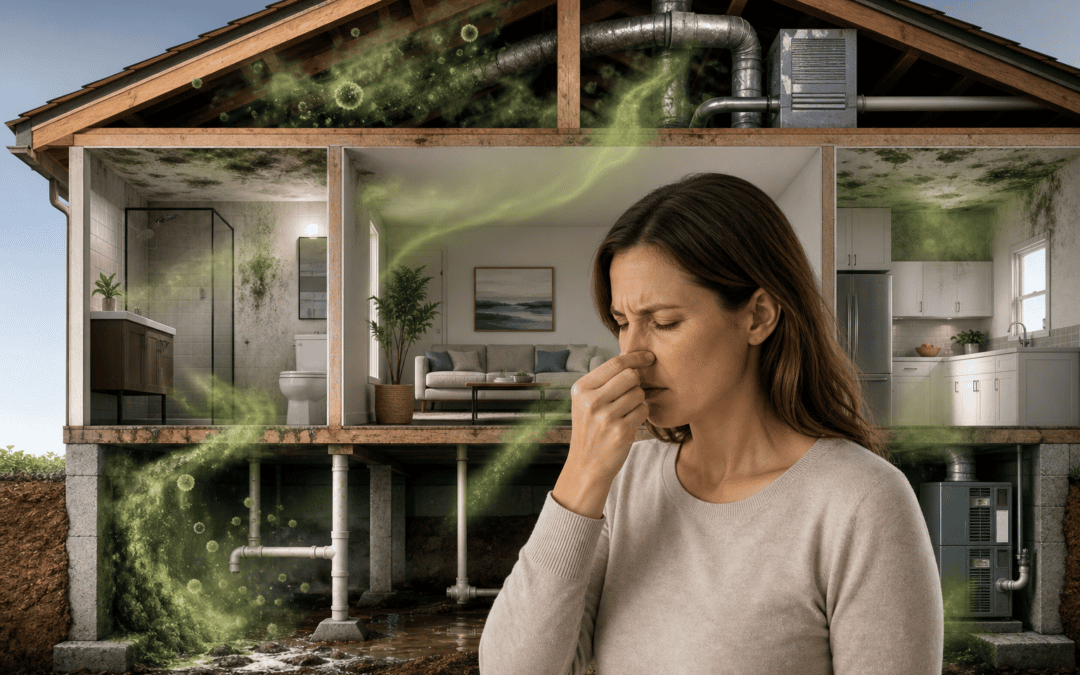
A dripping pipe inside a wall, a slow roof leak, or condensation around an AC unit can create a persistently damp environment with no obvious water damage in sight. By the time the smell appears, mold may have already been growing for weeks.
HVAC Systems
Your air conditioning system moves air through the entire house. If mold or mildew develops inside the air handler, on the coils, or in the ductwork, that smell gets pushed into every room. This is one of the most common reasons people notice a musty odor with no clear source.
Bathrooms and Kitchens
These rooms generate moisture constantly. Poor ventilation, unsealed grout, or a slow leak under the sink can all give mildew exactly what it needs to take hold.
Crawl Spaces and Attics
These areas tend to get ignored until a problem becomes serious. Inadequate ventilation, roof leaks, or ground moisture seeping upward can allow mold to grow on wood framing and insulation for months before anyone notices.
Flooding or Water Intrusion
If your home experienced flooding, a burst pipe, or storm-related water intrusion, mold growth is almost inevitable if affected materials weren't dried within 24 to 48 hours. Florida's humidity makes that window even shorter.
Where to Look First
Start with these areas:
- Under sinks in bathrooms and the kitchen
- Around the base of toilets and behind the tank
- Window frames and sills, especially where condensation collects
- Closets on exterior walls, which tend to run cooler and trap moisture
- The air handler cabinet and return air vents
- Laundry rooms, particularly around the washing machine drain hose
- The attic, near roof vents or around skylights
- Any room that had a water leak, even one that seemed minor
Visible mold often shows up as dark spots, fuzzy patches, or discoloration on walls, ceilings, or grout. But if you can smell it and can't find it, there's a good chance the growth is inside a wall cavity, under flooring, or somewhere you can't easily access.
What the Smell Means for Your Health
Mold affects people differently. Some are highly sensitive; others notice little. But prolonged exposure in an enclosed home can cause or worsen:
- Nasal congestion and sinus irritation
- Coughing, wheezing, or shortness of breath
- Eye, throat, and skin irritation
- Headaches and fatigue
- Worsening asthma and allergy symptoms
Children, elderly adults, and anyone with respiratory conditions or a compromised immune system face higher risk. If someone in your household has been dealing with unexplained symptoms and the house smells musty, that connection is worth taking seriously.
What Not to Do
A few approaches that won't solve the problem:
Don't mask the smell. Air fresheners, candles, and dehumidifiers can reduce the odor temporarily. They don't touch the source. The mold keeps growing.
Don't paint over visible mold. Mold-resistant paint applied over an active colony doesn't stop the growth — it just hides it for a few weeks.
Don't assume bleach fixes everything. Bleach can kill surface mold on non-porous materials like tile, but it doesn't penetrate drywall or wood. The root structure stays intact, and growth resumes.
Don't wait. Mold spreads. A small colony can expand significantly within days in South Florida's climate. The longer you wait, the more material gets affected and the more involved the remediation becomes.
What to Do Next
Step 1: Find the Moisture Source
Mold can't survive without moisture. Before any cleaning or remediation, you need to identify and fix whatever is feeding it — a leaking pipe, poor bathroom ventilation, a roof issue, or an HVAC drainage problem. Skipping this step means the mold comes back.
Step 2: Get a Professional Mold Inspection
If you can't locate the source, or if the smell is widespread, a professional inspection is the right move. An inspector can use moisture meters, thermal imaging, and air sampling to find where mold is growing and how far it has spread — including inside walls and under floors where you can't see it.
This step matters especially if you're buying or selling a home. A mold inspection gives you documented evidence of what's present and what needs to be addressed before closing.
Step 3: Remediation by Trained Technicians
When mold is confirmed, surface cleaning is rarely enough. Professional remediation means containing the affected area to prevent spores from spreading, removing compromised materials, treating surfaces, and verifying the area is clear before any reconstruction begins.
This isn't a DIY job for anything beyond a small, isolated patch of surface mildew on tile or glass. Anything inside walls, in HVAC systems, or covering more than a few square feet calls for professional remediation.
Royal Mold Specialist has been handling exactly these situations across South Florida for over 12 years. Their own trained technicians manage the full scope — inspection, remediation, water damage treatment, and sanitizing — without subcontracting any part of the job. They serve residential and commercial properties across more than 20 cities in Broward, Miami-Dade, and Palm Beach Counties.
When the Smell Comes Back
If you've had mold remediated before and the smell has returned, one of two things happened: the original moisture source wasn't fully resolved, or the remediation didn't address all affected material. Recurring mold is a common frustration in Florida homes, and it almost always traces back to one of those two causes.
A second inspection can determine whether new growth has started or whether there's a residual problem from the original job. Don't write it off as something older homes just do. It isn't normal, and it won't go away on its own.
FAQs
What does a mildew smell in a house indicate?
It usually means there's active mold or mildew growth somewhere in the home. The odor comes from gases released by fungal colonies as they feed on organic material — and it can show up before any visible growth appears, especially when mold is inside walls, under flooring, or in HVAC systems.
Can a mildew smell make you sick?
Yes. Prolonged exposure can cause respiratory irritation, sinus problems, coughing, headaches, and worsening asthma or allergies. Children, elderly adults, and people with respiratory conditions tend to be more affected.
Why does my house smell like mildew but I can't find any mold?
Mold often grows in hidden areas — inside wall cavities, under flooring, in attic spaces, or inside HVAC ductwork. The smell can travel through air systems and show up in rooms far from the actual source. A professional inspection with moisture meters and air sampling is the most reliable way to find it.
Does a dehumidifier get rid of the mildew smell?
A dehumidifier reduces ambient moisture, which can slow mold growth and reduce odor over time. But it doesn't kill existing mold or remove colonies that are already established. If the smell is coming from active growth, you need remediation — not just humidity control.
How long does it take for mold to grow after a water leak?
Mold can begin growing within 24 to 48 hours of water exposure, depending on temperature and humidity. In South Florida, that window is often shorter. Materials that weren't dried thoroughly after any water intrusion are at risk, even if the leak seemed minor at the time.
Is it safe to stay in a house that smells like mildew?
Short-term exposure is unlikely to cause serious harm for most healthy adults. But living with active mold growth over weeks or months increases health risks, particularly for sensitive individuals. If the smell is strong or widespread, getting an inspection sooner rather than later is the sensible call.
When should I call a professional instead of handling it myself?
Call a professional if the mold covers more than a small area, if it's inside a wall or under flooring, if it keeps coming back after cleaning, if someone in the household has symptoms, or if you can smell it but can't find it. Surface mildew on tile or glass can often be cleaned with the right products — but anything beyond that warrants a professional assessment.
Take the Next Step
A mildew smell is worth acting on, not ignoring. The earlier you find the source and address it, the less damage accumulates — and the simpler the fix tends to be.
If you're in South Florida and want trained technicians to inspect your home and give you a clear picture of what you're dealing with, book an appointment directly at royalmoldfl.com.