
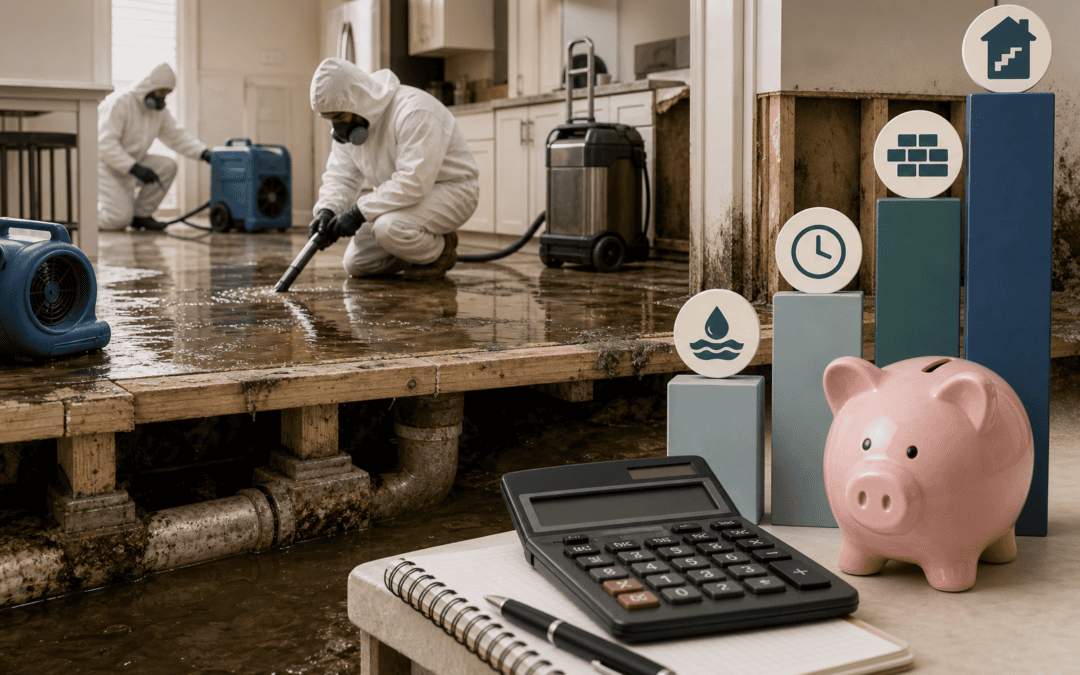
- The Average Cost Range for Sewage Backup Cleanup
- What Drives the Cost Up or Down
- What a Cleanup Quote Should Include
- Does Homeowners Insurance Cover Sewage Backup Cleanup?
- How to Avoid Overpaying
- Why South Florida Properties Face Higher Risk
- FAQs
- What to Do Right Now
A sewage backup is one of the worst property emergencies you can deal with. The smell hits you immediately, and from that point on, every hour that contaminated water sits is an hour of additional damage. Before you call anyone, you want to know what this is going to cost.
The honest answer: it depends. Most homeowners in South Florida pay somewhere between $2,000 and $10,000 for a full cleanup. Smaller incidents can come in below that range, and severe cases can climb well above it. What follows is a breakdown of what actually drives the final number so you can plan ahead and avoid surprises.
The Average Cost Range for Sewage Backup Cleanup
For a typical residential sewage backup, here is a realistic range of what you might pay in 2026:
| Severity | Estimated Cost Range |
|---|---|
| Minor (one fixture, limited area) | $700 – $2,500 |
| Moderate (bathroom or laundry room, some flooring affected) | $2,500 – $6,000 |
| Severe (multiple rooms, structural materials saturated) | $6,000 – $15,000+ |
These figures cover extraction, drying, disinfection, and disposal of contaminated materials. They do not automatically include structural repairs, flooring replacement, or mold remediation if mold has already taken hold.
What Drives the Cost Up or Down
1. How Much Area Is Affected
This is the biggest variable. A backup contained to a single bathroom is a very different job than one that has soaked through a hallway, into a bedroom, or down into a crawl space. Every additional square foot means more labor, more drying equipment, and more contaminated material to haul out.
2. Type of Water Involved
Restoration professionals classify water damage into three categories. Category 1 is clean water from a supply line. Category 2 is gray water from appliances or sinks. Category 3 is black water — raw sewage.
Sewage backups are always Category 3. That classification matters because black water carries bacteria, pathogens, and sometimes viruses. It requires full protective equipment, specialized disinfectants, and stricter disposal protocols. All of that raises labor costs compared to a standard water damage job.
3. How Long the Water Sat Before Cleanup
Time is money here in a very direct way. Sewage that sits for 24 to 48 hours starts soaking into drywall, subfloor, and insulation. After 48 hours, mold can begin developing. The longer contaminated water goes untreated, the more material needs to be torn out and replaced rather than dried and sanitized.
Calling a professional within a few hours of discovering the backup can save you thousands in material replacement costs alone.
4. Flooring and Building Materials
Hard tile is relatively easy to clean. Carpet, hardwood, laminate, and porous grout are not. Carpet saturated with sewage almost always needs to come out. Hardwood often warps beyond saving. Drywall that absorbed black water typically has to be cut out entirely.
Each removal adds to the total — both in labor and in disposal fees.
5. Location and Accessibility
A backup in a finished basement, a tight crawl space, or behind built-in cabinetry takes more time to access and treat. Difficult access means more labor hours, which shows up directly on the invoice.
6. Mold Remediation (If Required)
If mold is already present when the crew arrives — or if moisture sat long enough to allow it to develop — remediation becomes a separate line item. In South Florida, mold remediation can add anywhere from $500 to $6,000 or more depending on how far it has spread. Royal Mold Specialist handles both sewage cleanup and mold remediation, which simplifies things considerably when both problems are in play.
7. Emergency or After-Hours Service
Sewage backups rarely happen at a convenient time. If you need a crew at 11 p.m. on a Saturday, expect a premium — typically 15% to 25% added to the base cost. That said, calling immediately almost always saves money overall, because it limits how far the damage spreads before work begins.
What a Cleanup Quote Should Include
A professional sewage backup cleanup quote should cover:
- Extraction of standing water and sewage
- Removal of unsalvageable materials (carpet, drywall, insulation)
- Drying using industrial air movers and dehumidifiers
- Disinfection of all affected surfaces with EPA-registered antimicrobial agents
- Deodorization to neutralize odors
- Disposal of contaminated waste
What is often quoted separately: structural repairs, flooring reinstallation, painting, and mold remediation if it falls outside the original scope.
Ask for an itemized estimate before work begins so you know exactly what is and is not covered.
Does Homeowners Insurance Cover Sewage Backup Cleanup?
Standard homeowners insurance policies typically exclude sewage backups unless you have added a specific endorsement or rider. Flood insurance — which is a separate policy — also generally excludes sewer backups unless the backup was a direct result of a covered flood event.
Check your policy documents carefully. If you do have a sewage backup endorsement, your insurer will typically cover cleanup costs minus your deductible. Before cleanup begins, document everything: photos, videos, and a written inventory of damaged items. A good remediation company can also provide documentation to support your claim.
How to Avoid Overpaying
Get at least two estimates. Prices vary between companies, and a second opinion helps you spot outliers on either end.
Ask about certifications. Reputable companies employ technicians trained in water damage restoration. This matters for quality and for insurance documentation.
Do not delay to save money. Waiting for a cheaper quote while sewage sits in your home almost always costs more in the end. The damage compounds fast.
Understand the full scope before signing. Make sure the quote covers complete disinfection, not just extraction. Removing the water without properly sanitizing the area leaves pathogens behind and sets the stage for mold.
Why South Florida Properties Face Higher Risk
South Florida's climate makes sewage backups more damaging and more likely to lead to mold. High humidity means materials stay wet longer. Warm temperatures accelerate bacterial growth and mold development. Older plumbing infrastructure in many South Florida homes also increases the likelihood of backups occurring in the first place.
If you own property in the region, having a trusted remediation company's number saved before an emergency happens is genuinely worth doing. Royal Mold Specialist has served more than 20 cities across South Florida for over 12 years, handling sewage cleanup, water damage treatment, and mold remediation for both residential and commercial properties.
FAQs
How much does sewage backup cleanup cost on average?
Most residential sewage backup cleanups in 2026 fall between $2,000 and $10,000. Minor incidents confined to a single fixture can cost less, while severe backups affecting multiple rooms or requiring mold remediation can exceed $15,000.
What makes sewage backup cleanup more expensive than regular water damage cleanup?
Sewage is classified as Category 3 (black water), which contains bacteria, pathogens, and other contaminants. That requires specialized protective equipment, stronger disinfectants, stricter disposal procedures, and more thorough treatment of every affected surface — all of which raise labor and material costs.
Will my homeowners insurance pay for sewage backup cleanup?
Not automatically. Most standard policies exclude sewer backups unless you have added a specific endorsement. Review your policy and contact your insurer immediately after the incident. Document all damage thoroughly before cleanup begins to support any claim.
How long does sewage backup cleanup take?
A contained single-room backup can typically be cleaned and dried within two to four days. Larger or more severe incidents may take a week or longer, especially if structural materials need to dry fully before repairs can begin.
Can I clean up a sewage backup myself?
It is not recommended. Raw sewage contains harmful bacteria and pathogens that require professional-grade disinfectants and proper disposal. DIY cleanup also risks leaving contamination behind in porous materials, which leads to persistent odors and mold growth. Professional remediation is the right call for health and safety reasons.
How quickly should sewage backup cleanup start?
As soon as possible — ideally within a few hours of discovery. Every hour that contaminated water sits increases the amount of material that will need to be removed and raises the risk of mold developing within 24 to 48 hours.
Does sewage backup cleanup always include mold remediation?
Not automatically. If mold is already present or develops during the drying process, that is typically a separate scope of work. Choosing a company that handles both — like Royal Mold Specialist — means one team manages the full situation rather than you coordinating between multiple contractors.
What to Do Right Now
If you are dealing with a sewage backup, stop the source if you can, keep people and pets out of the affected area, and call a professional remediation company immediately. The faster you act, the lower your final bill is likely to be.
For properties across South Florida, Royal Mold Specialist provides sewage backup cleanup, water damage treatment, and mold remediation with trained technicians who can respond quickly and document the work for insurance purposes. Book an appointment online or by phone.