- Why Hollywood, FL Is Especially Vulnerable to Mold
- Where Mold Hides in Hollywood Homes
- The Mold Removal Process: What It Actually Takes in Hollywood
- Why Mold Keeps Coming Back in Hollywood Properties
- Mold and Real Estate Transactions in Hollywood
- Commercial Properties in Hollywood Face the Same Challenges
- What to Do If You Find Mold in Your Hollywood Home
- Frequently Asked Questions
- The Bottom Line
Hollywood, Florida sits in one of the most mold-prone corridors in the country. If you've been searching for mold removal in Hollywood, FL, you're not alone — and the problem you're dealing with almost certainly isn't a fluke. The city's geography, climate, and building stock combine to create conditions where mold doesn't just appear occasionally. It spreads faster than homeowners expect, returns after treatment, and hides in places that aren't obvious until the damage is already done.
This article covers why Hollywood has such a stubborn mold problem, where it tends to show up in local homes, what professional remediation actually involves, and how to make sure the fix holds in South Florida's humidity.
Why Hollywood, FL Is Especially Vulnerable to Mold
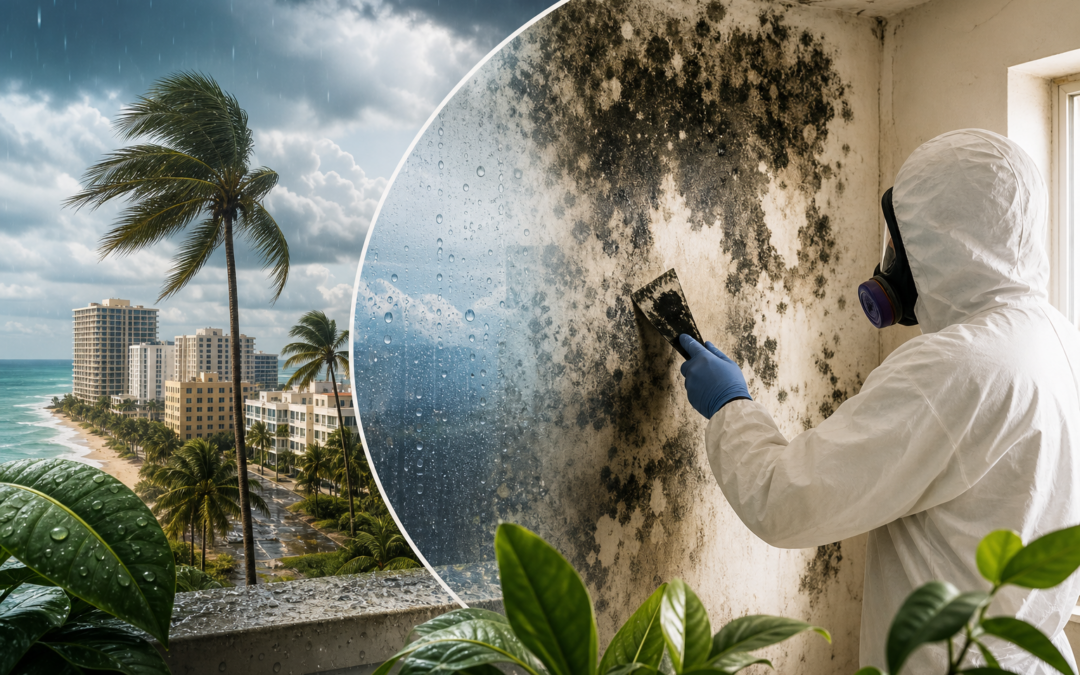
Hollywood is wedged between the Atlantic Ocean and the Everglades. That geography matters more than most homeowners realize. The city sits at near-sea level, with a water table close to the surface in many neighborhoods. Add average annual humidity consistently above 70%, summer temperatures that rarely drop below 80 degrees, and a rainy season running from June through October, and you have a near-perfect environment for mold growth year-round.
Mold needs three things: moisture, warmth, and an organic surface to feed on. Hollywood provides the first two in abundance, and every home has plenty of the third — drywall, wood framing, carpet, ceiling tiles, insulation.
The Role of Hurricane Season and Heavy Rain Events
South Florida's rainy season doesn't just bring daily afternoon showers. It brings sustained moisture intrusion events. A single storm can dump several inches of rain in under an hour. When that water finds its way in through a window seal, a roof penetration, or improperly graded landscaping, the clock starts immediately. Under Florida conditions, mold can begin colonizing a wet surface within 24 to 48 hours.
Hollywood's older neighborhoods — particularly those built between the 1960s and 1980s — often have aging roof membranes, original window caulking, and drainage systems that weren't designed for the intensity of modern South Florida storms. Water intrusion in these homes tends to be a recurring event, not a one-time problem.
Air Conditioning and Condensation
Here's something that surprises many Hollywood homeowners: your air conditioner is one of the most common contributors to indoor mold. South Florida homes run their AC systems almost continuously. When warm, humid outdoor air meets cold interior surfaces, condensation forms. A clogged drain line, a dirty evaporator coil, or inadequate airflow lets moisture accumulate inside the air handler — and from there, it gets distributed through the ductwork.
Mold growing inside duct systems is particularly problematic because every time the system runs, it disperses spores throughout the entire home. You might spot mold on a ceiling vent and assume it's a surface issue. Often it's a symptom of something much larger happening inside the ducts.
Where Mold Hides in Hollywood Homes
Knowing where mold typically develops in South Florida homes helps you catch it earlier and gives you a clearer sense of what a thorough inspection should cover.
Bathrooms and laundry rooms. The obvious starting point. Poor ventilation, persistent moisture, and tile grout that absorbs water all create ideal conditions. But the mold visible on a grout line is often the least of the problem — behind the wall, where the pipe connections are, is where serious colonization tends to happen.
Under kitchen and bathroom sinks. A slow drip from a supply line or drain connection can go unnoticed for months. The cabinet enclosure traps moisture, the wood substrate becomes saturated, and by the time you notice a musty smell, the mold colony is well established.
Attic spaces. Hollywood's flat and low-slope roofs are notorious for developing small leaks that don't produce obvious interior water stains right away. Moisture enters the attic, insulation absorbs it, and mold grows on the roof decking and rafters. Attic mold is one of the most commonly missed problems during a casual home walkthrough.
Behind drywall following water damage. If your home has experienced flooding, a burst pipe, or an appliance leak — and the drywall wasn't fully dried and treated within 48 hours — there's a reasonable chance mold is growing behind the surface. Paint and primer don't stop mold that's already established inside the wall cavity.
HVAC systems and ductwork. Condensation, organic dust accumulation, and constant airflow make ductwork a common mold pathway in South Florida homes, as noted above.
The Mold Removal Process: What It Actually Takes in Hollywood
A lot of homeowners assume mold removal means spraying something on a surface and wiping it off. In a Florida climate, that approach doesn't hold. Surface treatment without addressing the moisture source and the full extent of colonization almost always results in the mold returning within weeks.
Professional mold removal in Hollywood, FL follows a structured process:
1. Inspection and testing. Before any work begins, a trained technician assesses the full scope of the problem — identifying visible mold, using moisture meters to find wet materials that aren't visibly affected, and checking areas where mold commonly hides based on the home's construction type and history. Testing may be used to identify mold species and confirm the extent of airborne contamination.
2. Containment. Affected areas are sealed off to prevent cross-contamination. Negative air pressure systems keep spores from migrating to clean areas of the home during remediation.
3. Removal of contaminated materials. Drywall, insulation, flooring, and other porous materials that have been colonized beyond a certain threshold generally need to come out rather than be treated in place. It's a step some homeowners resist because of the disruption, but it's non-negotiable for a lasting result in a high-humidity environment.
4. Treatment and cleaning. Structural elements that can be retained are treated with EPA-registered antimicrobial products. HEPA vacuuming removes residual spores from surfaces.
5. Drying and moisture control. Industrial dehumidifiers and air movers bring moisture levels in the affected area down to safe thresholds before any reconstruction begins.
6. Post-remediation verification. A clearance test confirms that spore counts have returned to acceptable levels before the area is closed up.
At Royal Mold Specialist, trained technicians handle every step of this process in a single engagement — inspection, remediation, water damage treatment, and sanitizing, all managed by the same team rather than handed off between contractors. For Hollywood homeowners dealing with an active problem, that continuity matters.
Why Mold Keeps Coming Back in Hollywood Properties
The most frustrating call a remediation company gets is from a homeowner whose mold returned a few months after treatment. In South Florida, this happens more often than it should, and the cause is almost always one of three things.
The moisture source wasn't fixed. If the roof still leaks, the AC drain line is still clogged, or the bathroom still has inadequate ventilation, mold will return regardless of how thorough the initial remediation was. Mold removal without moisture control is a temporary fix.
The remediation wasn't complete. Treating visible mold while leaving colonized materials in place creates a reservoir that reseeds the treated area. This is why proper removal of affected materials matters — not just surface treatment.
Humidity wasn't managed post-remediation. In Hollywood's climate, indoor relative humidity should stay consistently below 60%. Homes that run their AC intermittently, have poorly sealed crawl spaces, or have HVAC systems that aren't correctly sized for the space will cycle through mold problems repeatedly.
After remediation, keeping your HVAC system properly maintained is one of the most practical steps you can take. A system with clean coils and clear drain lines removes a significant amount of moisture from the air before it can settle on surfaces. Professionals who specialize in HVAC maintenance for South Florida homes — like those at JB Water & Air — understand the specific demands that year-round humidity places on residential systems.
Mold and Real Estate Transactions in Hollywood
Hollywood's real estate market is active, and mold issues surface frequently during the inspection process. Sellers who discover mold during a pre-listing inspection face a clear choice: remediate before listing, or disclose and negotiate. Buyers who find mold during due diligence need to understand the scope before moving forward.
In either situation, a professional mold inspection with documented findings is essential. A thorough inspection report gives both parties a clear picture of what's present, where it is, and what remediation would involve. Trying to negotiate around mold without that documentation tends to create more problems than it solves.
If you're buying or selling a property in Hollywood and need a professional assessment, Royal Mold Specialist provides mold inspections for residential and commercial properties across South Florida. You can book directly at royalmoldfl.com.
Commercial Properties in Hollywood Face the Same Challenges
Multi-unit residential buildings, retail spaces, and office properties in Hollywood are not immune. Commercial properties often have larger HVAC systems with more complex ductwork, more plumbing connections, and more occupants generating moisture through daily activity. A mold problem in a commercial building can affect tenant health, trigger complaints, and create real liability exposure for property managers.
Royal Mold Specialist works with commercial property managers across South Florida, handling inspections and remediation for buildings of varying size and complexity. The same trained-technician model applies: no subcontractors, no handoffs.
What to Do If You Find Mold in Your Hollywood Home
If you've spotted visible mold, noticed a persistent musty smell, or recently dealt with a water leak, here's a practical sequence:
- Don't disturb it. Scrubbing or spraying mold without containment disperses spores and can make the problem significantly worse.
- Identify and stop the moisture source if you can. Fix the leaking pipe, clear the AC drain line, or address the roof penetration. Remediation without this step is incomplete.
- Get a professional inspection. Surface mold is rarely the full picture. A trained technician with moisture meters and inspection tools will find what you can't see.
- Follow the full remediation process. Insist on a clear scope before work begins, and ask about post-remediation verification.
- Address ventilation and humidity control. Long-term prevention in Hollywood means keeping indoor humidity in check consistently — not just after a remediation.
Royal Mold Specialist has been operating in South Florida for over 12 years and serves Hollywood along with 20+ other cities across Broward, Miami-Dade, and Palm Beach Counties. If you're dealing with a mold problem — or want a professional inspection before it becomes one — you can book an appointment at royalmoldfl.com.
Frequently Asked Questions
Why is mold such a persistent problem in Hollywood, FL specifically?
Hollywood's near-sea-level elevation, proximity to both the ocean and the Everglades, year-round humidity above 70%, and a six-month rainy season create near-constant moisture conditions. Combined with older housing stock and AC systems that generate condensation, mold becomes a recurring issue rather than an occasional one.
How quickly can mold grow after a water leak in South Florida?
Under Florida's warm, humid conditions, mold can begin colonizing a wet surface within 24 to 48 hours. That's why water damage needs to be dried and treated quickly. Waiting even a few days after a leak significantly increases the likelihood of mold developing behind walls and under flooring.
Can I remove mold myself in a Hollywood home?
Small surface mold on non-porous materials like tile can sometimes be cleaned with appropriate products. But in South Florida's humidity, mold on drywall, wood, insulation, or other porous materials almost always indicates deeper colonization. DIY treatment without proper containment, moisture control, and post-remediation verification typically results in the mold coming back.
What does a professional mold inspection in Hollywood involve?
A thorough inspection includes a visual assessment of the property, moisture meter readings on walls, floors, and ceilings, examination of areas where mold commonly hides — attic, HVAC system, under sinks, behind appliances — and documentation of findings. Testing may be used to identify mold species and measure airborne spore levels.
How do I know if my AC system is contributing to mold growth?
Common signs include mold visible around air vents or on the air handler unit, a musty smell when the system runs, or a clogged condensate drain line. In South Florida's climate, a poorly maintained AC system can distribute mold spores throughout your home every time it cycles on.
Does mold remediation in Hollywood require removing drywall?
Not always, but often. Porous materials like drywall and insulation that have been colonized beyond the surface level generally need to be removed for remediation to hold in a high-humidity environment. A professional inspection will determine the extent of the problem and whether material removal is necessary.
How long does mold remediation take for a typical Hollywood home?
It depends on the size of the affected area and the extent of the contamination. A contained bathroom problem might be resolved in a day or two. Larger infestations involving multiple rooms, ductwork, or structural materials can take several days. A professional assessment will give you a realistic scope and timeline before any work begins.
The Bottom Line
Hollywood's mold problem isn't going away. The city's climate, geography, and housing stock make mold a persistent reality rather than an occasional inconvenience. Whether a remediation holds comes down to whether the full scope was addressed: the moisture source, the contaminated materials, and the conditions that determine whether the fix lasts.
If you're dealing with mold in Hollywood or anywhere across South Florida, Royal Mold Specialist's trained technicians handle the complete process from inspection through remediation in a single engagement. Book an appointment at royalmoldfl.com.