- Why Hollywood, FL Has a Persistent Mold Problem
- Signs You Need Mold Remediation in Your Hollywood Home
- The Mold Remediation Process: What Happens Step by Step
- Services Available for Hollywood, FL Properties
- What Makes Hollywood Properties Different from Other South Florida Cities
- How to Choose a Mold Remediation Company in Hollywood
- What to Expect During and After Remediation
- Booking a Mold Inspection or Remediation in Hollywood
- Frequently Asked Questions
Hollywood, FL sits in one of the most mold-prone corridors in the country. Wedged between the Atlantic coast and the Everglades, the city combines year-round humidity, frequent afternoon storms, aging housing stock, and a water table that sits close to the surface. If you're searching for mold remediation in Hollywood, FL, you're almost certainly dealing with something visible, something that smells wrong, or both. This article covers why Hollywood properties are so vulnerable, what professional remediation looks like from start to finish, and what to expect when you hire a specialist.
Why Hollywood, FL Has a Persistent Mold Problem
Mold doesn't need much to thrive — just moisture, an organic surface, and warmth. Hollywood delivers all three, consistently, across every season.
The city's average relative humidity stays above 75 percent for most of the year. That alone creates conditions where mold can colonize porous materials like drywall, insulation, and wood framing without any visible water event triggering it. Layer in the regular afternoon thunderstorms from May through October, the Atlantic sea breeze carrying salt moisture inland, and the proximity to canals and the Intracoastal Waterway, and you have a baseline moisture environment that most of the country never deals with.
Aging Housing Stock Compounds the Risk
A significant portion of Hollywood's residential neighborhoods were built between the 1950s and 1980s. Many of these homes have older roofing systems, single-pane windows, and minimal vapor barriers in their slab construction. When a roof loses a few shingles in a storm or a window seal fails, water intrudes quietly. By the time a homeowner notices discoloration on a wall or a persistent musty smell, mold has often been growing behind the surface for weeks.
Older HVAC systems are another common culprit. Air handlers that haven't been serviced regularly accumulate condensation inside the unit and in the ductwork — and that moisture becomes a distribution system for mold spores throughout the entire house.
Storm Surge and Flooding Events
Hollywood is a coastal city with low-lying neighborhoods that flood during heavy rain events and tropical storms. When floodwater enters a home, it doesn't just damage flooring and drywall. It saturates wall cavities, subfloor materials, and insulation that may not fully dry for days. Without professional drying, mold growth can begin within 24 to 48 hours of the moisture event.
Signs You Need Mold Remediation in Your Hollywood Home
Not every mold problem announces itself with a visible black patch on the wall. Many calls to mold specialists start with something subtler.
Visible discoloration is the most obvious sign — black, green, gray, or white patches on walls, ceilings, grout lines, or around window frames. The color alone doesn't identify the species, but any visible growth warrants a professional inspection.
A persistent musty or mildew smell is often the first indicator of hidden mold. If a room smells damp even when it looks dry, mold may be growing inside a wall cavity, under flooring, or in the HVAC system.
Health symptoms that improve when you leave the property and return when you come back — nasal congestion, eye irritation, coughing, headaches — can point to elevated mold spore counts in the indoor air.
Recent water damage is a strong predictor of future mold growth. A roof leak, a burst pipe, a slow appliance leak, or storm flooding all create the moisture conditions mold needs. Even if the surface appears dry, water can persist inside wall assemblies and under flooring long after the visible event.
Real estate transactions are another common trigger. Buyers and sellers in Hollywood frequently request mold inspections as part of due diligence, particularly for older properties or homes that have been sitting vacant.
The Mold Remediation Process: What Happens Step by Step
Understanding the process helps you know what to expect and what questions to ask before work begins.
Step 1: Mold Inspection and Assessment
Professional remediation starts with a thorough inspection. A trained technician examines the property visually, checks moisture readings in walls and flooring with a moisture meter, and identifies the source of the problem. In some cases, air sampling is performed to measure spore concentrations in different areas of the home.
The inspection report tells you where the mold is, how extensive the growth is, what's likely causing it, and what remediation approach is appropriate. This step isn't optional. Skipping straight to removal without understanding the scope and source means the problem will come back.
Step 2: Containment
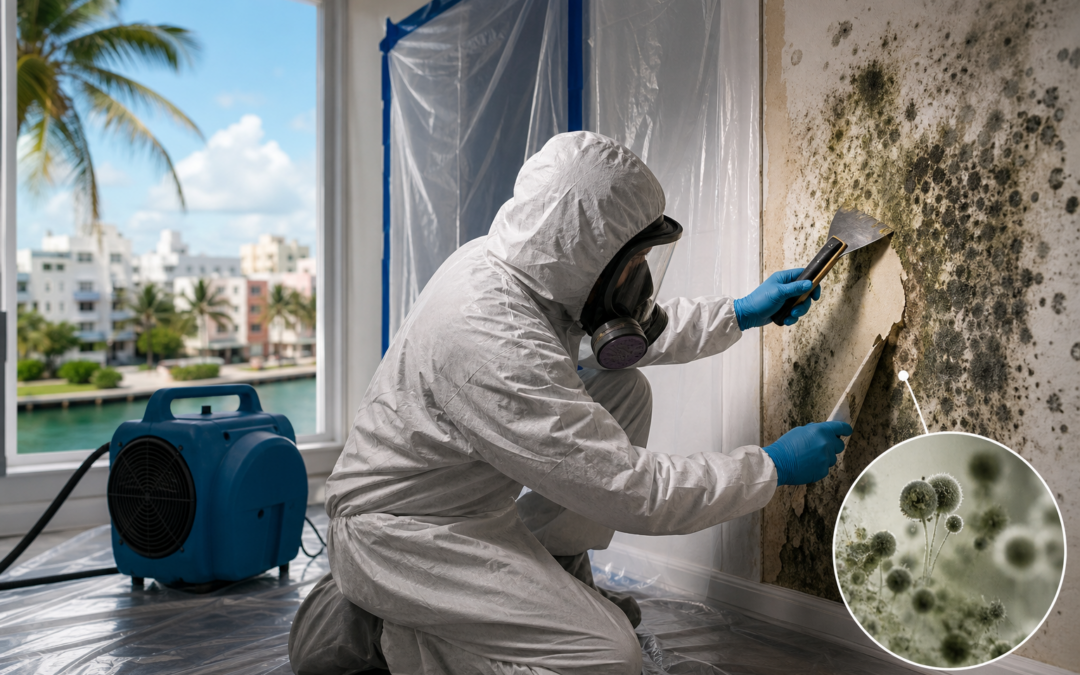
Before any physical removal begins, the affected area is sealed off to prevent mold spores from spreading to unaffected parts of the property. This typically involves plastic sheeting over doorways and HVAC vents, along with negative air pressure inside the containment zone using HEPA-filtered air scrubbers. The goal is to keep disturbed spores from migrating through the rest of the home.
Step 3: Removal of Contaminated Materials
Porous materials saturated with mold — drywall, insulation, carpet, certain types of wood — generally can't be cleaned. They need to be removed and disposed of properly. Non-porous surfaces like concrete, tile, and metal can often be cleaned and treated in place.
All removed materials are bagged inside the containment zone before being transported out of the property to prevent cross-contamination.
Step 4: Cleaning and Treatment
After physical removal, remaining structural surfaces are cleaned with antimicrobial solutions. HEPA vacuuming removes settled spores, and air scrubbers continue running throughout this phase to capture airborne particles.
Some protocols include an encapsulant or sealant applied to surfaces like wood framing that can't be replaced. This isn't a substitute for proper removal when materials are heavily contaminated, but it can be appropriate for light surface growth on structural wood.
Step 5: Drying and Moisture Control
Removing the mold without addressing the moisture source is a temporary fix. Professional remediation includes drying the affected area with industrial dehumidifiers and air movers, and identifying and resolving the source of the moisture intrusion — whether that's a roof repair, a plumbing fix, or improved ventilation in a bathroom or crawl space.
Step 6: Post-Remediation Verification
A reputable remediator verifies the work is complete before closing out the job. This can involve a visual inspection and, in some cases, post-remediation air sampling to confirm spore counts have returned to normal levels. The goal is a clearance result that shows the remediation actually worked.
Services Available for Hollywood, FL Properties
Hollywood homeowners and property managers typically need one or more of the following services, often in combination.
Mold inspection is a standalone service appropriate when you suspect a problem but haven't confirmed it, or when you need documentation for a real estate transaction or insurance claim.
Mold remediation is the full removal and treatment process described above — appropriate when mold has been confirmed and the affected area requires professional intervention.
Water damage restoration addresses the moisture event itself. Because mold follows water damage, many jobs require both services. Handling them together in a single engagement avoids the delays and coordination problems that come with using two separate vendors.
Sewage backup cleanup is a specialized service for properties that have experienced sewage intrusion from a backed-up drain, a broken sewer line, or flooding that introduced contaminated water. Sewage introduces biological hazards beyond mold, and the cleanup protocol is more intensive.
Sanitizing is sometimes needed after remediation or water damage events to restore safe indoor air quality and surface conditions.
Royal Mold Specialist handles all of these services and covers Hollywood as part of a 20-plus city service area across Broward, Miami-Dade, and Palm Beach Counties. The team sends its own trained technicians on every job — no subcontracted crews, no handoffs between vendors.
What Makes Hollywood Properties Different from Other South Florida Cities
Hollywood sits between Fort Lauderdale to the north and Hallandale Beach to the south, with Dania Beach on its northwest edge. The city has a mix of single-family neighborhoods, beachfront condominiums, and older multi-unit buildings — and each property type comes with its own mold risks.
Single-family homes in West Lake and Emerald Hills are particularly susceptible to attic mold because of how rooflines interact with South Florida's heat and humidity. Condensation forms on the underside of roof sheathing when hot attic air meets cooler air from the living space below, and without adequate ventilation, that moisture feeds mold growth on the wood framing.
Condominiums near the beach face a different set of problems. Salt air accelerates the degradation of window seals and exterior caulking, creating entry points for moisture. HVAC condensate lines in multi-story buildings can back up and leak into wall assemblies, sometimes affecting multiple units before anyone notices.
Older rental properties in central Hollywood — many built in the 1960s and 1970s — often carry deferred maintenance issues that compound over time. A slow roof leak that goes unaddressed for a season can result in extensive mold growth in the attic and ceiling cavities.
How to Choose a Mold Remediation Company in Hollywood
The South Florida market has no shortage of restoration companies, but most treat mold as one service among many — alongside fire damage, water damage, and storm cleanup, all under the same brand. That generalist model can work for straightforward jobs, but it often means the technicians on your mold job are doing fire cleanup the next day.
A company that focuses specifically on mold brings a different level of process depth. The technicians are doing this work every day, in South Florida's specific climate, in the types of buildings that are common here.
When evaluating any company, ask these questions:
- Do you send your own technicians, or do you subcontract?
- Will you perform post-remediation verification before closing the job?
- Can you handle water damage and mold remediation in the same engagement?
- How do you document the scope of work before starting?
If a company can't answer those questions clearly, keep looking.
What to Expect During and After Remediation
Most residential mold remediation jobs in Hollywood take one to three days depending on scope. Larger jobs involving multiple rooms or significant structural material removal can take longer.
During the work, you may need to vacate the affected areas of the property. If the mold is in a bedroom or living area, some homeowners choose to stay elsewhere during the active remediation phase. Your technician should give you a clear timeline and explain which areas are off-limits during the work.
Once remediation is complete, any drywall or other removed materials will need to be replaced. Mold remediation companies typically handle the removal and treatment — not the cosmetic rebuild. You'll need a general contractor or handyman to restore drywall, paint, and flooring after the remediation work is done.
The most important step after remediation is fixing the moisture source. If the roof leak that caused the problem isn't repaired, or the bathroom exhaust fan that was never properly vented isn't corrected, mold will return. Remediation treats the existing growth. Moisture control prevents the next one.
Booking a Mold Inspection or Remediation in Hollywood
If you've found mold, noticed a persistent smell, or recently dealt with water damage at a Hollywood property, the right next step is a professional inspection. It gives you a clear picture of what you're dealing with before any work begins.
Royal Mold Specialist has served Hollywood and the surrounding Broward County area for over 12 years. Appointments can be booked directly through the online form at royalmoldfl.com. Quotes are provided on-site after the inspection, so you'll know the full scope and cost before anything starts.
Frequently Asked Questions
How long does mold remediation take in a Hollywood, FL home?
Most residential jobs take one to three days. The timeline depends on how much area is affected, whether materials like drywall need to be removed, and how long drying takes. Your technician will give you a specific estimate after the initial inspection.
Is mold remediation covered by homeowners insurance in Florida?
It depends on the cause. If the mold resulted from a covered water damage event — such as a burst pipe — your policy may cover remediation costs. Mold from long-term neglect or gradual leaks is typically excluded. Review your policy and contact your insurer before assuming coverage.
Can I stay in my home during mold remediation?
In many cases, yes. If the mold is contained to one area, you can often remain in unaffected parts of the home. If remediation involves large sections of the house or significant material removal, staying elsewhere during the active work phase may be more practical. Your technician will advise based on the specific scope.
What's the difference between mold removal and mold remediation?
Mold removal refers to physically taking mold off a surface. Mold remediation is a broader process that includes containment, removal, treatment of remaining surfaces, drying, and addressing the moisture source. Remediation is the appropriate standard for professional work — removal alone without the surrounding steps doesn't produce a lasting result.
How do I know if the mold is completely gone after remediation?
Post-remediation verification — which may include visual inspection and air sampling — confirms that spore counts have returned to normal levels. Ask your remediation company whether they perform this step and what documentation they provide.
Why does Hollywood, FL have so much mold compared to other cities?
Hollywood's combination of coastal humidity, aging housing stock, frequent storm activity, and a high water table creates persistent moisture conditions. Many homes in the city were built before modern vapor barrier and ventilation standards were common, which makes them more susceptible to moisture intrusion and the mold growth that follows.
How soon after water damage does mold start to grow?
Mold can begin growing within 24 to 48 hours of a moisture event under the right conditions. South Florida's heat and humidity accelerate that timeline. If you've had a water leak, flooding, or storm damage, getting a professional assessment quickly is the most effective way to prevent mold from taking hold.
Hollywood's climate isn't going to change, and the city's housing stock isn't getting any newer. What you can control is how quickly and thoroughly you respond when moisture or mold shows up at your property. A professional inspection is the right starting point — from there, a focused remediation process handles the existing problem, and fixing the moisture source keeps it from coming back.