- What a Mold Inspection Actually Includes
- What Credentials and Licensing to Verify
- The Conflict of Interest You Need to Know About
- How to Evaluate the Inspection Report Before You Hire
- Cost Ranges and What Drives the Price
- Questions to Ask Before You Book
- Red Flags That Should Make You Walk Away
- Why Local Specialization Matters in South Florida
- What to Do After the Inspection
- FAQs
- The Bottom Line
Searching for a mold inspection near me usually happens fast. You spot something dark on a wall, notice a smell that won't go away, or get a flag during a home purchase inspection. The urgency is real — but so is the risk of hiring the wrong company. "Mold inspector" is a loosely regulated term in most states, and the results that show up in your search range from certified specialists to generalists who treat mold as a side job. The wrong choice can mean a missed problem, an inflated remediation quote, or a report that won't hold up in a real estate transaction.
This guide covers what to look for, what to ask, and what to walk away from before you hand anyone a deposit.
What a Mold Inspection Actually Includes
A mold inspection, mold testing, and mold remediation are three different things. Knowing the difference helps you avoid paying for services you don't need — and skipping ones you do.
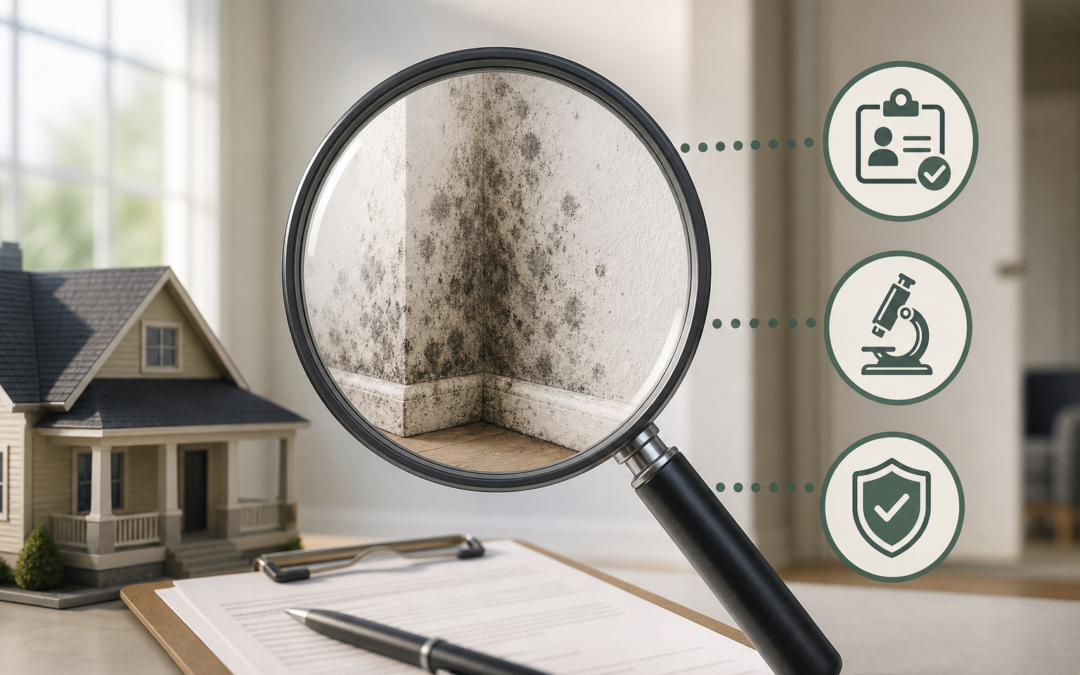
Mold inspection is a visual assessment of your property. The inspector looks for visible growth, water staining, moisture intrusion points, and conditions that support mold development. A qualified inspector uses a moisture meter to check building materials and may use thermal imaging to locate hidden wet areas behind walls or under flooring without cutting into them.
Mold testing means collecting air or surface samples and sending them to a certified laboratory. Results tell you what species are present and at what concentrations. It isn't always necessary — the EPA's general guidance is that if you can see mold, you don't need testing to confirm it exists. Testing becomes valuable when the source is hidden, when occupants have unexplained health symptoms, or when post-remediation clearance is required.
Mold remediation is the physical removal and treatment of mold. A reputable inspection company should not be pitching you remediation during the same visit. More on that conflict of interest below.
What Credentials and Licensing to Verify
Florida doesn't have a single statewide mold inspector license, but that doesn't make credentials irrelevant. Here's what to check before booking.
State licensing for mold assessment. Florida requires a Mold Assessor license from the Department of Business and Professional Regulation for any company performing mold assessments for compensation. Ask for the license number and verify it on the DBPR website before the appointment.
Industry certifications. The IICRC (Institute of Inspection, Cleaning and Restoration Certification) is the most widely recognized body in the restoration industry. Certifications like the Applied Microbial Remediation Technician (AMRT) or Certified Mold Inspector (CMI) from organizations like ACAC signal that the technician has completed formal training — not just picked up a moisture meter.
Insurance. The company should carry general liability and errors and omissions insurance. If an inspector misses a significant mold problem and you discover it after closing on a property, you want recourse. Ask for a certificate of insurance before the visit.
Local experience. A company that has operated continuously in South Florida for over a decade understands the regional conditions that drive mold here: persistent humidity, hurricane-season water intrusion, aging HVAC systems, and concrete construction that traps moisture differently than wood-frame homes in other parts of the country.
The Conflict of Interest You Need to Know About
Here's one of the most important questions to ask — and almost no one asks it: does the company that inspects your home also sell remediation services?
If the answer is yes, understand the incentive structure. An inspector who profits from the remediation job they recommend has a financial reason to find more mold, push for more testing, and scope a larger project than may actually be necessary. That doesn't mean every dual-service company is dishonest. It means you should ask whether the inspector is the same person who writes the remediation estimate, and whether the inspection fee gets waived if you book remediation.
The cleanest arrangement is an independent inspection from a company with no financial stake in what comes next. If you do hire a company that handles both, ask for the written inspection report before any remediation conversation begins — and consider getting a second opinion on the scope of work.
How to Evaluate the Inspection Report Before You Hire
Most homeowners never ask to see a sample report before booking. That's a mistake, especially when the inspection is tied to a real estate transaction.
A thorough mold inspection report should include:
- A written summary of all areas inspected and their condition
- Photographs of moisture readings, visible growth, and any access limitations
- Moisture meter readings with specific locations noted
- A clear explanation of any samples collected, including type (air, swab, or bulk) and the lab used
- Lab results attached or referenced with chain-of-custody documentation
- Recommendations that distinguish between confirmed mold problems and conditions that could support future growth
- The inspector's license number and signature
Ask how long the report takes to deliver after the visit. In a real estate context, a 5-to-7 business day turnaround can kill a deal. A company that uses an accredited lab and delivers results within 48 to 72 hours of sample collection is worth paying a premium for.
Cost Ranges and What Drives the Price
According to ibuyer.com's 2026 data, mold inspection prices range from $150 to nearly $3,000. That's a wide spread, and it reflects real differences in scope — not just company markup.
A basic visual inspection of a standard single-family home with no sampling sits at the lower end. The price climbs when sampling is added, when the property is large, or when access is difficult. ibuyer.com notes that attic and crawlspace access adds $50 to $200 to the base cost. In South Florida, where many homes have attic HVAC systems and older construction with tight crawlspace access, that add-on is common.
Before you book, ask specifically how many samples are included in the quoted price and what the per-sample cost is for any additional ones. Some companies quote a low base price and then charge $50 to $100 per sample — which adds up quickly on a larger property.
For context on what remediation costs if the inspection finds a problem, the 2026 national average runs $1,200 to $3,750 per job, though complex jobs or insurance claims can run significantly higher.
Questions to Ask Before You Book
Before confirming an appointment, run through this list:
- Are you licensed as a Mold Assessor in Florida? What is your license number?
- Do you also perform remediation, and if so, is the inspector the same person who writes the remediation estimate?
- What does the inspection include, and what triggers an additional charge?
- Which laboratory do you use for samples, and how long does it take to receive results?
- What does the final report look like? Can I see a sample?
- Is the inspection fee applied toward remediation if I book with you?
- Do you carry general liability and errors and omissions insurance?
A company that answers these questions directly and without hesitation has nothing to hide. Vague answers or pressure to book before you've had time to think are warning signs worth taking seriously.
Red Flags That Should Make You Walk Away
The inspector recommends testing before finishing the visual. If a company pushes air sampling before completing a thorough visual inspection, they may be padding the invoice. Sampling should follow the inspection, not replace it.
The quote includes remediation before you've seen the report. You should receive a written inspection report before anyone discusses remediation scope or pricing. A company that skips this step is not operating in your interest.
No physical address or local track record. National franchise brands aren't inherently bad, but a company with no verifiable local presence and no history in your specific market may not understand South Florida's construction types, humidity patterns, or permitting requirements.
Unusually low prices with vague scope. A $99 mold inspection that doesn't specify what's included is almost always a lead-generation tactic for remediation upsells. Cheap inspections and expensive remediation quotes tend to travel together.
No written report offered. Verbal findings are useless for insurance claims, real estate transactions, or future reference. If a company doesn't offer a written report as standard, that's a problem.
Why Local Specialization Matters in South Florida
South Florida's climate creates mold conditions that differ meaningfully from the national average. moldscanner.ai reported in 2026 that the population-weighted average prevalence of dampness or mold in U.S. homes is about 47%. In a high-humidity coastal market like Miami-Dade, Broward, or Palm Beach County, that figure reflects local reality more directly than it does in drier inland markets.
A company that focuses exclusively on mold — rather than treating it as one service among many — will have seen more of the specific failure patterns common in South Florida construction: HVAC condensation leaks, post-hurricane water intrusion, bathroom tile failures in older condos, and roof deck moisture in flat-roof commercial buildings.
Royal Mold Specialist has operated in South Florida for over 12 years, serving residential and commercial properties across more than 20 cities in Broward, Miami-Dade, and Palm Beach Counties. The company's five service lines — mold inspection, mold remediation, water damage restoration, sewage backup cleanup, and sanitizing — are handled by one licensed and insured team. Appointments can be booked online through the site's embedded form.
What to Do After the Inspection
If the inspection comes back clean, ask the inspector to flag any moisture-prone areas worth monitoring. Prevention is significantly cheaper than remediation.
If the report identifies mold, read it carefully before agreeing to any scope of work. Understand which areas show confirmed growth versus conditions that could support growth down the line. Ask whether the mold is accessible for standard remediation or whether the job requires containment, HVAC cleaning, or structural work. For larger jobs, get at least two remediation quotes.
Keep the inspection report permanently. It's relevant for insurance claims, future sales, and any disputes with contractors.
FAQs
How much does a mold inspection near me typically cost?
According to ibuyer.com's 2026 data, mold inspection prices range from $150 to nearly $3,000 depending on property size, the number of samples collected, and whether areas like attics or crawlspaces require access. A basic visual inspection of a standard home with no sampling will sit at the lower end of that range.
Do I need mold testing if I can already see mold?
Generally, no. If visible mold is present, the priority is identifying the moisture source and removing the growth. Testing becomes useful when the source is hidden, when occupants have unexplained symptoms, or when post-remediation clearance is required.
Should the mold inspector and the remediation company be the same?
Not ideally. An inspector who profits from the remediation job has a financial incentive to find more mold or recommend a larger scope than necessary. If you use a dual-service company, make sure you receive a written inspection report before any remediation discussion begins.
What credentials should a mold inspector in Florida have?
Florida requires a Mold Assessor license from the Department of Business and Professional Regulation for compensated mold assessments. Industry certifications from bodies like IICRC or ACAC add an additional layer of verified training. Always ask for the license number and verify it independently.
How long does a mold inspection take?
A standard single-family home inspection typically takes one to three hours. Larger properties, homes with difficult attic or crawlspace access, or commercial buildings will take longer. Lab results from samples, if collected, usually return within 48 to 72 hours from an accredited lab.
What should the written mold inspection report include?
A complete report should include a written summary of all areas inspected, photographs, moisture meter readings with locations noted, a description of any samples collected, lab results with chain-of-custody documentation, and clear recommendations. The inspector's license number and signature should appear on the document.
When is mold testing not worth the cost?
Testing adds cost without adding clarity when visible mold is already present and the source is obvious. It's also less useful when a homeowner simply wants a general health check with no specific symptom or moisture concern driving the question. In those cases, a thorough visual inspection by a qualified professional is usually the more practical starting point.
The Bottom Line
Finding a mold inspection company near you is easy. Finding one worth trusting takes a few extra minutes of research. Verify the Florida Mold Assessor license, understand whether the company also sells remediation, ask to see a sample report, and get the scope and pricing in writing before anyone enters your home.
If you're in South Florida and want a licensed, insured team that specializes in mold rather than treating it as a side service, you can book an appointment and learn more at royalmoldfl.com.