- Why Pompano Beach Homes Are Especially Vulnerable to Mold
- Signs You Need a Mold Inspection
- What a Professional Mold Inspection Actually Involves
- Mold Inspection vs. Mold Testing: Understanding the Difference
- What Happens After the Inspection
- Choosing a Mold Inspector in Pompano Beach
- Common Mold Hiding Spots in Pompano Beach Homes
- Mold and Indoor Air Quality: What the Research Shows
- Preventing Mold Between Inspections
- Frequently Asked Questions
- Take the Next Step
Pompano Beach sits in the heart of Broward County, where coastal humidity, frequent afternoon storms, and aging housing stock create near-perfect conditions for mold. If you've noticed a musty smell, spotted discoloration on a wall, or recently dealt with a water leak, a professional mold inspection is usually the smartest first move before the problem gets worse.
This guide covers what a mold inspection actually involves, why Pompano Beach properties face elevated risk, what to expect from the process, and how to find the right company for the job.
Why Pompano Beach Homes Are Especially Vulnerable to Mold
Florida's climate doesn't give mold much resistance to overcome. Pompano Beach averages over 60 inches of rainfall per year, and relative humidity regularly sits above 70% even on clear days. That baseline moisture means mold doesn't need a flood to take hold. A slow roof leak, a poorly sealed window, or an AC unit that isn't draining correctly can be enough.
A few factors specific to Pompano Beach push the risk even higher:
- Older construction: Many homes here were built between the 1960s and 1980s, before moisture barriers and vapor-resistant materials became standard. Older drywall, wood framing, and insulation absorb and hold moisture longer.
- Hurricane season damage: Even minor storms can push water into attic spaces, around window frames, and under roofing. Damage that goes undetected for weeks creates ideal mold conditions.
- AC condensation: South Florida homes run their systems nearly year-round. Condensate drain lines that clog or overflow inside walls are one of the most common hidden mold sources in the area.
- Proximity to water: Neighborhoods near the Intracoastal Waterway or the Atlantic coast tend to have higher ambient indoor humidity, especially in homes without well-maintained vapor barriers.
Knowing these risks helps you catch warning signs before they become expensive problems.
Signs You Need a Mold Inspection
Not every mold problem announces itself with a visible patch of black growth. Many infestations develop inside walls, under flooring, or in attic spaces where they go unnoticed until the colony is well established.
Smell before you see it. A persistent musty or earthy odor—especially in bathrooms, closets, or rooms near the AC unit—often signals hidden mold. If the smell comes back after cleaning, it's not surface dust.
Recent water events. Any water intrusion, whether from a pipe leak, roof damage, flooding, or an appliance malfunction, warrants a professional inspection within a few weeks. Mold can colonize damp materials in as little as 24 to 48 hours.
Health symptoms that improve when you leave home. Recurring respiratory irritation, unexplained headaches, or allergy symptoms that ease when you travel can point to indoor air quality issues, including mold.
Discoloration on walls, ceilings, or grout. Not all mold is black. Green, white, gray, and brown patches can all indicate fungal growth. Discoloration that keeps coming back after cleaning is a red flag.
You're buying or selling a home. Real estate transactions in Pompano Beach increasingly include mold inspections as part of due diligence. Buyers want to know what they're getting; sellers benefit from addressing issues before they surface during a buyer's inspection.
What a Professional Mold Inspection Actually Involves
A mold inspection is not a visual walk-through. A thorough inspection follows a structured process designed to find mold where it's hiding, not just where it's visible.
Visual Assessment
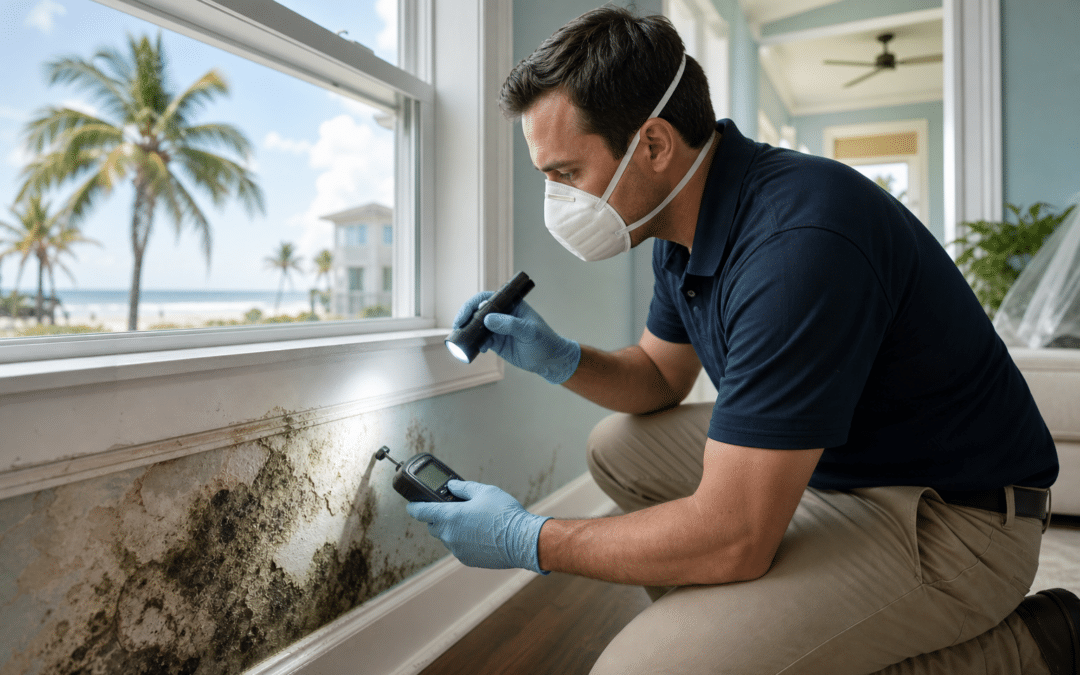
The inspector examines the entire property, focusing on areas with known moisture risk: bathrooms, kitchens, laundry rooms, attics, crawl spaces, and the areas around windows and doors. They look for visible growth, water staining, and structural signs of past or ongoing moisture intrusion.
Moisture Mapping
Professional inspectors use moisture meters and thermal imaging cameras to detect elevated moisture levels inside walls and under flooring without cutting into surfaces. A wall that looks dry to the eye can register significantly elevated readings, indicating active water movement or a past event that wasn't fully dried.
Air Sampling
Air quality samples are collected inside the property and compared against an outdoor baseline. Lab analysis identifies the types and concentrations of mold spores present. Elevated indoor spore counts relative to outdoor levels confirm active mold growth even when no visible colony is found.
Surface Sampling
When visible growth is present, surface swabs or tape lifts are collected and sent to a lab for species identification. Knowing whether you're dealing with common household molds or more aggressive species informs the remediation approach.
Written Report
A reputable inspector provides a written report documenting findings, moisture readings, sample results, and recommended next steps. This report matters if you're filing an insurance claim or negotiating a real estate transaction.
Mold Inspection vs. Mold Testing: Understanding the Difference
These terms get used interchangeably, but they describe different scopes of work.
Mold inspection is the full process described above: visual assessment, moisture mapping, and professional judgment about the scope and likely source of any growth. It may or may not include laboratory sampling depending on what the inspector finds.
Mold testing refers specifically to collecting and analyzing air or surface samples in a lab. Testing without a thorough inspection can produce misleading results. A positive air sample tells you spores are present—it doesn't tell you where the colony is, how extensive it is, or what's feeding it.
For Pompano Beach homeowners, the most useful approach is a complete inspection that includes targeted testing where the inspector identifies elevated risk, not a standalone air test that generates a lab report without context.
What Happens After the Inspection
The inspection report determines what comes next. Outcomes generally fall into three categories:
No active mold found. The inspector may still flag elevated moisture readings and recommend corrective action to prevent future growth. Addressing the moisture source now is far less expensive than treating a colony later.
Limited mold growth. Small, contained areas of mold on non-porous surfaces can sometimes be cleaned without full remediation. The inspector will advise on whether that's appropriate or whether professional remediation is the safer path.
Mold remediation required. When mold has penetrated porous materials like drywall, insulation, or wood framing, professional remediation is necessary. This involves containing the affected area, removing compromised materials, treating surfaces, and verifying clearance through post-remediation testing.
Nationally, mold remediation jobs average between $1,200 and $3,750 in 2026, though costs vary based on the size of the affected area, the materials involved, and whether water damage restoration is also needed. Insurance coverage depends on the cause of the mold and the specifics of your policy.
Choosing a Mold Inspector in Pompano Beach
The quality of a mold inspection depends heavily on who you hire. A few things worth evaluating:
Mold-specific experience. Companies that specialize in mold rather than treating it as one service among many tend to bring sharper diagnostic skills. A team that works with mold every day develops pattern recognition that matters in ambiguous cases.
Local knowledge. South Florida's climate, construction styles, and common failure points are different from the rest of the country. A company that has operated in Broward County for years understands the specific ways moisture moves through local homes.
Transparent process. Ask whether the inspection includes a written report, what types of sampling are used, and how long lab results take. A company that can't explain its process clearly is one to avoid.
Full-service capability. If the inspection finds mold, you'll want a company that can handle remediation without requiring you to start over with a different contractor. Continuity from inspection through remediation reduces the risk of anything being missed.
Royal Mold Specialist has served Pompano Beach and the surrounding Broward County communities for over 12 years. The company focuses exclusively on mold, handling everything from initial inspection through full remediation, water damage restoration, and sanitizing—with its own trained technicians, not subcontractors. You can book an inspection directly through the website.
Common Mold Hiding Spots in Pompano Beach Homes
Knowing where mold tends to develop helps you have a more informed conversation with your inspector and better understand the findings in the report.
Attics: Poor ventilation combined with Florida's heat causes condensation to form on roof decking. Attic mold is one of the most common findings in South Florida inspections and one of the most frequently underestimated by homeowners.
Behind bathroom tiles: Grout and caulk failures allow water to penetrate the wall cavity behind shower surrounds and tub enclosures. The mold grows on the drywall or backer board, invisible from the surface.
Under kitchen and bathroom sinks: Slow drips from supply lines or drain connections create persistent moisture on cabinet floors and adjacent walls. The enclosed space limits airflow and accelerates growth.
Around windows and sliding glass doors: Homes with older window seals or aluminum frames that have shifted over time often develop moisture intrusion at the frame perimeter—especially after hurricane season.
HVAC systems and ductwork: Mold in air handling units or duct lining can distribute spores throughout the entire home every time the system runs. This is one reason air sampling is a valuable part of a thorough inspection.
Crawl spaces: Less common in Pompano Beach than in other regions, but homes with any below-grade or semi-enclosed foundation spaces can accumulate significant moisture and mold growth.
Mold and Indoor Air Quality: What the Research Shows
Mold exposure is associated with respiratory symptoms, allergic reactions, and in cases of prolonged high-level exposure, more serious health effects. The specific impact depends on the mold species, the concentration of spores, and the sensitivity of the people living in the home.
The U.S. Environmental Protection Agency recommends addressing any visible mold or moisture problem promptly—regardless of species—rather than waiting for testing to confirm a specific type before acting. The presence of mold in a living space is itself the problem.
For households with young children, elderly residents, or anyone with asthma or immune system conditions, the threshold for taking action should be lower. A professional inspection gives you documented evidence of what's present and a clear path to resolving it.
Preventing Mold Between Inspections
An inspection addresses what's already there. Keeping mold from returning requires ongoing attention to moisture control.
- Keep indoor humidity below 60%, ideally between 45% and 55%. A whole-home dehumidifier is a worthwhile investment in South Florida.
- Service your AC system at least once a year, including the condensate drain line.
- Inspect your roof after every significant storm and address damage quickly.
- Reseal windows and sliding doors when you notice gaps or water intrusion around frames.
- Run exhaust fans during and after showers, and confirm they're venting to the outside rather than into the attic.
- Address plumbing leaks the same day you find them.
Moisture control is the single most effective long-term mold prevention strategy. Everything else is secondary.
Frequently Asked Questions
How long does a mold inspection in Pompano Beach take?
Most residential inspections take between one and three hours depending on the size of the property and how many areas require detailed assessment. Lab results from air or surface samples typically add a few business days before the final report is complete.
Do I need a mold inspection if I can already see mold?
Yes. Visible mold confirms growth is present, but it doesn't tell you how far it extends, whether there are additional hidden colonies, or what moisture source is feeding it. An inspection before remediation ensures the full scope of the problem is understood and addressed.
Will homeowner's insurance cover mold remediation in Florida?
Coverage depends on the cause. Most standard policies cover mold resulting from a sudden, accidental event like a burst pipe, but typically exclude mold from long-term leaks, flooding, or maintenance neglect. Your inspection report documenting the cause and timeline can be important evidence when filing a claim.
How much does a mold inspection cost in Pompano Beach?
Inspection fees vary by company and scope. Royal Mold Specialist quotes jobs on-site—contact them directly for pricing. For context, full mold remediation nationally averages between $1,200 and $3,750 in 2026, with inspection costs typically separate from remediation.
Is there a difference between a mold inspection and a home inspection for real estate?
Yes. A general home inspection covers the overall condition of a property—structural, mechanical, and electrical systems. Mold may be noted if it's visible, but a home inspector is not a mold specialist and typically doesn't perform air sampling or moisture mapping. If you're buying a home in Pompano Beach and have any concern about mold, a dedicated mold inspection is a separate and more thorough engagement.
What's the difference between mold inspection and mold remediation?
Inspection identifies whether mold is present, where it is, and what's causing it. Remediation is the physical process of containing, removing, and treating it. They are sequential steps, not interchangeable terms. A proper remediation should always be preceded by a thorough inspection.
How soon after a water leak should I schedule a mold inspection?
As soon as possible. Mold can begin developing on wet materials within 24 to 48 hours. Even if the affected area was dried quickly, an inspection within two to three weeks of any significant water event is a reasonable precaution in South Florida's climate.
Take the Next Step
Mold doesn't wait, and in Pompano Beach's humidity, it moves fast. Whether you've noticed warning signs or simply want peace of mind after a water event or storm season, a professional mold inspection gives you the information you need to act with confidence.
Royal Mold Specialist serves Pompano Beach and 20+ cities across South Florida with mold inspections, remediation, water damage restoration, and sanitizing—handled by the company's own trained technicians. Book directly at royalmoldfl.com.