- Why Florida Home Buyers Need a Separate Mold Inspection
- When to Order a Mold Inspection During the Buying Process
- What a Mold Inspection Covers
- Reading the Results: What the Report Tells You
- What to Do If Mold Is Found
- Florida-Specific Risks to Know Before You Buy
- How to Choose a Mold Inspector in South Florida
- After Purchase: Clearance and Ongoing Prevention
- FAQs: Mold Inspection for Home Purchase in Florida
- The Right Inspection Protects Your Investment
Buying a home in South Florida is one of the biggest financial decisions you'll ever make, and a mold inspection should be on your checklist before you close. Florida's heat, humidity, and frequent rain create near-perfect conditions for mold to grow inside walls, under floors, and behind cabinets — often with no visible sign on the surface. A standard home inspection won't catch all of it. This guide covers what a dedicated mold inspection includes, when to order one, how to read the results, and what your options are if mold turns up.
Why Florida Home Buyers Need a Separate Mold Inspection
A general home inspector covers structure, electrical, plumbing, and HVAC. Mold is not their primary focus, and most aren't equipped to test air quality or identify hidden moisture intrusion behind finished surfaces.
Florida makes the problem worse. Indoor humidity rarely drops below 60 percent without active air conditioning, and even a brief AC outage, a slow roof leak, or a plumbing drip behind drywall can produce active mold colonies within 24 to 48 hours. Older homes, properties that sat vacant, and homes that experienced any storm flooding are especially high-risk.
A dedicated mold inspection is a separate engagement with a specialist whose entire focus is mold and moisture. They bring tools a general inspector typically doesn't carry: moisture meters, thermal imaging cameras, and air sampling equipment. The goal is to find what the general inspection missed.
When to Order a Mold Inspection During the Buying Process
Timing matters. You want the inspection done during your due diligence window — after your offer is accepted but before you waive contingencies. That gives you time to negotiate repairs, request remediation, or walk away if the findings are serious.
Before Making an Offer
If you tour a home and notice any of the following, raise the issue with your agent before you're under contract:
- A musty or earthy smell anywhere in the home
- Visible staining on ceilings, walls, or around windows
- Discoloration under sinks or around the water heater
- Peeling paint or bubbling drywall near exterior walls
- Evidence of past flooding, even if repaired
None of these are automatically disqualifying, but they're signals that a mold inspection should be a condition of the sale.
After Acceptance, During Due Diligence
This is the standard window. Most Florida purchase contracts allow 10 to 15 days for inspections. Schedule your general inspection first, then use those findings to guide the mold inspection. If the general inspector notes moisture intrusion, past water damage, or HVAC issues, those areas become priority targets for the mold specialist.
Before Closing on a Newly Remediated Property
If the seller discloses prior mold remediation, verify the work was done correctly. A clearance inspection confirms that remediation met professional standards and that spore counts in affected areas are back within normal range. Never skip this step on a previously remediated home.
What a Mold Inspection Covers
A professional mold inspection in Florida typically includes several components. Here's what to expect from a thorough engagement.
Visual Assessment
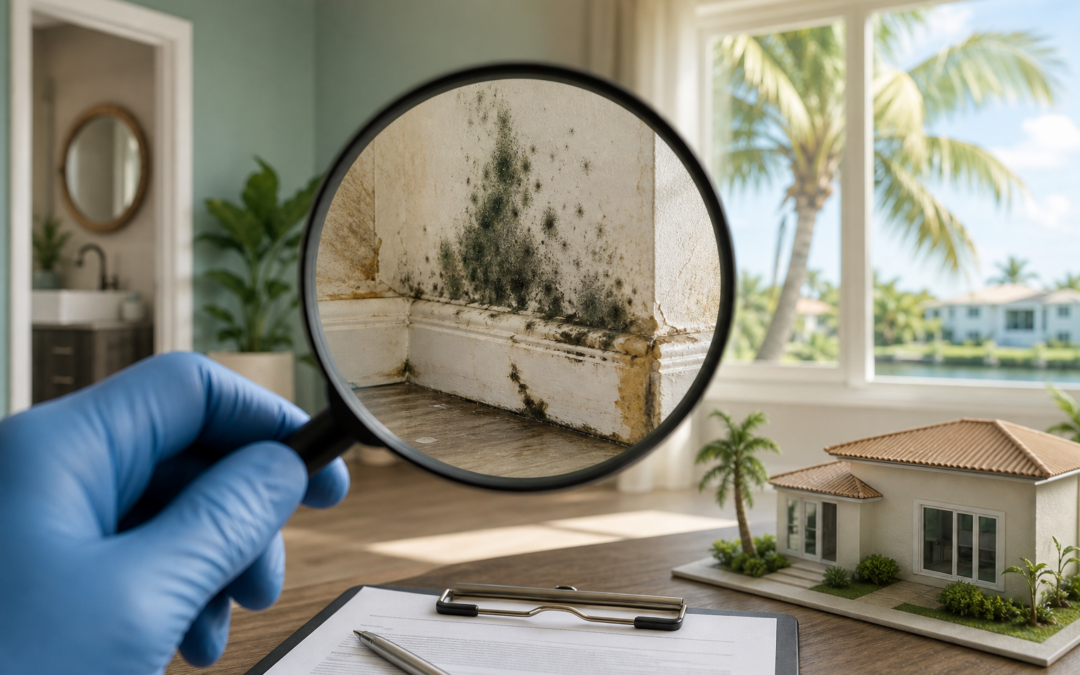
The inspector walks the entire property looking for visible mold growth, water stains, condensation patterns, and building defects that allow moisture intrusion. This includes attics, crawl spaces, under sinks, inside closets, around HVAC air handlers, and along the foundation perimeter.
Moisture Mapping
Using a moisture meter and sometimes a thermal imaging camera, the inspector identifies areas where moisture levels are elevated inside walls, floors, or ceilings. Elevated moisture without visible mold still signals active risk. In Florida, moisture mapping isn't optional — it's the only reliable way to find problems before they become visible.
Air Sampling
Air samples are collected inside the home and compared to an outdoor baseline. Elevated indoor spore counts, or the presence of specific mold species at high concentrations, indicate active growth somewhere in the building envelope. Air sampling is especially useful when there's a musty odor but no visible mold.
Surface Sampling
If the inspector identifies a suspicious area, they may take a swab or tape lift sample to identify the mold species present. This matters because some species carry greater health concern than others, and knowing what's there can shape the remediation approach.
Written Report
A professional inspection ends with a written report documenting findings, identifying affected areas, noting moisture readings, and including lab results for any samples collected. This report is your negotiating document with the seller and your roadmap if remediation is needed.
Reading the Results: What the Report Tells You
Mold inspection reports can look technical. Here's how to interpret the key findings.
Elevated spore counts indoors vs. outdoors: If indoor spore counts significantly exceed outdoor counts, active mold growth is likely somewhere inside the home. The lab report will identify which species are elevated.
Moisture readings: Readings above 16 to 20 percent in wood or drywall indicate moisture levels that support mold growth. Any reading in that range in a non-wet area is a flag.
Species identification: The report may identify common molds like Cladosporium or Penicillium, which are widespread and less alarming at low levels, or species like Stachybotrys chartarum, which is associated with chronic water damage and higher health concern. Species alone doesn't tell the whole story — concentration and location matter too.
Affected square footage: The report should note the approximate area of any visible or suspected growth. This directly affects remediation scope and cost.
What to Do If Mold Is Found
Finding mold during a home purchase is not automatically a deal-breaker. What matters is the scope, the cause, and whether the seller is willing to address it.
Negotiate Remediation Before Closing
You can ask the seller to have mold remediated by a licensed specialist before closing, with a clearance inspection confirming the work is complete. This is the cleanest outcome: you take ownership of a property that has been properly treated.
Make sure the remediation is performed by a specialist — not a general contractor with a bleach spray bottle. Surface-only treatments don't address the root cause and won't pass a clearance inspection. In Florida's humidity, mold that isn't fully remediated will come back.
Request a Price Reduction
If the seller won't remediate before closing, you can negotiate a price reduction that accounts for the cost of remediation after purchase. Get a written quote from a licensed specialist before agreeing to a number. That quote should cover inspection, remediation, and a post-clearance test.
Walk Away
If the scope of mold growth is extensive, if the cause is structural — a failing roof, a chronic foundation leak, a compromised HVAC system — or if the seller won't negotiate, walking away is a legitimate outcome. A mold problem that isn't properly addressed will cost far more than any purchase price difference.
Florida-Specific Risks to Know Before You Buy
South Florida buyers face conditions that make mold risk higher than in most other states.
Year-round humidity: Unlike northern states where winter dries out buildings, South Florida stays humid all year. Homes need functioning HVAC systems and proper ventilation to maintain safe moisture levels.
Hurricane and storm history: Homes in Broward, Miami-Dade, and Palm Beach Counties are regularly exposed to storm events that can force water into wall cavities, under flooring, and into attics. A home that flooded even once and wasn't properly dried within 48 to 72 hours likely has residual mold somewhere.
Older construction: Many South Florida homes were built before modern moisture barriers and vapor retarder standards. Homes built before the 1990s are especially likely to have building envelope issues that allow moisture intrusion.
Vacant properties: Homes that sat on the market for months — especially without consistent air conditioning — are high-risk. Without active cooling and dehumidification, mold can colonize quickly in Florida's climate.
Flat roofs and low-slope construction: Common in South Florida architecture, flat roofs are more prone to ponding water and slow leaks than pitched roofs. Any home with a flat or low-slope roof section deserves extra attention during a mold inspection.
How to Choose a Mold Inspector in South Florida
Not every inspector brings the same level of expertise. Here's what to look for when hiring someone to inspect a home you're considering purchasing.
Mold as a specialization, not a side service: A company that focuses exclusively on mold and moisture will bring more targeted expertise than a general home inspector who offers mold testing as an add-on. Specialization matters in a climate like South Florida's.
Independent inspection and remediation: For a pre-purchase inspection, you want an unbiased assessment. Some companies both inspect and remediate — that's fine, as long as the inspection report stands on its own and you're not pressured into remediation before you understand your options.
Written reports with lab results: Any inspector worth hiring will provide a written report that includes lab analysis for any samples collected. Verbal-only findings aren't acceptable for a real estate transaction.
Local experience: South Florida mold behaves differently than mold in drier climates. An inspector with years of experience in Broward, Miami-Dade, or Palm Beach County will recognize patterns and problem areas that a generalist might miss.
Royal Mold Specialist has operated in South Florida for over 12 years, serving more than 20 cities across Broward, Miami-Dade, and Palm Beach Counties. The team handles the full scope — from inspection through remediation, water damage restoration, and clearance — so if the inspection turns up a problem, you have a direct path to resolution without coordinating multiple contractors.
After Purchase: Clearance and Ongoing Prevention
If you bought a home where mold was remediated before closing, schedule a clearance inspection after you take possession to confirm the work held. This is especially important heading into your first rainy season.
Once you're in the home, moisture control is your best defense. Keep indoor humidity below 60 percent, service your HVAC system annually, fix any leaks within 24 hours, and make sure bathroom and kitchen ventilation is working properly. In South Florida, these aren't optional maintenance items — they're the difference between a dry home and one that develops a mold problem within a few years.
If you ever notice a musty smell, see discoloration on walls or ceilings, or experience a water event of any kind, treat it as a mold risk and get an inspection promptly. Early detection costs a fraction of what full remediation runs after mold has had time to spread.
FAQs: Mold Inspection for Home Purchase in Florida
Does a standard home inspection include mold testing?
No. A general home inspection covers structure, electrical, plumbing, and HVAC. Mold testing requires separate equipment and expertise. If your general inspector notes moisture or water damage, schedule a dedicated mold inspection before you close.
Who pays for the mold inspection when buying a home?
In most transactions, the buyer pays for inspections during due diligence. That said, if the seller discloses prior mold issues or mold is found during the general inspection, you may be able to negotiate for the seller to cover remediation costs or reduce the purchase price accordingly.
How long does a mold inspection take?
For a typical single-family home, a thorough mold inspection takes two to four hours. Larger homes or properties with known water damage history may take longer. Lab results for air or surface samples usually come back within two to five business days.
Can I negotiate with the seller if mold is found?
Yes. You can request that the seller remediate before closing, reduce the purchase price to cover remediation costs, or in some cases, both. Get a written remediation quote from a licensed specialist before entering negotiations so you have a specific number to work from.
What is a clearance inspection and do I need one?
A clearance inspection is conducted after remediation to confirm that mold has been removed and that indoor air quality is back within normal range. If you're purchasing a home where remediation was performed, a clearance inspection is essential. Don't accept the seller's word that the work was done correctly — require documentation.
Is mold common in South Florida homes?
Yes. South Florida's heat and humidity create conditions where mold can develop quickly after any moisture event. Older homes, homes with flat roofs, and properties that sat vacant are at higher risk. A dedicated mold inspection before purchase is one of the most practical steps a Florida buyer can take.
What should I do if I find mold after I've already closed?
Contact a licensed mold specialist as soon as possible. Delaying remediation allows mold to spread and increases the cost of treatment. Document the mold with photos, check your homeowner's insurance policy for coverage, and get an inspection to determine the source and scope before any work begins.
The Right Inspection Protects Your Investment
A mold inspection for home purchase in Florida isn't a precaution for nervous buyers — it's a practical step in a state where the climate makes mold a real and common risk. The cost of a proper inspection before closing is small compared to discovering a mold problem after you own the property.
If you're buying a home anywhere in Broward, Miami-Dade, or Palm Beach County, schedule a dedicated mold inspection during your due diligence window. If mold is found, work with a specialist who can give you a clear picture of the scope and a path to resolution. Learn more at royalmoldfl.com.