- What Home Air Quality Testing Actually Measures
- When You Need Air Quality Testing in Your Home
- What Drives the Cost of Home Air Quality Testing in South Florida
- How the Testing Process Works
- What to Do With the Results
- South Florida-Specific Factors That Raise Your Risk
- Frequently Asked Questions
- Act Before the Problem Grows
South Florida homes deal with a combination of heat, humidity, and frequent water intrusion that few other regions face. That environment makes understanding air quality testing for your home genuinely important—well before a problem becomes obvious. If you've noticed a musty smell, spotted visible mold, or recently dealt with a leak, the air inside your home may already be carrying contaminants that affect your health and your property.
This guide covers what home air quality testing actually measures, when it makes sense to get one, what drives the cost in South Florida, and how to act on the results once you have them.
What Home Air Quality Testing Actually Measures
"Air quality testing" covers a range of assessments, and knowing the difference matters before you spend money on the wrong one.
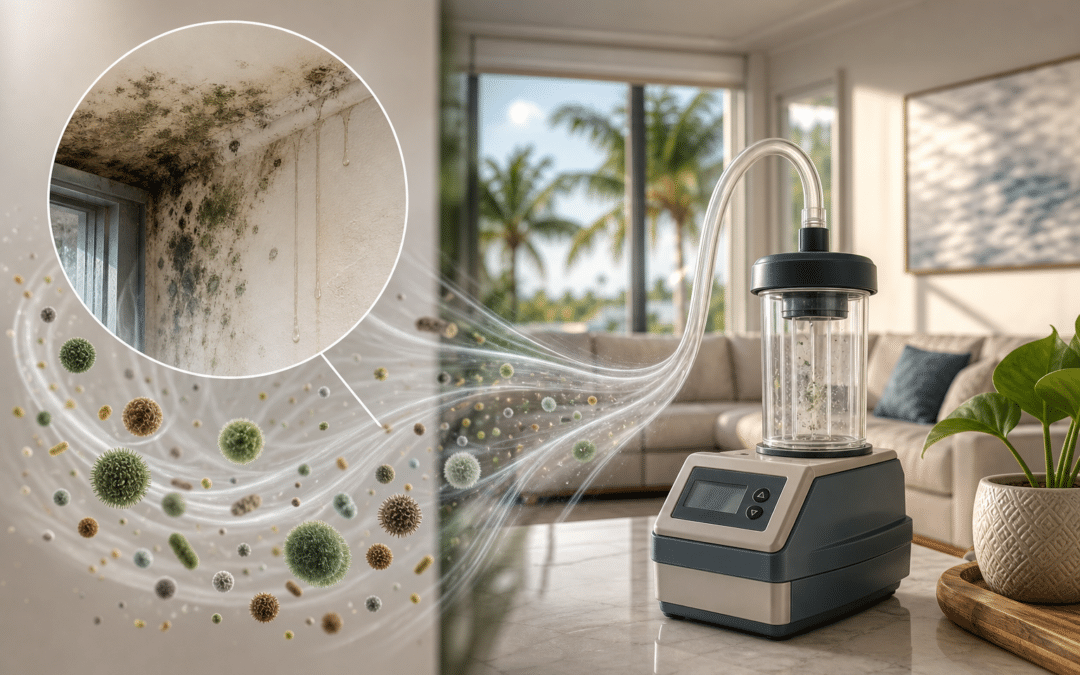
Mold spore sampling is the most common test requested in South Florida. A technician collects air samples using a spore trap cassette, which is then analyzed by a third-party laboratory. The results show the types and concentrations of mold spores present indoors compared to an outdoor baseline. Elevated indoor counts—or the presence of certain species like Stachybotrys (black mold) or Chaetomium—indicate an active mold problem even when nothing is visible.
Surface sampling complements air sampling. Swabs or tape lifts taken from walls, HVAC vents, or ceiling tiles identify what's growing on a surface rather than what's floating in the air. Used together, both methods give a much more complete picture.
VOC and chemical testing measures volatile organic compounds, which can come from building materials, cleaning products, or off-gassing from water-damaged materials. Less common in residential settings, but relevant after major flooding or renovation.
Particulate and allergen testing checks for dust mites, pet dander, pollen, and fine particulate matter—useful for households with allergy or asthma sufferers who can't identify a clear trigger.
Most South Florida homeowners requesting air quality testing are primarily concerned with mold, given the region's climate. A thorough mold inspection combined with air sampling addresses the most likely source of indoor air quality problems here.
When You Need Air Quality Testing in Your Home
Not every situation calls for a formal test. But several scenarios make testing the right move rather than guessing.
After Any Water Intrusion
A burst pipe, roof leak, storm flooding, or even an appliance overflow can leave moisture behind in walls, under flooring, and inside insulation. Mold can begin growing within 24 to 48 hours of a moisture event. If remediation wasn't completed immediately—or if you're unsure how thoroughly the area dried—air quality testing tells you whether spores have already spread through the space.
When You Smell Mold but Can’t Find It
Musty odors often mean mold is growing inside a wall cavity, behind baseboards, or inside ductwork. You can't see it, but the spores are circulating. Air sampling can confirm whether the smell corresponds to elevated spore counts and help a remediation team pinpoint the source.
Before Buying or Renting a Property
South Florida's older housing stock and history of hurricane damage make mold a real risk in pre-owned homes. A pre-purchase air quality test is a reasonable due-diligence step, especially if the property has had water damage disclosures or shows signs of past repairs near plumbing or the roof.
When Occupants Have Unexplained Health Symptoms
Persistent coughing, sinus congestion, headaches, or skin irritation that clears up when you leave the house and returns when you come back can point to an indoor air quality issue. Testing provides a documented baseline and, if elevated spore counts are found, a clear path to remediation.
After Mold Remediation Is Complete
Post-remediation testing—sometimes called clearance testing—confirms that the work was successful. Spore counts should return to levels comparable to the outdoor baseline. Skipping this step means trusting the remediation company's word without independent verification.
If Your HVAC System Is Old or Poorly Maintained
Air handlers and ductwork in South Florida accumulate moisture and biological growth over time. If your system hasn't been inspected in several years, or if you've noticed dust or debris coming from vents, testing the air near supply registers can reveal whether the system is distributing mold spores throughout the home.
What Drives the Cost of Home Air Quality Testing in South Florida
Pricing for air quality testing varies based on several factors. The following reflects the general variables that determine cost in this market. Always request a quote specific to your property.
Property size is the primary driver. A 1,000-square-foot condo requires fewer samples than a 4,000-square-foot house. More square footage means more sampling locations and higher laboratory fees.
Number of samples collected affects cost directly. A standard residential test typically includes outdoor baseline samples plus multiple indoor samples from different areas or rooms. Additional zones mean additional samples.
Type of testing matters too. A basic mold air quality test costs less than a comprehensive assessment that includes surface sampling, HVAC inspection, and VOC analysis. If you're trying to confirm or rule out mold after a small leak, a targeted test costs considerably less than a whole-home assessment.
Laboratory analysis fees are a real component of the total. Reputable testing sends samples to an accredited third-party lab, and those fees are typically included in the quote. Faster turnaround from the lab usually costs more.
Remediation versus inspection-only changes the pricing structure entirely. An inspection with air sampling is a separate service from remediation. Some companies offer free or discounted inspections when you also hire them for remediation; others charge for inspection regardless. Understand what you're paying for before you book.
Location within South Florida can affect pricing slightly based on travel and regional market rates. Miami-Dade, Broward, and Palm Beach counties each have their own dynamics.
For a straightforward mold air quality test in a typical South Florida home, you should receive a written quote before any work begins. Be cautious of any company that quotes a price without seeing the property or understanding the scope.
How the Testing Process Works
A trained technician starts with a visual walkthrough, noting any visible mold growth, water stains, condensation patterns, or areas of concern. That inspection informs where samples are collected.
Air samples are taken using a calibrated pump that draws a measured volume of air through a spore trap cassette over a set period—typically five to ten minutes per sample. Samples are labeled, sealed, and sent to an accredited laboratory.
You'll receive a written lab report showing spore types and concentrations compared against the outdoor baseline. A qualified inspector interprets those results for you, explaining what the numbers mean and whether remediation is warranted.
If the results show elevated levels, the next step is identifying the moisture source and developing a remediation plan. Testing alone doesn't fix anything—it gives you the information needed to fix it correctly.
What to Do With the Results
A clean result—indoor spore counts comparable to outdoor levels, no concerning species identified—is reassuring. It means the air in your home is within a normal range. Keep the report as a baseline for future comparison.
An elevated result requires action. The report will typically identify which rooms or zones showed elevated counts, which helps target remediation. From there, you need a remediation company that can locate the moisture source, remove affected materials, treat the area, and verify the results with post-remediation testing.
Royal Mold Specialist handles the full process—from initial inspection and air sampling through complete remediation and post-clearance verification—across more than 20 cities in South Florida. Having the same team manage testing and remediation simplifies the process, though some homeowners prefer to use a separate company for clearance testing as an independent check.
Either approach works. What matters is that the clearance test gets done, the results are documented, and the moisture source has been addressed—not just the visible mold.
South Florida-Specific Factors That Raise Your Risk
South Florida's climate creates conditions that make home air quality testing more relevant here than in most of the country.
Humidity rarely drops below 60 percent—the threshold at which mold growth becomes possible on most surfaces. During summer months, indoor humidity can spike significantly if an air conditioning system is undersized, malfunctioning, or turned off for extended periods.
Hurricane season runs from June through November, and storm damage, roof leaks, and flooding are common sources of moisture intrusion. Many mold problems discovered in the fall trace back to water that entered during a summer storm and was never fully dried out.
Older construction in parts of Miami-Dade and Broward often uses building materials that absorb moisture more readily than modern alternatives. Plaster walls, older drywall, and wood framing in crawl spaces are particularly vulnerable.
Year-round air conditioning use means HVAC systems run almost constantly, and any moisture that enters the system—whether from a clogged condensate drain or a refrigerant leak causing ice buildup—can spread spores through every room in the home.
If you live in South Florida and haven't had an air quality test in several years—especially if you've had any water-related events since then—testing is a reasonable precaution, not an overreaction.
Frequently Asked Questions
How long does a home air quality test take?
A standard residential test takes between one and three hours, depending on the size of the property and the number of samples collected. Laboratory results typically take two to five business days, though expedited turnaround is usually available at an additional cost.
Can I use a DIY air quality test kit instead of hiring a professional?
DIY mold test kits are available at hardware stores, but they have real limitations. Most only confirm whether mold spores are present—not what type or at what concentration. They also don't include an outdoor baseline for comparison, which is essential for interpreting results accurately. A professional test with laboratory analysis gives you actionable data. A DIY kit often just confirms that mold exists somewhere, which is true in virtually every home.
Does homeowners insurance cover air quality testing?
Coverage depends on your policy and the cause of the problem. If mold resulted from a covered peril—such as a sudden pipe burst—your insurer may cover testing and remediation. Mold caused by ongoing moisture issues or neglect is typically excluded. Review your policy and contact your insurer before assuming coverage.
How often should South Florida homeowners test their home's air quality?
There's no universal rule, but testing after any water intrusion event, before purchasing a property, and every few years as a general precaution is reasonable given South Florida's climate. If anyone in the home has respiratory conditions, more frequent testing may be worthwhile.
What's the difference between a mold inspection and an air quality test?
A mold inspection is primarily visual—a trained inspector looks for signs of mold growth, moisture damage, and conditions that support mold. An air quality test involves collecting physical samples analyzed in a laboratory. The two are often performed together, and combining them gives a more complete picture than either alone.
How do I know if a mold remediation company did the job correctly?
Post-remediation clearance testing is the standard way to verify results. Samples collected after remediation should show indoor spore counts at or below outdoor baseline levels. A reputable company will recommend clearance testing and shouldn't object to an independent third party conducting it.
What mold species are most common in South Florida homes?
Cladosporium, Penicillium, and Aspergillus are among the most frequently found species in South Florida air samples. Stachybotrys chartarum—commonly called black mold—is less common but associated with chronic water damage and requires professional remediation. Any species found at elevated concentrations relative to the outdoor baseline warrants attention, not just the well-known ones.
Act Before the Problem Grows
Home air quality testing gives you facts instead of guesses. In South Florida's climate, where moisture and heat create near-ideal conditions for mold growth year-round, waiting for visible mold or serious health symptoms means the problem is already well established.
Testing is the starting point. What you do with the results determines whether your home stays healthy or the problem compounds. If testing reveals elevated spore counts, the path forward is straightforward: find the moisture source, remediate properly, and verify the results.
Royal Mold Specialist has served South Florida homeowners and businesses for over 15 years. If you're ready to schedule an inspection or have questions about air quality testing for your home, you can book an appointment at royalmoldfl.com.