
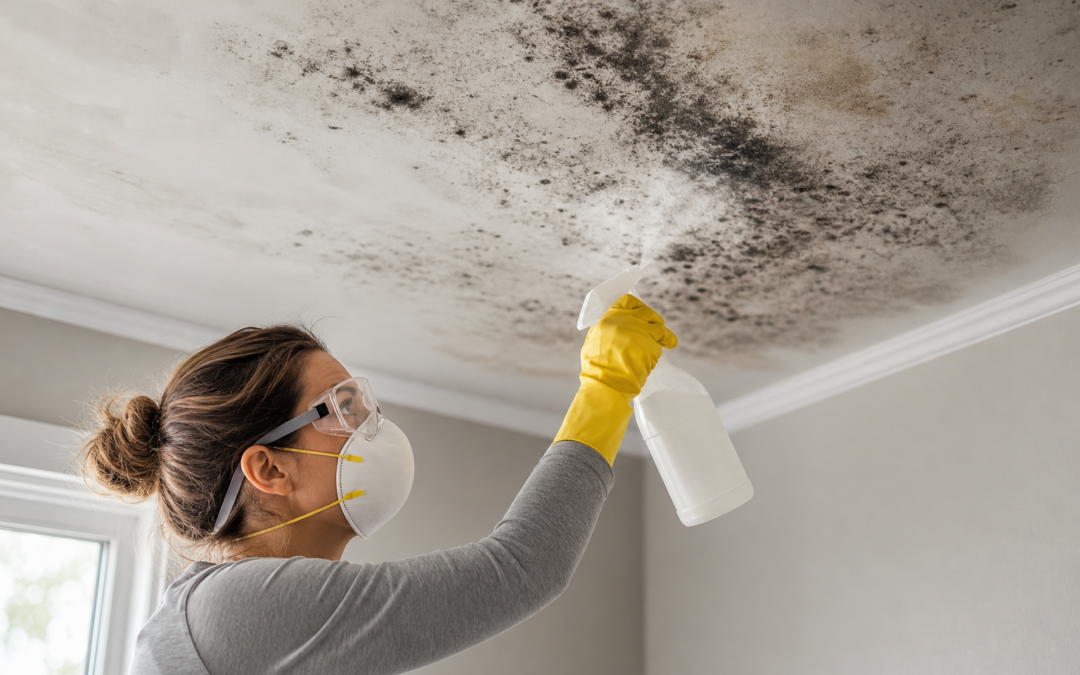
Fungus on a ceiling is almost always mold feeding on moisture from a leak, condensation, or poor ventilation. For a small patch, wear an N95 mask, gloves and goggles, wipe it with white vinegar, scrub gently, and dry it fully. Fix the moisture source, or it will return. Large or recurring growth needs a professional.
You noticed a mark overhead, and you want to know what it is before you touch it. Good instinct. Clean the wrong thing and you waste an afternoon. Clean the right thing without finding the cause, and you'll be back with the same sponge in a few months.
This guide covers how to identify what you're looking at, remove it safely, handle textured ceilings, stop it from returning, and know when to call a professional.
What Is Fungus on a Ceiling, and Is It Really Mold?
Fungus on a ceiling is mold: a living growth that needs moisture, a food source such as drywall paper or paint, and time. Before you treat anything, confirm it's mold and not ghosting or a water stain. All three look alike from the floor, but each needs a different fix.
Ceiling mold is common. Research by Uswitch found that 27% of UK residents who have experienced household mold reported finding it on their ceilings. In the U.S., occupants of 3.9 million housing units reported seeing mold in their homes over the previous year, according to Mold Law King's 2023 data.
Here is how to tell the three apart:
- Mold. Fuzzy, speckled, or slimy patches, often in clusters or spreading rings. Colors run white, green, gray, brown, or black. It usually comes with a smell.
- Ghosting. Flat, dusty gray or black stripes that follow the framing behind the drywall. Soot and dust settle where the ceiling is colder, so the lines trace the joists. There is no fuzz and no texture.
- Water stains. Yellow or brown rings with a darker edge, usually smooth. They mark where water soaked through. A stain can have mold growing on it, but the stain alone is just discoloration.
Two quick checks help. Press a damp white cloth against the mark: mold often smears or lifts color, while a dry stain stays put. Then smell the area. Mildew, an early surface-level mold, smells sharp, sour, and like a damp towel. Established mold smells deeper and earthier, like wet soil or rotting wood.
If the mark sits in a perfect line along a rafter, suspect ghosting. If it sits under a bathroom, roofline, or pipe, suspect moisture and mold.
White, Black or Brown Fungus on the Ceiling: What Each Usually Means
Color hints at what's going on, but it doesn't tell you the species or how toxic it is. Use the table to pick your next move, then confirm the cause with the smell and cloth tests above.
| What you see | What it usually means | What to do next |
|---|---|---|
| White fungus on ceiling. Powdery or cottony patches | Often early-stage mold on a damp surface. It can also be efflorescence, a chalky mineral residue left when water evaporates from masonry or plaster | Wipe a small spot with a damp cloth. If it smears and smells musty, treat it as mold. If it's gritty and odorless, find and fix the water source |
| Black fungus on ceiling. Dark specks or clusters, often fuzzy | Established mold, common above showers and near leaks. Black does not automatically mean the dangerous species | Treat as mold. Clean a small area, or call a professional if it's large or keeps returning |
| Brown fungus on ceiling. Tan to dark brown patches or rings | Often mold growing on a water stain, or a stain from an older leak | Look for a roof, plumbing, or condensation source. Check the attic or the room above |
| Dark soot lines. Flat gray or black stripes along framing | Ghosting from dust and temperature differences, not mold | Clean the surface, then improve insulation and airflow |
| Yellow-brown rings. Smooth, with a darker edge | A past or ongoing water leak | Find the leak. Dry the area. Check for mold growing on the stain |
Never judge a species by sight. Two patches that look identical can be different molds, and only lab testing separates them. The advice is the same in every row: find the moisture, then remove the growth.
Is Fungus on the Ceiling Dangerous?
Fungus on a ceiling can affect your health, but the risk depends on who lives in the home and how long the mold has been there. Most healthy adults get mild irritation at worst. Children, older adults, and people with asthma, allergies, or weakened immune systems react more strongly.
Typical symptoms include coughing, sneezing, a stuffy or runny nose, itchy eyes, and wheezing. These often improve when you leave the room or house. If someone in your home has persistent breathing problems that seem tied to one space, take that seriously and see a doctor.
Color does not decide the danger. Black mold has the scary reputation, but black fungus on a ceiling is not automatically more hazardous than white, green, or brown. Plenty of dark species exist, and several can irritate your lungs. Treat every visible growth as something to remove promptly, and skip the guesswork about "toxic" versus "harmless."
Time matters more than color. Mold on a ceiling usually means a leak or damp air sits above or behind it, and that moisture keeps feeding the growth. In South Florida, humidity stays high most of the year and storm season runs June through November, so a damp ceiling can turn into a spreading problem fast.
How to Get Rid of Fungus on a Ceiling, Step by Step
You can clean a small patch yourself, in a bedroom or any other room, with household supplies. "Small" means a spot you can cover with your hands, with no soft or sagging drywall behind it. Work in order. Skip the prep and spores end up on your bed and furniture.
- Put on protective gear. Wear an N95 mask (a respirator that filters fine particles), gloves, and eye protection. Overhead cleaning drops debris straight toward your face, so goggles matter more than you'd expect [S1].
- Prepare the room. Cover the floor and furniture with dust sheets. In a bedroom, move the bed or cover it completely. Open a window and keep the door closed to the rest of the house [S2].
- Mix your cleaner. Use undiluted white vinegar, or a 1:1 mix of white vinegar and water [S3].
- Saturate the area. A floor mop gives you reach without a ladder, and a spray bottle works for tight spots. Wet the patch and a few inches around it [S4].
- Scrub gently. Use a soft-bristle brush or scouring sponge. Hard scrubbing tears paper facing on drywall and opens the surface for new growth [S5].
- Wipe and dry thoroughly. Wipe with a damp cloth, then dry the surface completely. A fan or dehumidifier speeds this up. Leftover moisture is what brings mold back [S6].
Bag the cloths and dust sheets before you carry them through the house.
Never mix vinegar with bleach or peroxide, and never combine bleach with any other cleaner, because the fumes can be dangerous. Pick one product, use it alone, and keep the room ventilated.
If the stain returns within weeks, or the spot has grown while you worked, stop cleaning. Something is feeding it from above.
How to Clean Mold From Popcorn and Textured Ceilings
Popcorn and other textured ceilings are harder to clean than flat drywall. The surface is porous and uneven, so the bumps hold moisture and give mold more places to grip. The texture is also loosely bonded, so heavy wetting or scrubbing sheds it onto your floor.
Adapt the method from the steps above:
- Mist, don't soak. Use a spray bottle with a light vinegar mist. Soaking can soften the texture and darken it, or bring down chunks.
- Dab, don't scrub. Press a soft cloth or sponge against the surface to lift growth. Skip the brush.
- Dry longer. Run a fan and give the texture extra time to dry out, since it holds water longer than flat paint.
- Cover the floor well. Expect some texture to fall even with a gentle hand.
Be realistic about results. If the mold sits deep in the texture, returns after cleaning, or covers more than a small patch, cleaning rarely finishes the job. At that point, replacing the affected section is the practical choice, but stop before you scrape or cut into an older popcorn ceiling, since it may contain asbestos (see the professional section below).
How to Get Rid of Mold on a Ceiling Permanently
Permanent removal comes down to one thing: stopping the moisture. Cleaning removes what you can see, and fixing the source keeps it gone. Work through the likely causes in this order.
- Check the roof and attic first. Ceiling mold outside the bathroom often starts above you. Roof leaks, failed flashing, and damaged shingles let water into insulation and the back of the drywall. HUD data shows 4.4 percent of U.S. households experienced roof leaks in 2023. Look for wet insulation, stained rafters, or daylight where it shouldn't be.
- Trace plumbing leaks. A pipe or supply line in the room above, or inside the ceiling cavity, can drip for months before a stain shows. A slow HVAC condensate leak causes the same problem.
- Manage condensation. Warm, humid air meets a cool ceiling and turns to water. Add insulation above cold spots, and run air conditioning consistently in humid months.
- Use exhaust fans. Run the bathroom fan during every shower and for 20 to 30 minutes afterward. Make sure it vents outside, not into the attic.
- Control humidity. Keep indoor humidity low. A dehumidifier helps in bedrooms and closed rooms, especially in South Florida's wet season.
- Dry bathroom ceilings after showers. Wipe condensation off the ceiling or leave the door open and the fan running so steam leaves the room.
Do not paint over the patch to hide it. Paint traps moisture and the growth continues underneath.
For bathroom-specific causes, see Mold in Bathroom Ceiling: Causes and How to Fix It. For more guides on mold causes and cleanup, browse the Royal Mold Specialist blog.
When to Call a Professional Instead of Cleaning It Yourself
Some ceiling mold is beyond a vinegar wipe. Call a professional if any of these apply:
- A large patch. Anything larger than about 10 square feet is best left to a pro.
- An older popcorn ceiling. It may contain asbestos, so have a sample tested before you scrape or cut into it.
- Repeat growth. The mold returns after you've cleaned it.
- Hidden moisture. The ceiling feels soft, sags, or stays damp, or you can't find the source.
- Water or sewage damage. Contaminated water raises the stakes well past mold.
- Health symptoms. Anyone in the home reacts to the space.
Professional mold remediation averages $3,500, though bills typically run from $1,500 to $9,000, according to This Old House. Trained technicians contain the work area, find the moisture source, remove affected material, and verify the job is done. If you're in South Florida, Royal Mold Specialist handles everything from inspection to full remediation.
FAQs
What is the difference in smell between mildew and mold?
Mildew smells sharp, sour, and damp, like a wet towel left in a bag. Established mold smells deeper and earthier, like wet soil or rotting wood. Either smell points to moisture you need to find, even if you can't see growth yet.
Is black mold on a ceiling always a health hazard?
No. Black fungus on a ceiling is not automatically more dangerous than white, green, or brown mold. Color doesn't identify a species, and only lab testing does. Treat every visible growth as something to remove promptly, especially if children, older adults, or people with asthma live in the home.
Can I use bleach to kill fungus on a ceiling?
You can, but it only works on the surface. Bleach doesn't soak into porous drywall or texture, so growth can persist underneath. If you use it, use it alone and never mix it with vinegar, ammonia, or any other cleaner. Keep the room well ventilated and wear your mask, gloves, and goggles.
How long does it take for mold to grow on a wet ceiling?
Mold can take hold within 24 to 48 hours of moisture exposure. A ceiling that stays damp from a leak or condensation gives it all the time it needs. Dry any wet area quickly, and track down the source so the ceiling doesn't soak again.
Will painting over fungus on the ceiling stop it?
No. Paint traps moisture, and the mold keeps growing underneath. It often bleeds back through within weeks. Clean the growth, fix the moisture source, let the ceiling dry fully, and only then repaint.
How do I clean a bathroom ceiling safely?
Run the exhaust fan, wear an N95 mask, gloves, and goggles, and wipe the patch with white vinegar. Scrub gently, wipe with a damp cloth, and dry it completely. Then fix the cause: run the fan during every shower and for 20 to 30 minutes afterward, and confirm it vents outside.
Conclusion
Fungus on a ceiling is almost always mold fed by a leak, condensation, or poor ventilation. A small patch comes off with vinegar, protective gear, and a thorough drying. Lasting results come from finding and fixing the moisture source. Large, recurring, or soft-ceiling growth calls for a professional.
Start by checking what sits above the stain: the attic, the roof, the pipes, the room upstairs. Confirm whether the mark is mold, ghosting, or an old water stain. Clean only after you know what's feeding it.