- Why Florida Crawl Spaces Are So Vulnerable
- Signs You Have Crawl Space Mold
- What Crawl Space Mold Removal Actually Involves
- How Long Does It Take?
- Can You Do It Yourself?
- What It Costs
- Why Crawl Space Mold Comes Back — and How to Stop It
- When to Call a Professional
- Frequently Asked Questions
Florida crawl spaces are practically built for mold. Low clearance, poor airflow, ground moisture, and relentless heat create exactly the conditions mold spores need to thrive. If you've noticed a musty smell rising through your floors, or a home inspector flagged your crawl space during a real estate transaction, you're dealing with one of the most common and most underestimated mold problems in South Florida.
Here's what drives crawl space mold in this climate, what removal actually looks like, and how to know when it's time to stop reading and pick up the phone.
Why Florida Crawl Spaces Are So Vulnerable
In most of the country, crawl space mold is a seasonal problem. In Florida, the conditions that feed mold growth are present nearly year-round.
Humidity Never Really Lets Up
South Florida's relative humidity hovers between 70% and 90% for much of the year. Mold starts colonizing surfaces once humidity stays above 60% for any extended stretch. In a crawl space with poor ventilation, that threshold gets crossed constantly — and unlike northern climates, there's no cold winter to interrupt the cycle.
Ground Moisture Rises Through the Floor
In unvented or improperly vented crawl spaces, moisture evaporates from the soil and condenses on wooden joists, subfloor panels, and insulation. This is called soil vapor intrusion, and it's a direct, ongoing moisture source for mold. Without a properly installed vapor barrier, the ground beneath your home is essentially a humidifier running 365 days a year.
Ventilation That Wasn’t Designed for This Climate
Older homes across Broward, Miami-Dade, and Palm Beach Counties often have crawl spaces with passive vents that were never engineered for Florida's humidity levels. When outdoor air is already saturated, those vents don't help — they can actually pull warm, humid air inside, where it condenses on cooler surfaces and makes conditions worse.
Water Intrusion from Leaks and Flooding
Florida's rainy season brings fast, heavy accumulation. A single plumbing leak, a cracked foundation wall, or water pooling near the home's perimeter after a storm can saturate a crawl space quickly. Once wood and insulation absorb that moisture, mold can begin growing within 24 to 48 hours. If the source isn't found and stopped, remediation alone won't hold.
Signs You Have Crawl Space Mold
You won't always see it directly. Most homeowners find out through secondary signs:
- A persistent musty or earthy smell inside the home, especially near floors or in lower-level rooms
- Soft spots, warping, or discoloration on hardwood floors or subfloor panels
- Allergy symptoms or respiratory irritation that seem to improve when you leave the house
- Visible dark staining on floor joists or insulation when you look into the crawl space with a flashlight
- A home inspector's report flagging elevated moisture readings or visible fungal growth
Any one of these is worth a professional inspection. Mold in a crawl space doesn't stay contained there — spores travel upward through floor gaps, HVAC systems, and wall cavities into the living space above.
What Crawl Space Mold Removal Actually Involves
This isn't a bleach-and-respirator job. Effective crawl space mold removal follows a structured process, and cutting corners on any step tends to result in regrowth within months.
Step 1: Inspection and Moisture Assessment
Before anything is removed, a technician needs to assess the full scope of the problem — every affected surface, moisture levels in the wood and air, and the source of the moisture itself. If the source isn't addressed first, the remediation won't last.
Step 2: Containment
Crawl spaces connect to the rest of the home through floor gaps, HVAC returns, and utility penetrations. Proper containment keeps spores disturbed during removal from spreading into living areas. This typically involves plastic sheeting and negative air pressure equipment.
Step 3: Removal of Contaminated Materials
Insulation that has absorbed mold can't be cleaned — it has to be removed and disposed of properly. Affected wood surfaces are treated with antimicrobial agents, and in cases of deep penetration, sanding or media blasting may be needed to remove the colony from the wood grain itself.
Step 4: Drying and Dehumidification
Once contaminated materials are removed and surfaces treated, the crawl space needs to be dried thoroughly. Industrial dehumidifiers and air movers bring moisture levels down to a safe range before any new materials go in.
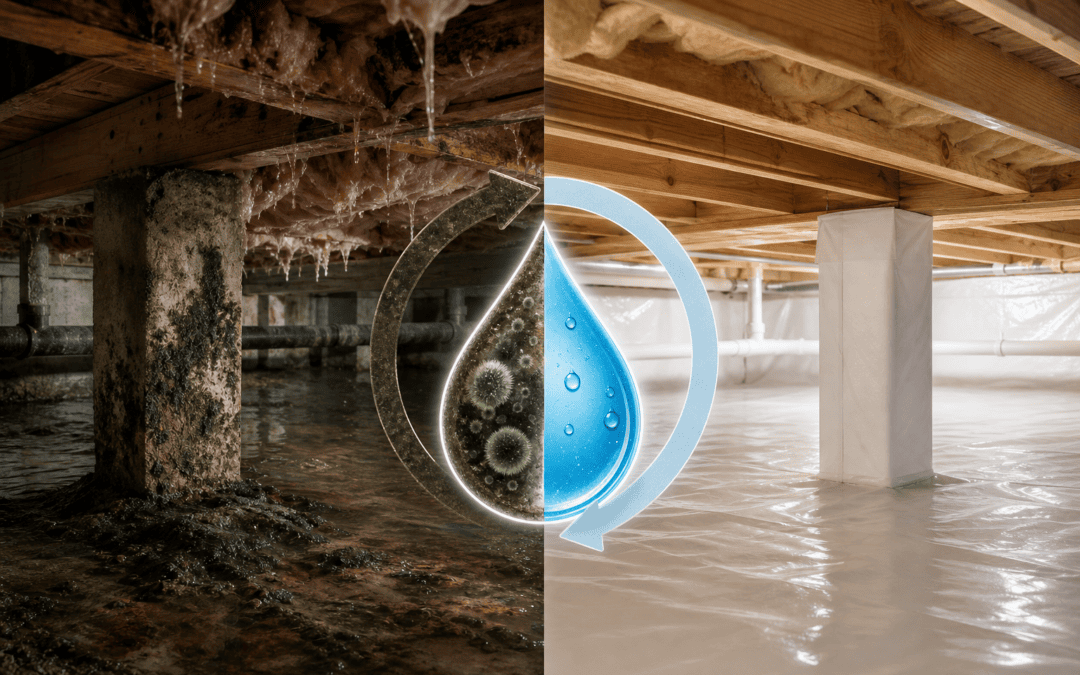
Step 5: Vapor Barrier Installation and Encapsulation
A heavy-duty polyethylene vapor barrier installed across the crawl space floor is the single most effective long-term defense against recurrence in Florida. In more severe cases, full encapsulation — sealing both the walls and floor in a continuous barrier — is the right call. It cuts off the ground moisture supply entirely.
Step 6: Post-Remediation Verification
A reputable remediation company will verify the results through visual inspection, moisture testing, or air sampling. This step confirms the mold has been removed and that conditions no longer support regrowth.
How Long Does It Take?
A straightforward crawl space remediation on a standard residential property typically takes one to three days, depending on the size of the space and the extent of contamination. Jobs requiring full encapsulation or involving active water damage take longer. If water intrusion is still ongoing, that needs to be resolved before remediation begins — which adds time to the overall timeline.
Can You Do It Yourself?
Technically, yes. Practically, it's a bad idea in most Florida cases.
DIY removal can work in a narrow set of circumstances: a small, clearly defined surface area, a moisture source that's already been fixed, and no HVAC or structural involvement. That describes a small fraction of crawl space mold situations in South Florida.
More often, the contamination is more widespread than it looks from the access hatch, the moisture source is still active, and the materials involved — insulation, wood joists, subfloor panels — require proper disposal under Florida guidelines. Applying bleach to a moldy joist without addressing the moisture doesn't eliminate the colony. It temporarily bleaches it.
For anything beyond a minor surface issue, professional remediation is the more cost-effective path. Incomplete DIY work that leads to regrowth means paying twice.
What It Costs
Royal Mold Specialist quotes jobs on-site after a full inspection, so there's no flat rate to reference here. For context, 2026 national averages for professional mold remediation run approximately $1,200 to $3,750 for residential jobs, though crawl space work involving encapsulation or significant material replacement can run higher depending on square footage and scope.
The most reliable way to get an accurate number for your property is to book an inspection at royalmoldfl.com.
Why Crawl Space Mold Comes Back — and How to Stop It
Remediation removes what's there. Prevention keeps it from returning. In Florida, that means:
- Installing or upgrading a vapor barrier to at least 6-mil polyethylene (20-mil holds up better long-term)
- Sealing foundation vents or converting to a conditioned crawl space if your home's design allows it
- Grading the soil around the home's perimeter so water drains away from the foundation
- Fixing plumbing leaks promptly — even a slow drip under the house creates persistent moisture
- Running a crawl space dehumidifier if the space remains vented
If you've had a water intrusion event, time matters. Mold can establish itself within 48 hours of a moisture event, so getting water out quickly is the most important first step before remediation begins.
When to Call a Professional
Reach out to a mold remediation specialist when:
- You can see visible mold on joists, insulation, or subfloor panels
- You smell mold but can't locate the source
- A home inspector has flagged crawl space mold or elevated moisture readings
- You've had a plumbing leak or flooding event in or near the crawl space
- You've tried DIY cleaning and the smell or staining has returned
Royal Mold Specialist has been handling crawl space mold removal across South Florida for over 12 years. The team serves more than 20 cities across Broward, Miami-Dade, and Palm Beach Counties — including Miami, Fort Lauderdale, Boca Raton, Hollywood, Pompano Beach, Coral Springs, Davie, and Pembroke Pines. Inspection, remediation, water damage treatment, and sanitizing are all handled in a single engagement, not coordinated across multiple vendors.
Book an inspection at royalmoldfl.com and get a clear picture of what you're dealing with before the problem spreads further.
Frequently Asked Questions
What causes mold in a Florida crawl space?
The main drivers are high ambient humidity, ground moisture vapor rising through unprotected soil, poor ventilation, and water intrusion from leaks or flooding. Florida's climate means these conditions are present for most of the year, making crawl spaces here significantly more vulnerable than in drier or colder regions.
How do I know if I have mold in my crawl space without going in?
Common signs include a persistent musty smell inside the home (especially near floors), unexplained allergy symptoms that improve when you leave, soft or discolored spots on hardwood flooring, and elevated moisture readings flagged during a home inspection. A professional inspection with moisture meters and a visual assessment is the most reliable way to confirm it.
Is crawl space mold dangerous to my family's health?
It can be. Mold spores from the crawl space travel upward into living areas through floor gaps, HVAC systems, and wall penetrations. Prolonged exposure to elevated spore counts can cause respiratory irritation, allergic reactions, and in sensitive individuals, more serious symptoms. The risk depends on the mold species, the size of the colony, and how well the crawl space is sealed from the living space above.
Can I just spray bleach on crawl space mold?
Bleach can temporarily discolor surface mold on non-porous materials, but it doesn't penetrate wood grain — which is where mold colonies typically root. It also does nothing to address the moisture conditions that caused the mold in the first place. On porous materials like wood joists and insulation, bleach is not an effective remediation method and is not recommended by industry standards.
How long does crawl space mold remediation take?
Most residential crawl space jobs take one to three days. Larger spaces, jobs requiring full encapsulation, or situations where water damage is still active will take longer. An on-site inspection gives you the most accurate timeline for your specific property.
Will the mold come back after remediation?
It can, if the moisture source isn't addressed. Remediation removes the existing colony, but mold will return if humidity, ground vapor, or water intrusion remain uncontrolled. A vapor barrier, proper drainage, and any needed plumbing repairs are the prevention side of the equation — and a thorough remediation company will identify those factors as part of the inspection.
How much does crawl space mold removal cost in Florida?
Pricing depends on the size of the affected area, the materials involved, and whether encapsulation is needed. Royal Mold Specialist provides quotes after an on-site inspection. For reference, 2026 national averages for residential mold remediation range from approximately $1,200 to $3,750, with larger or more complex crawl space jobs often falling above that range. Contact Royal Mold Specialist for an accurate quote for your property.