- Why Commercial Mold Remediation Costs More Than Residential
- The Main Cost Drivers for Commercial Jobs in Florida
- Florida-Specific Factors That Affect Your Budget
- What a Commercial Remediation Job Typically Includes
- How to Budget Before You Have a Quote
- Choosing the Right Commercial Remediator in South Florida
- What Happens If You Wait
- Getting a Quote for Your Florida Commercial Property
- Frequently Asked Questions
Commercial mold remediation cost is one of the first questions a Florida business owner asks after finding mold in a warehouse, office, restaurant, or rental unit — and it's rarely a simple answer. Unlike a single-room residential job, commercial remediation involves more variables, more stakeholders, and often far more square footage. This guide breaks down what drives the cost, what Florida's climate adds to the equation, and how to budget realistically before you call anyone.
Why Commercial Mold Remediation Costs More Than Residential
The core difference is scope. A residential job typically involves one or two affected rooms and a single decision-maker. A commercial job can span multiple floors, HVAC systems serving dozens of zones, and materials ranging from drywall to concrete block to drop-ceiling tiles.
Then there's the business continuity factor. A homeowner can stay elsewhere while work is done. A business usually can't shut down entirely, which means remediation may need to happen in phases, during off-hours, or behind containment barriers that protect active workspaces. That complexity adds labor time — and cost.
Florida adds its own layer. The state's year-round humidity means mold doesn't need a dramatic water event to take hold. A slow HVAC condensate leak, a poorly sealed roof penetration, or a single weekend of elevated indoor humidity can be enough. By the time visible mold appears in a commercial space, the problem has usually been growing for weeks.
The Main Cost Drivers for Commercial Jobs in Florida
Size of the Affected Area
Square footage is the most direct cost driver. A small office bathroom with mold on the ceiling tiles is a very different job from a 10,000-square-foot warehouse where mold has colonized the insulation behind metal wall panels. Larger affected areas require more labor hours, more containment material, more antimicrobial product, and more disposal.
The affected area isn't always the same as the visible area. Mold grows inside walls, above drop ceilings, and inside HVAC ductwork. A thorough commercial inspection maps the full extent of contamination — not just what's visible from the floor.
Type of Building and Materials
Porous materials like drywall, insulation, carpet, and ceiling tiles typically need to be removed and replaced rather than cleaned in place. Non-porous surfaces like concrete, metal, and glass can usually be cleaned and treated without demolition. A commercial space with a lot of porous finishes will cost more to remediate than a bare-concrete warehouse of the same size.
Older Florida commercial buildings sometimes bring additional complications: original drywall with paper facing that's especially susceptible to mold, HVAC systems that haven't been serviced in years, or roof structures with a long history of minor water intrusion that was never properly addressed.
HVAC System Involvement
This is one of the most significant cost variables in any commercial remediation job. If mold has entered the ductwork, the scope expands considerably. Ducts need to be cleaned, treated, and in some cases replaced. The system may need to be shut down during work, which affects the entire building. A post-remediation air quality test should confirm the system is clean before it goes back into service.
Florida businesses should assume HVAC involvement is possible in any commercial mold job. The state's reliance on air conditioning means systems run almost continuously, and condensate pans, drain lines, and coil housings are among the most common mold growth sites.
Containment and Safety Requirements
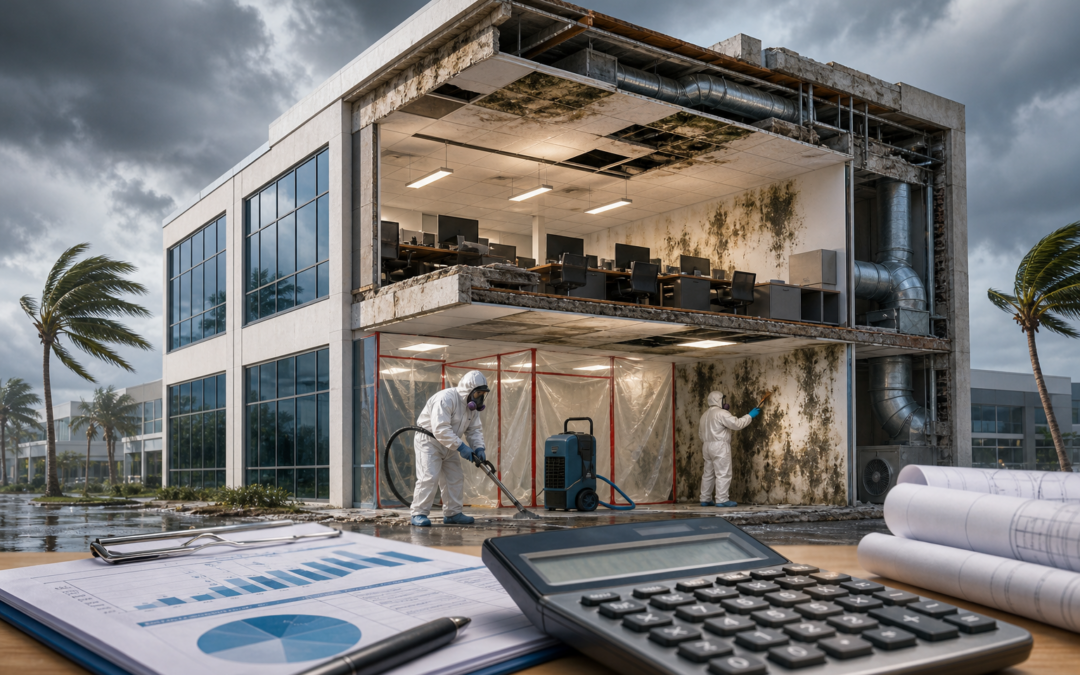
Commercial remediation requires containment to prevent mold spores from spreading to unaffected areas during removal. In a large building, setting up and maintaining proper containment barriers, negative air pressure systems, and HEPA filtration adds meaningful cost compared to a small residential job.
Certain commercial environments — healthcare facilities, food service operations, schools, and childcare centers — have stricter requirements for how remediation is conducted and what documentation must be provided. If your business operates in a regulated industry, factor in the additional time and paperwork your remediator will need to deliver.
Moisture Source Identification and Repair
Mold remediation without addressing the moisture source is a temporary fix. In Florida's climate, mold will return within weeks if the underlying water intrusion or humidity problem isn't corrected. A complete commercial remediation job should include identifying — and where possible, correcting — that source.
That might mean a roof repair, a plumbing fix, an HVAC drain line correction, or improved ventilation. Some of that work falls within a remediator's scope; some requires a separate contractor. Either way, it's a cost you need to plan for. A company that removes visible mold without asking where the moisture came from isn't solving your problem.
Florida-Specific Factors That Affect Your Budget
Storm Season and Water Damage
South Florida's hurricane and tropical storm season runs from June through November. Commercial properties that take on water during a storm often face mold growth within 24 to 48 hours if water isn't extracted and the space dried quickly. When water damage restoration and mold remediation are needed in the same job, both the scope and the cost increase.
If your building sustained storm damage, your commercial property insurance policy may cover some or all of the remediation cost, depending on the cause of loss and your policy terms. Document everything before any work begins, and contact your insurer before authorizing large-scale remediation.
Year-Round Humidity
Unlike northern states where mold season follows specific weather patterns, Florida businesses deal with mold pressure every month of the year. High outdoor humidity, frequent rain, and the constant cycling of air conditioning create conditions where mold can grow regardless of the season. That means commercial buildings need ongoing moisture management — not just a one-time remediation.
After remediation is complete, maintaining indoor relative humidity below 60 percent — ideally between 45 and 55 percent — is the most effective way to prevent recurrence. Depending on the building, that may require HVAC upgrades, dedicated dehumidification equipment, or changes to how the space is ventilated.
Building Age and Construction Type
Older commercial buildings in South Florida, particularly those built before modern moisture-resistant building codes, tend to carry more remediation complexity. Flat roofs, original single-pane windows, and aging HVAC systems all create more opportunities for moisture intrusion. If your building is more than 20 years old and has never had a professional mold inspection, the scope of a first remediation job may be larger than you expect.
What a Commercial Remediation Job Typically Includes
A complete commercial mold remediation job from a qualified company should move through the following phases:
Inspection and assessment. A trained technician surveys the affected areas, identifies the extent of contamination, locates the moisture source, and documents findings. This phase may include air sampling and surface testing, particularly when results will be used for insurance claims or regulatory compliance.
Containment setup. Before any mold is disturbed, the work area is sealed off from the rest of the building using plastic sheeting, negative air pressure machines, and HEPA filtration. This prevents spores from spreading during removal.
Removal and cleaning. Affected porous materials are removed and bagged for disposal. Non-porous surfaces are cleaned and treated with antimicrobial products. HVAC components are cleaned or replaced as needed.
Drying and moisture control. Where water damage is present, industrial drying equipment brings moisture levels in structural materials down to acceptable ranges before any reconstruction begins.
Post-remediation verification. Air and surface testing after the work is complete confirms that mold levels are within normal limits. This documentation matters for insurance purposes, for regulated industries, and as a record that the job was done properly.
Reconstruction. Replacing removed drywall, insulation, ceiling tiles, and flooring may fall within the remediation company's scope or may require a separate contractor, depending on the company.
How to Budget Before You Have a Quote
Because commercial mold remediation cost varies so widely, no honest company will give you a firm price without an on-site inspection. Be cautious of any company that quotes a commercial job over the phone without seeing the space.
What you can do before the inspection is gather information that will help the remediator give you a more accurate estimate:
- Know the approximate square footage of the affected area, including any areas above ceilings or inside walls where mold may have spread
- Identify when the moisture problem started and whether it has been corrected
- Note whether the HVAC system serves the affected area
- Understand whether your building falls under any regulated industry requirements
- Pull your commercial property insurance policy and review the mold coverage section
Having this ready will make the inspection more efficient and the resulting estimate more accurate.
Choosing the Right Commercial Remediator in South Florida
Not every mold company has meaningful experience with commercial properties. The scale, documentation requirements, and business continuity considerations of a commercial job are genuinely different from residential work.
When evaluating companies, ask specifically about their commercial experience. Ask whether they handle the full scope from inspection through post-remediation verification, or whether they subcontract portions of the work. Ask how they approach phased remediation if your business can't fully shut down. Ask what documentation they provide for insurance claims or regulatory purposes.
National franchise chains treat mold as one service among many — fire, storm, water, and construction all compete for their technicians' time and attention. A company that works exclusively on mold inspection and remediation brings a different level of focus to a commercial job.
Royal Mold Specialist has focused exclusively on mold inspection and remediation for over 12 years, serving commercial and residential properties across more than 20 cities in Broward, Miami-Dade, and Palm Beach Counties. That exclusive focus means every job — including large commercial ones — is handled by technicians whose entire experience is in mold, not technicians who rotated over from a fire restoration job last week.
What Happens If You Wait
Commercial mold problems don't stay contained on their own. In Florida's humidity, an untreated mold colony will spread to adjacent materials, move into HVAC systems, and eventually affect air quality throughout the building. What starts as a localized issue in one area can become a building-wide remediation project if it's left alone for months.
There's also a liability dimension. If employees, tenants, or customers are exposed to elevated mold levels in your commercial space, you may face workers' compensation claims, tenant complaints, or regulatory scrutiny depending on your industry. Addressing the problem promptly and documenting the remediation protects your business as well as the people in it.
Getting a Quote for Your Florida Commercial Property
Because commercial mold remediation cost depends on so many site-specific variables, the most useful next step is an on-site assessment. A trained technician can evaluate the full extent of the contamination, identify the moisture source, and give you a realistic scope of work and cost estimate.
Royal Mold Specialist provides commercial mold inspections and remediation across South Florida, from Miami and Fort Lauderdale to Boca Raton, Coral Springs, Doral, and beyond. You can book an appointment directly at royalmoldfl.com.
Frequently Asked Questions
What is the average commercial mold remediation cost in Florida?
Commercial mold remediation cost in Florida varies significantly based on the size of the affected area, the materials involved, HVAC system involvement, and whether water damage restoration is also needed. There is no single average that applies across all commercial jobs. An on-site inspection is the only way to get an accurate estimate for your specific property.
Does commercial property insurance cover mold remediation?
It depends on your policy and the cause of the mold. If the mold resulted from a covered water loss — such as a burst pipe or storm damage — your policy may cover remediation costs. Mold caused by long-term neglect or maintenance failures is typically excluded. Review your policy and contact your insurer before authorizing work.
How long does commercial mold remediation take?
A small commercial job affecting one room or area might be completed in one to three days. A large job involving multiple floors, HVAC systems, or extensive demolition and reconstruction can take one to three weeks or longer. Phased remediation for businesses that cannot fully shut down will extend the timeline further.
Can my business stay open during commercial mold remediation?
In some cases, yes. Proper containment barriers and negative air pressure systems can isolate the work area from the rest of the building, allowing portions of the business to remain operational. Whether that's feasible depends on where the affected area is located and how the building is laid out. Discuss it with your remediator during the inspection.
What causes mold in Florida commercial buildings?
The most common causes are HVAC system issues (condensate leaks, dirty coils, clogged drain lines), roof leaks, plumbing leaks, poor building envelope sealing, and flooding from storm events. Florida's year-round humidity means even minor moisture intrusion can lead to mold growth faster than in drier climates.
How do I prevent mold from returning after remediation?
The most important step is correcting the moisture source that allowed mold to grow in the first place. Beyond that, maintaining indoor relative humidity below 60 percent, servicing HVAC systems regularly, and addressing any water intrusion promptly are the most effective long-term prevention measures for Florida commercial properties.
Should I get a post-remediation air quality test?
Yes. A post-remediation verification test confirms that mold levels in the treated area are within normal limits before the space is returned to use. This documentation is important for insurance claims, for regulated industries like healthcare and food service, and as a record that the work was completed properly.